Managing Energy Risk (eBook)
John Wiley & Sons (Verlag)
978-1-118-61858-5 (ISBN)
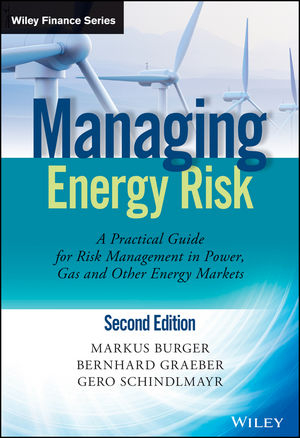
As global warming takes center stage in the public and private sectors, new debates on the future of energy markets and electricity generation have emerged around the world. The Second Edition of Managing Energy Risk has been updated to reflect the latest products, approaches, and energy market evolution. A full 30% of the content accounts for changes that have occurred since the publication of the first edition. Practitioners will appreciate this contemporary approach to energy and the comprehensive information on recent market influences.
A new chapter is devoted to the growing importance of renewable energy sources, related subsidy schemes and their impact on energy markets. Carbon emissions certificates, post-Fukushima market shifts, and improvements in renewable energy generation are all included.
Further, due to the unprecedented growth in shale gas production in recent years, a significant amount of material on gas markets has been added in this edition. Managing Energy Risk is now a complete guide to both gas and electricity markets, and gas-specific models like gas storage and swing contracts are given their due.
The unique, practical approach to energy trading includes a comprehensive explanation of the interactions and relations between all energy commodities.
- Thoroughly revised to reflect recent changes in renewable energy, impacts of the financial crisis, and market fluctuations in the wake of Fukushima
- Emphasizes both electricity and gas, with all-new gas valuation models and a thorough description of the gas market
- Written by a team of authors with theoretical and practical expertise, blending mathematical finance and technical optimization
- Covers developments in the European Union Emissions Trading Scheme, as well as coal, oil, natural gas, and renewables
The latest developments in gas and power markets have demonstrated the growing importance of energy risk management for utility companies and energy intensive industry. By combining energy economics models and financial engineering, Managing Energy Risk delivers a balanced perspective that captures the nuances in the exciting world of energy.
DR MARKUS BURGER (Karlsruhe, Germany) is Director of Risk Management at EnBW Trading (Energie Baden-Württemberg AG) a company specialising in energy trading, optimization and risk management. Markus has more than fifteen years' experience in Commodity Trading, Finance and Risk Management. He has a PhD in mathematics from Karlsruhe Institute of Technology (KIT).
DR BERNHARD GRAEBER (Karlsruhe, Germany) is Head of Infrastructure Investments at Talanx Asset Management. Prior to that he was head of Renewable Energies and International Climate Projects at EnBW AG and was responsible for the coordination of all renewable energy activities within the EnBW group. Bernhard has a PhD in Energy Economics from Stuttgart University.
DR GERO SCHINDLMAYR (Essen, Germany) is Head of Risk Control for asset-related trading at RWE Supply & Trading GmbH. Over the last fifteen years, Gero held various positions in the finance and energy industry in the area of quantitative modelling and risk management and is author of several research publications. He holds a PhD in mathematics from RWTH Aachen, University of Technology.
An overview of today's energy markets from a multi-commodity perspective As global warming takes center stage in the public and private sectors, new debates on the future of energy markets and electricity generation have emerged around the world. The Second Edition of Managing Energy Risk has been updated to reflect the latest products, approaches, and energy market evolution. A full 30% of the content accounts for changes that have occurred since the publication of the first edition. Practitioners will appreciate this contemporary approach to energy and the comprehensive information on recent market influences. A new chapter is devoted to the growing importance of renewable energy sources, related subsidy schemes and their impact on energy markets. Carbon emissions certificates, post-Fukushima market shifts, and improvements in renewable energy generation are all included. Further, due to the unprecedented growth in shale gas production in recent years, a significant amount of material on gas markets has been added in this edition. Managing Energy Risk is now a complete guide to both gas and electricity markets, and gas-specific models like gas storage and swing contracts are given their due. The unique, practical approach to energy trading includes a comprehensive explanation of the interactions and relations between all energy commodities. Thoroughly revised to reflect recent changes in renewable energy, impacts of the financial crisis, and market fluctuations in the wake of Fukushima Emphasizes both electricity and gas, with all-new gas valuation models and a thorough description of the gas market Written by a team of authors with theoretical and practical expertise, blending mathematical finance and technical optimization Covers developments in the European Union Emissions Trading Scheme, as well as coal, oil, natural gas, and renewables The latest developments in gas and power markets have demonstrated the growing importance of energy risk management for utility companies and energy intensive industry. By combining energy economics models and financial engineering, Managing Energy Risk delivers a balanced perspective that captures the nuances in the exciting world of energy.
DR MARKUS BURGER -(Karlsruhe, Germany) is Director of Risk Manage-ment at EnBW Trading (-Energie Baden-Württemberg AG) a company specialising in -energy -trading, optimization and risk management. Markus has more than fifteen years' experience in Commodity -Trading, Finance and Risk Management. He has a PhD in mathematics from -Karlsruhe Institute of Technology (KIT). DR BERNHARD GRAEBER (Karlsruhe, Germany) is Head of Infrastructure Investments at -Talanx Asset -Management. Prior to that he was head of Renewable Energies and International -Climate Projects at EnBW AG and was res-ponsible for the coordination of all renewable -energy -activities within the EnBW group. Bernhard has a PhD in Energy Economics from Stuttgart -University. DR GERO SCHINDLMAYR (Essen, Germany) is Head of Risk Control for asset-related trading at RWE -Supply & Trading GmbH. Over the last fifteen years, Gero held various positions in the finance and energy industry in the area of quantitative modelling and risk management and is author of several -research publications. He holds a PhD in mathematics from RWTH Aachen, University of Technology.
1 Energy Markets 7
1.1 Energy Trading 9
1.2 The Oil Market 14
1.3 The Natural Gas Market 20
1.4 The Coal Market 29
1.5 The Electricity Market 35
1.6 The Emissions Market 53
2 Renewable Energy 69
2.1 The Role of Renewable Energy in Electricity Generation 70
2.2 The Role of Liquid Biofuels in the Transportation Sector 75
2.3 Renewable Energy Technologies 77
2.4 Support Schemes for Renewable Energy 96
2.5 Key Economic Factors of Renewable Energy Projects 108
2.6 Risks in Renewable Energy Projects and their Mitigation 110
3 Risk Management 125
3.1 Governance Principles and Market Regulation 126
3.2 Market Risk 128
3.3 Legal Risk 156
3.4 Credit Risk 160
3.5 Liquidity Risk 172
3.6 Operational Risk 175
4 Retail Markets 179
4.1 Interaction of Wholesale and Retail Markets 179
4.2 Retail Products 183
4.3 Sourcing 189
4.4 Load Forecasting 192
4.5 Weather Risk in Gas Retail Markets 194
4.6 Risk Premiums 201
5 Energy Derivatives 215
5.1 Forwards, Futures and Swaps 216
5.2 Commodity Forward Curves 223
5.3 "Plain Vanilla" Options 228
5.4 American, Bermudan and Asian Options 243
5.5 Multi-Underlying Options 247
5.6 Modelling Spot Prices 255
5.7 Stochastic Forward Curve Models 277
6 Stochastic Models for Electricity and Gas 283
6.1 Daily and Hourly Forward Curve Models 283
6.2 Structural Electricity Price Models 295
6.3 Structural Gas Price Models 312
7 Fundamental Market Models 333
7.1 Fundamental Price Drivers in Electricity Markets 333
7.2 Economic Power Plant Dispatch 347
7.3 Methodological Approaches 372
7.4 Relevant System Information for Electricity Market Modelling 406
7.5 Application of Electricity Market Models 413
7.6 Gas Market Models 416
7.7 Market Models for Oil, Coal, and CO2 Markets 429
7.8 Asset Investment Decisions 430
Appendix 437
A Mathematical Background 439
A.1 Econometric Methods 439
A.2 Stochastic Processes 448
A.3 Option Pricing Theory 451
1
Energy Markets
Despite a global sustainability trend including climate protection and more efficient use of energy, worldwide energy consumption will continue to grow over the coming decades (see Figure 1.1). Besides future economic growth, an important driver of global energy demand is policy commitments, such as renewable energy or energy efficiency targets. Depending on scenario assumptions, the average annual growth rate in energy consumption is estimated to be between 0.5% and 1.5% (International Energy Agency, 2012) until 2035, with significant regional differences. Most of the energy demand growth is expected to come from non-OECD countries, with China and India being the largest single contributors.
Figure 1.1 World energy demand. Source: International Energy Agency (2012).
The main primary energy source worldwide is oil, covering 32% of worldwide energy consumption (see Figure 1.2). Second are coal and natural gas, with a share of 27% (respectively 22%). Nuclear energy (6%) and renewables (13%) have a much smaller share. To meet the growing worldwide demand for energy, there will need to be an increase in energy supply from all primary energy sources. However, depending on the scenario, the share of oil and coal will diminish in favour of gas and renewable energy sources (Figure 1.2).
Figure 1.2 World primary energy sources. Source: International Energy Agency (2012).
Not all of the primary sources of energy are used directly for consumption; they may first be transformed into secondary forms of energy, such as electricity or heat. Since part of the primary energy is used for the transformation process, the final consumption is below the primary energy demand. A breakdown of the final consumption into different sectors is given in Figure 1.3.
Figure 1.3 World final energy consumption. Source: International Energy Agency (2012).
The current trends by sector are as follows (International Energy Agency, 2012):
- Industry: The industrial sector accounts for 28% of the total energy consumption and has the highest growth rate among the sectors. The main energy sources are coal (28%), electricity (26%), gas (19%) and oil (13%). It is expected that electricity and gas will gain importance at the expense of coal and oil.
- Transport: The transport sector, which makes up 27% of the energy demand, is strongly dominated by oil (93%). On a worldwide scale, biofuels (2%) and electricity (1%) still play a minor role, but are expected to increase their share to 2% (respectively 6%) in the reference scenario. The actual development will be strongly influenced by future governmental policies.
- Buildings: This sector includes heating, air conditioning, cooking and lighting. It accounts for 34% of the total energy consumption. The energy is delivered mainly in the form of electricity (29%), bioenergy (29%), gas (21%) and oil (11%). There is a clear trend towards a higher share of electricity and gas at the expense of bioenergy and oil.
1.1 Energy Trading
With the development of a global oil market in the 1980s, energy has become a tradable commodity. In the early 1990s, deregulation of the natural gas market in the United States led to a liquid and competitive gas market. In Europe, liberalisation of gas and electricity markets started in the UK in the late 1980s. In the late 1990s, the EU Commission adopted first directives making energy market liberalisation a mandatory target for EU member states along different steps of implementation. Whereas a wholesale market for electricity developed successfully in the early 2000s in some countries (e.g., Germany), a liquid gas wholesale market only existed in the UK. Gas markets in Continental Europe still remained fragmented and dominated by oil-indexed supply contracts. Further consolidation of market areas, easier market access and declining gas demand following the financial crisis in 2008 increased competition and finally led to growing market liquidity for gas markets in Continental Europe and a decoupling of gas and oil prices in the early 2010s.
Besides the commodities coal, oil, gas and electricity, which carry energy directly, the EU introduced carbon emission certificates (European Emission Allowance or EUA) in the year 2005 as part of the EU climate policy. The certificates were designed as tradable instruments for which a liquid market quickly developed. Since carbon certificates are closely related to energy commodities and electricity generation, they will be treated here along with the other energy commodities. Before describing the specific markets for each commodity, the general structure and basic products of commodity markets in general will be introduced. A more detailed description of commodity derivatives products will be given in Chapter 5.
We generally distinguish between over-the-counter (OTC) and exchange-traded markets. The OTC market consists of bilateral agreements, which are concluded over the phone or through Internet-based broker platforms. Such transactions are most flexible since the parties are free to agree individual contract terms. As a main disadvantage, OTC transactions may contain credit risk, meaning that one of the counterparties may not deliver on his contract (e.g., in case of insolvency). As a mitigation, collaterals may be defined to protect the counterparties from losses in such a case. Exchanges provide organised markets for commodities in the form of standardised contracts. In particular, they became popular for derivatives products (futures, options), where the exchange also eliminates credit risk for the market participants.
1.1.1 Spot Market
The spot market is the market for immediate (or nearby) delivery of the respective commodity in exchange for cash. The exact definition depends on the commodity. As an example, the spot market for electricity often refers to delivery on the next day or on the next working day. For coal markets, contracts delivering within the next several weeks ahead are typically still considered as spot transactions. Spot markets can either be bilateral OTC transactions or organised by exchanges. For electricity, gas and EUAs, energy exchanges typically offer spot market products.
A particular form of spot market is the auction market, where buyers submit their bids and sellers their offers at the same time. In most cases a uniform price, the market clearing price, is determined, which balances supply and demand. Such a uniform price auction is popular for electricity spot markets; traded products are typically single-hour (or even half-hour) deliveries.
Spot prices represent the final price of the “physical commodity” in the prevailing situation of supply and demand, and are therefore the underlying of the derivatives market, which is largely driven by expectations regarding the future situation on spot markets. There are various published spot price indices available for the different commodities that provide transparency for market participants and also serve as official references for the financial settlement of futures contracts.
1.1.2 Forwards and Futures
Forward and futures contracts are contractual agreements to purchase or sell a certain amount of commodity on a fixed future date (delivery date) at a predetermined contract price. The contract needs to be fulfilled regardless of the commodity price development between conclusion of the contract and delivery date. In case the spot price has increased, the seller needs to sell below the prevailing spot price at delivery and therefore incurs an opportunity loss, whereas the buyer makes an (opportunity) profit. In case prices decline, the situation is reversed. The buyer of a forward or future is said to hold a long position in the commodity (he profits from a price increase until delivery), the seller is said to hold a short position (he takes a loss from a price increase).
The final profit or loss for the buyer of a forward contract (long position) at delivery date T is the value of the commodity at delivery S(T) minus the contract price K (i.e., S(T) − K), see Figure 1.4. Similarly, the profit or loss for the seller (short position) is K − S(T).
Figure 1.4 Profit or loss of a commodity forward contract.
Forward contracts are the most basic hedging instruments. If a producer of a commodity enters into a forward contract as a seller, he fixes his revenues and is indemnified from further price changes. On the contrary, a market participant who is dependent on the commodity for consumption may enter into a forward contract as a buyer to fix his purchasing costs for the commodity in advance.
The term “futures contract” is used for a standardised forward contract which is traded via an exchange. Often, futures contracts are financially settled, which means that only the value of the commodity at the delivery date is paid instead of a true physical delivery. Futures contracts open up the commodity market for participants who do not want to get involved in the physical handling of the commodity. Since the exchange serves as a central counterparty for futures contracts, market participants do not have to deal with multiple individual counterparties and their associated credit risk. This also makes it easier...
| Erscheint lt. Verlag | 23.6.2014 |
|---|---|
| Reihe/Serie | The Wiley Finance Series |
| Wiley Finance Series | Wiley Finance Series |
| Sprache | englisch |
| Themenwelt | Geisteswissenschaften ► Geschichte |
| Recht / Steuern ► Wirtschaftsrecht | |
| Technik ► Elektrotechnik / Energietechnik | |
| Wirtschaft ► Betriebswirtschaft / Management ► Finanzierung | |
| Schlagworte | Bernhard Graeber • carbon emissions • carbon emissions certificates • coal • Commodities • Commodity markets • Commodity risk • Deregulation • electricity • electricity markets • Energie • Energiewirtschaft • Energiewirtschaft u. -politik • Energy • Energy Economics • Energy Economics & Policy • Energy Markets • energy risk • Energy Risk Management • Energy Trading • European Union Emissions Trading Scheme • Financial Crisis • Financial Engineering • Fukushima • Gas Markets • gas storage • gas valuation models • Gero Schindlmayr • global warming • Managing Energy Risk • market fluctuations • Markus Burger • mathematical finance • Natural gas • Oil • Power Markets • renewable energy • Renewable Energy Generation • Renewables • Shale Gas • swing contracts • technical optimization |
| ISBN-10 | 1-118-61858-0 / 1118618580 |
| ISBN-13 | 978-1-118-61858-5 / 9781118618585 |
| Informationen gemäß Produktsicherheitsverordnung (GPSR) | |
| Haben Sie eine Frage zum Produkt? |
 EPUB (Adobe DRM)
Kopierschutz: Adobe-DRM
Adobe-DRM ist ein Kopierschutz, der das eBook vor Mißbrauch schützen soll. Dabei wird das eBook bereits beim Download auf Ihre persönliche Adobe-ID autorisiert. Lesen können Sie das eBook dann nur auf den Geräten, welche ebenfalls auf Ihre Adobe-ID registriert sind.
Details zum Adobe-DRM
Dateiformat: EPUB (Electronic Publication)
EPUB ist ein offener Standard für eBooks und eignet sich besonders zur Darstellung von Belletristik und Sachbüchern. Der Fließtext wird dynamisch an die Display- und Schriftgröße angepasst. Auch für mobile Lesegeräte ist EPUB daher gut geeignet.
Systemvoraussetzungen:
PC/Mac: Mit einem PC oder Mac können Sie dieses eBook lesen. Sie benötigen eine
eReader: Dieses eBook kann mit (fast) allen eBook-Readern gelesen werden. Mit dem amazon-Kindle ist es aber nicht kompatibel.
Smartphone/Tablet: Egal ob Apple oder Android, dieses eBook können Sie lesen. Sie benötigen eine
Geräteliste und zusätzliche Hinweise
Buying eBooks from abroad
For tax law reasons we can sell eBooks just within Germany and Switzerland. Regrettably we cannot fulfill eBook-orders from other countries.
aus dem Bereich