Zum Hauptinhalt springen
Nicht aus der Schweiz? Besuchen Sie lehmanns.de
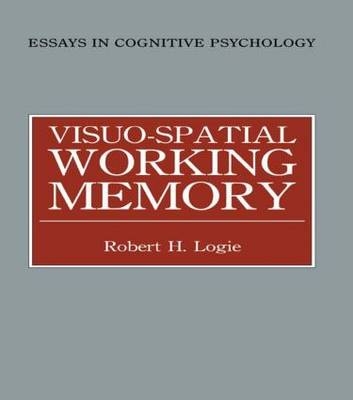
Visuo-spatial Working Memory -  Robert H. Logie

Visuo-spatial Working Memory (eBook)

eBook Download: PDF
2014
161 Seiten
Taylor and Francis (Verlag)
978-1-317-77546-1 (ISBN)
Systemvoraussetzungen
64,97 inkl. MwSt
(CHF 63,45)
Der eBook-Verkauf erfolgt durch die Lehmanns Media GmbH (Berlin) zum Preis in Euro inkl. MwSt.
  • Download sofort lieferbar
  • Zahlungsarten anzeigen
Representation of the visual and spatial properties of our environment is a pivotal requirement of everyday cognition. We can mentally represent the visual form of objects. We can extract information from several of the senses as to the location of objects in relation to ourselves and to other objects nearby. For some of those objects we can reach out and manipulate them. We can also imagine ourselves manipulating objects in advance of doing so, or even when it would be impossible to do so physically. The problem posed to science is how these cognitive operations are accomplished, and proffered accounts lie in two essentially parallel research endeavours, working memory and imagery. Working memory is thought to pervade everyday cognition, to provide on-line processing and temporary storage, and to update, moment to moment, our representation of the current state of our environment and our interactions with that environment. There is now a strong case for the claims of working memory in the area of phonological and articulatory functions, all of which appear to contribute to everyday activities such as counting, arithmetic, vocabulary acquisition, and some aspects of reading and language comprehension. The claims for visual and spatial working memory functions are less convincing. Most notable has been the assumption that visual and spatial working memory are intimately involved in the generation, retention and manipulations of visual images. There has until recently been little hard evidence to justify that assumption, and the research on visual and spatial working memory has focused on a relatively restricted range of imagery tasks and phenomena. In a more or less independent development, the literature on visual imagery has now amassed a voluminous corpus of data and theory about a wide range of imagery phenomena. Despite this, few books on imagery refer to the concept of working memory in any detail, or specify the nature of the working memory system that might be involved in mental imagery. This essay follows a line of reconciliation and positive critiquing in exploring the possible overlap between mental imagery and working memory. Theoretical development in the book draws on data from both cognitive psychology and cognitive neuropsychology. The aim is to stimulate debate, to address directly a number of assumptions that hitherto have been implicit, and to assess the contribution of the concept of working memory to our understanding of these intriguing core aspects of human cognition.
PDFPDF (Adobe DRM)

Kopierschutz: Adobe-DRM
Adobe-DRM ist ein Kopierschutz, der das eBook vor Mißbrauch schützen soll. Dabei wird das eBook bereits beim Download auf Ihre persönliche Adobe-ID autorisiert. Lesen können Sie das eBook dann nur auf den Geräten, welche ebenfalls auf Ihre Adobe-ID registriert sind.
Details zum Adobe-DRM

Dateiformat: PDF (Portable Document Format)
Mit einem festen Seiten­layout eignet sich die PDF besonders für Fach­bücher mit Spalten, Tabellen und Abbild­ungen. Eine PDF kann auf fast allen Geräten ange­zeigt werden, ist aber für kleine Displays (Smart­phone, eReader) nur einge­schränkt geeignet.

Systemvoraussetzungen:
PC/Mac: Mit einem PC oder Mac können Sie dieses eBook lesen. Sie benötigen eine Adobe-ID und die Software Adobe Digital Editions (kostenlos). Von der Benutzung der OverDrive Media Console raten wir Ihnen ab. Erfahrungsgemäß treten hier gehäuft Probleme mit dem Adobe DRM auf.
eReader: Dieses eBook kann mit (fast) allen eBook-Readern gelesen werden. Mit dem amazon-Kindle ist es aber nicht kompatibel.
Smartphone/Tablet: Egal ob Apple oder Android, dieses eBook können Sie lesen. Sie benötigen eine Adobe-ID sowie eine kostenlose App.
Geräteliste und zusätzliche Hinweise

Buying eBooks from abroad
For tax law reasons we can sell eBooks just within Germany and Switzerland. Regrettably we cannot fulfill eBook-orders from other countries.

Mehr entdecken
aus dem Bereich