Emperor and the World (eBook)
Cambridge University Press (Verlag)
978-1-316-02270-2 (ISBN)
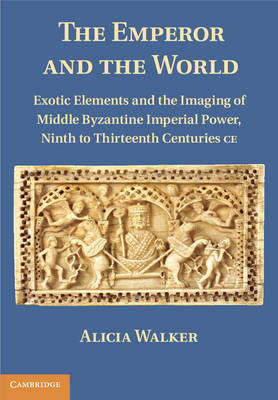
Byzantine imperial imagery is commonly perceived as a static system. In contrast to this common portrayal, this book draws attention to its openness and responsiveness to other artistic traditions. Through a close examination of significant objects and monuments created over a 350-year period, from the ninth to the thirteenth century, Alicia Walker shows how the visual articulation of Byzantine imperial power not only maintained a visual vocabulary inherited from Greco-Roman antiquity and the Judeo-Christian tradition, but also innovated on these artistic precedents by incorporating styles and forms from contemporary foreign cultures, specifically the Sasanian, Chinese and Islamic worlds. In addition to art and architecture, this book explores historical accounts and literary works as well as records of ceremonial practices, thereby demonstrating how texts, ritual and images operated as integrated agents of imperial power. Walker offers new ways to think about cross-cultural interaction in the Middle Ages and explores the diverse ways in which imperial images employed foreign elements in order to express particularly Byzantine meanings.
Byzantine imperial imagery is commonly perceived as a static system. In contrast to this common portrayal, this book draws attention to its openness and responsiveness to other artistic traditions. Through a close examination of significant objects and monuments created over a 350-year period, from the ninth to the thirteenth century, Alicia Walker shows how the visual articulation of Byzantine imperial power not only maintained a visual vocabulary inherited from Greco-Roman antiquity and the Judeo-Christian tradition, but also innovated on these artistic precedents by incorporating styles and forms from contemporary foreign cultures, specifically the Sasanian, Chinese and Islamic worlds. In addition to art and architecture, this book explores historical accounts and literary works as well as records of ceremonial practices, thereby demonstrating how texts, ritual and images operated as integrated agents of imperial power. Walker offers new ways to think about cross-cultural interaction in the Middle Ages and explores the diverse ways in which imperial images employed foreign elements in order to express particularly Byzantine meanings.
| Erscheint lt. Verlag | 30.4.2012 |
|---|---|
| Sprache | englisch |
| Themenwelt | Kunst / Musik / Theater ► Kunstgeschichte / Kunststile |
| Kunst / Musik / Theater ► Malerei / Plastik | |
| Geschichte ► Allgemeine Geschichte ► Altertum / Antike | |
| Geschichte ► Allgemeine Geschichte ► Mittelalter | |
| ISBN-10 | 1-316-02270-6 / 1316022706 |
| ISBN-13 | 978-1-316-02270-2 / 9781316022702 |
| Informationen gemäß Produktsicherheitsverordnung (GPSR) | |
| Haben Sie eine Frage zum Produkt? |
 PDF (Adobe DRM)
Kopierschutz: Adobe-DRM
Adobe-DRM ist ein Kopierschutz, der das eBook vor Mißbrauch schützen soll. Dabei wird das eBook bereits beim Download auf Ihre persönliche Adobe-ID autorisiert. Lesen können Sie das eBook dann nur auf den Geräten, welche ebenfalls auf Ihre Adobe-ID registriert sind.
Details zum Adobe-DRM
Dateiformat: PDF (Portable Document Format)
Mit einem festen Seitenlayout eignet sich die PDF besonders für Fachbücher mit Spalten, Tabellen und Abbildungen. Eine PDF kann auf fast allen Geräten angezeigt werden, ist aber für kleine Displays (Smartphone, eReader) nur eingeschränkt geeignet.
Systemvoraussetzungen:
PC/Mac: Mit einem PC oder Mac können Sie dieses eBook lesen. Sie benötigen eine
eReader: Dieses eBook kann mit (fast) allen eBook-Readern gelesen werden. Mit dem amazon-Kindle ist es aber nicht kompatibel.
Smartphone/Tablet: Egal ob Apple oder Android, dieses eBook können Sie lesen. Sie benötigen eine
Geräteliste und zusätzliche Hinweise
Buying eBooks from abroad
For tax law reasons we can sell eBooks just within Germany and Switzerland. Regrettably we cannot fulfill eBook-orders from other countries.
aus dem Bereich