


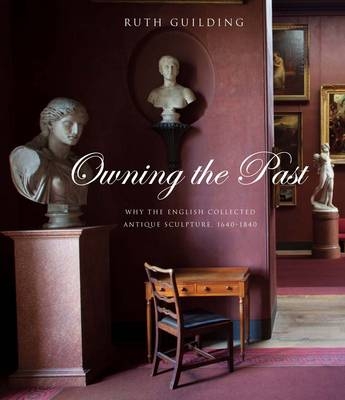
Owning the Past
Why the English Collected Antique Sculpture, 1640–1840
Seiten
2014
Yale University Press (Verlag)
978-0-300-20819-1 (ISBN)
Yale University Press (Verlag)
978-0-300-20819-1 (ISBN)
- Titel ist leider vergriffen;
keine Neuauflage - Artikel merken
A re-examination of the British collectors who bankrupted themselves to possess antique marble statues. Analyzing the motives the drove "Marble Mania" in England from the 17th to 19th centuries, it examines how the trend entrenches the ideals of connoisseurship and taste, exacerbates socio-economic inequities, and serves nationalist propaganda.
In a lively re-examination of the British collectors who bankrupted themselves to possess antique marble statues, Owning the Past chronicles a story of pride, rivalry, snobbery, and myopic obsession with posterity and possession. Analyzing the motives that drove “Marble Mania” in England from the 17th through the early 19th century, Ruth Guilding examines how the trend of collecting antique sculpture entrenches the ideals of connoisseurship and taste, exacerbates socioeconomic inequities, and serves nationalist propaganda. Even today, for the individuals or regimes that possess them, classical statuary performs as a symbol of authority or as the trophies of a “civilized” power. From Adolf Hitler posing for the press beside an ancient copy of Myron’s Discobolus to the 2002 sale of the Newby Venus for a record price of about $13 million to the Emir of Qatar, marble mania remains unabated. With insider access to private collections, Guilding writes with verve and searing insight into this absorbing fixation.
Published for the Paul Mellon Centre for Studies in British Art
In a lively re-examination of the British collectors who bankrupted themselves to possess antique marble statues, Owning the Past chronicles a story of pride, rivalry, snobbery, and myopic obsession with posterity and possession. Analyzing the motives that drove “Marble Mania” in England from the 17th through the early 19th century, Ruth Guilding examines how the trend of collecting antique sculpture entrenches the ideals of connoisseurship and taste, exacerbates socioeconomic inequities, and serves nationalist propaganda. Even today, for the individuals or regimes that possess them, classical statuary performs as a symbol of authority or as the trophies of a “civilized” power. From Adolf Hitler posing for the press beside an ancient copy of Myron’s Discobolus to the 2002 sale of the Newby Venus for a record price of about $13 million to the Emir of Qatar, marble mania remains unabated. With insider access to private collections, Guilding writes with verve and searing insight into this absorbing fixation.
Published for the Paul Mellon Centre for Studies in British Art
Ruth Guilding is an independent scholar and critic.
| Zusatzinfo | 100 color + 200 b-w illus. |
|---|---|
| Sprache | englisch |
| Maße | 241 x 292 mm |
| Gewicht | 2631 g |
| Themenwelt | Kunst / Musik / Theater ► Kunstgeschichte / Kunststile |
| Kunst / Musik / Theater ► Malerei / Plastik | |
| Geisteswissenschaften ► Geschichte ► Regional- / Ländergeschichte | |
| Geschichte ► Teilgebiete der Geschichte ► Kulturgeschichte | |
| ISBN-10 | 0-300-20819-7 / 0300208197 |
| ISBN-13 | 978-0-300-20819-1 / 9780300208191 |
| Zustand | Neuware |
| Informationen gemäß Produktsicherheitsverordnung (GPSR) | |
| Haben Sie eine Frage zum Produkt? |
Mehr entdecken
aus dem Bereich



aus dem Bereich
Die Revolution des Gemeinen Mannes
Buch | Softcover (2024)
C.H.Beck (Verlag)
CHF 16,80
Eine Geschichte des Geschmacks
Buch | Hardcover (2025)
C.H.Beck (Verlag)
CHF 49,95


