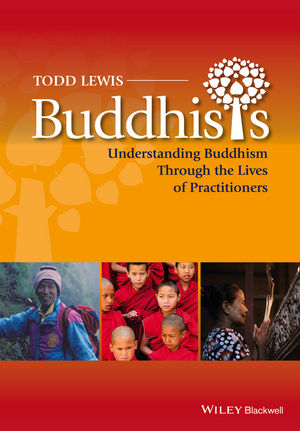
Buddhists (eBook)
John Wiley & Sons (Verlag)
978-1-118-32208-6 (ISBN)
Buddhists: Understanding Buddhism through the Lives of Practitioners provides a series of case studies of Asian and modern Western Buddhists, spanning history, gender, and class, whose lives are representative of the ways in which Buddhists throughout time have embodied the tradition.
- Portrays the foundational principles of Buddhist belief through the lives of believers, illustrating how the religion is put into practice in everyday life
- Takes as its foundation the inherent diversity within Buddhist society, rather than focusing on the spiritual and philosophical elite within Buddhism
- Reveals how individuals have negotiated the choices, tensions, and rewards of living in a Buddhist society
- Features carefully chosen case studies which cover a range of Asian and modern Western Buddhists
- Explores a broad range of possible Buddhist orientations in contemporary and historical contexts
Todd Lewis is Professor in the Religious Studies Department at The College of the Holy Cross. He is one of the world's leading authorities on the social history of Buddhism. His most recent book, Sugata Saurabha: A Poem on the Life of the Buddha by Chittadhar Hridaya of Nepal, was awarded the Toshide Numata Book Prize for the best book in Buddhist Studies in 2010 and the Khyentse Foundation Award in 2012, for the best translation of a Buddhist text. In 2011, Professor Lewis was awarded a Guggenheim Fellowship.
Buddhists: Understanding Buddhism through the Lives of Practitioners provides a series of case studies of Asian and modern Western Buddhists, spanning history, gender, and class, whose lives are representative of the ways in which Buddhists throughout time have embodied the tradition. Portrays the foundational principles of Buddhist belief through the lives of believers, illustrating how the religion is put into practice in everyday life Takes as its foundation the inherent diversity within Buddhist society, rather than focusing on the spiritual and philosophical elite within Buddhism Reveals how individuals have negotiated the choices, tensions, and rewards of living in a Buddhist society Features carefully chosen case studies which cover a range of Asian and modern Western Buddhists Explores a broad range of possible Buddhist orientations in contemporary and historical contexts
Todd Lewis is Professor in the Religious Studies Department at The College of the Holy Cross. He is one of the world's leading authorities on the social history of Buddhism. His most recent book, Sugata Saurabha: A Poem on the Life of the Buddha by Chittadhar Hridaya of Nepal, was awarded the Toshide Numata Book Prize for the best book in Buddhist Studies in 2010 and the Khyentse Foundation Award in 2012, for the best translation of a Buddhist text. In 2011, Professor Lewis was awarded a Guggenheim Fellowship.
Cover 1
Title Page 5
Copyright 6
Contents 7
Notes on Contributors 11
Preface 15
Acknowledgments 17
Introduction 19
The Eightfold Path and the Gradual Path 21
Pragmatic and Transcendental Buddhism 22
Part I Buddhists in the Earliest and Medieval Eras 29
Chapter 1 The Female Householder Mallika 31
Introduction:Mallika’s Historical, Geographical, and Cultural Context 32
Mallika’s Biography 32
Reflections on How This Individual’s Life Relates to the Buddhist Community 37
Chapter 2 Bhadda Kundalakesa: The Ex-Jain 39
Introduction 40
The Biographical Details of Bhadda Kundalakesa in Other Texts 42
Conclusion 45
Chapter 3 Two Noted Householders of the Buddha's Time: Upasika Vishakha and Upasaka Anathapindika 47
Anathapindika the Upasaka 48
Vishakha the Upasika 52
Chapter 4 Nagarjuna: The Great Philosopher 57
Introduction 58
Second-Century Mathura 58
Mahayana Traditions in Mathura 59
Monastic Life in Mathura 60
Nagarjuna, a Brahmin Monk 62
Nagarjuna in Andhra Pradesh 63
Conclusion 66
Chapter 5 Who Is Uncle Donpa? 70
Introduction 71
Uncle Donpa and Trickster Tales in Tibet 71
Traditional Interpretations 72
Contemporary Interpretations 76
Conclusions 78
Chapter 6 Ma-chig Lab-dron: Mother of Tibetan Buddhist Chod 80
The Life Story of Ma-chig Lab-dron 82
Ma-chig Lab-dron’s Teachings 84
Spiritual Innovator: Chod Tradition 85
The Legacy of Ma-chig Lab-dron 86
Part II Buddhist Lives in the West 89
Chapter 7 I.B. Horner and the Twentieth-Century Development of Buddhism in the West 91
Introduction: Colonial Context, the Centrality of Texts, and the Authority of European Scholarship 92
Theravada Buddhism and the Pali Canon 92
The Rhys Davids and the Pali Text Society 92
Joining the Pali Text Society 94
Assuming Leadership of the Pali Text Society 94
Participation in Buddhist Groups 95
Was Horner a Buddhist or just an Advocate of Buddhist Views? 95
Conclusion 96
Chapter 8 Takyu: A Young Buddhist Nun at a Ch'an Temple in the English Midlands 98
Introduction 99
Life History 99
The Monastery 100
The Ordination 101
Monastic Temple Religious Practices 101
Forms of Pragmatic Buddhism 102
Conclusion 103
Chapter 9 Refuge and Reconnection: One Lao Woman's Story 105
Introduction 106
Refuge and Reconnection 109
Conclusion 112
Chapter 10 Conversion, Devotion, and (Trans-)Mission: Understanding Ole Nydahl 114
Introduction 115
Early Life: Conversion, Training, and Mission 116
First Charismatic Phase: Foundations (1972–1982) 118
Second Charismatic Phase: Transition (1982–1992) 118
“Twenty Years on the Road”: The Making of a Lama 119
Third Charismatic Phase:The Global Schism and Diamond Way Expansion (1992–2007) 120
Conclusion: Observations on a Late-Charismatic Movement in Transition 121
Chapter 11 Noah Levine: Punk Rocker and Buddhist Meditation Teacher 125
The Religious Biography of Noah Levine 126
Early Life: Drugs, Alcohol, Jail, and Punk Rock Music 126
Turning Point: Becoming a “Spiritual Person” 127
Committing to Buddhism 128
Mixing Punk with Buddhism: The Teaching Style of Noah Levine 129
Noah Levine’s Life Story and Its Relation to the Buddhist Tradition 131
Chapter 12 Legendary Beat Poet: Allen Ginsberg 133
Introduction 134
A Poet’s Jewish Roots and Buddhist Beginnings 134
Asian Pilgrimage, Tibetan Influences, Antiwar Expressions 136
Problems at Naropa Institute and with Chogyam Trungpa 137
Last Years 138
Chapter 13 Dr. Stephen John Fulder: Founder of Vipassana in Israel 142
Background 143
Western Meditation 145
From One Man’s Project to a Community 146
Influenced by yet Ambivalent toward Goenka 146
Relation to Judaism 147
Politics 148
Some Concluding Remarks 148
Chapter 14 Amala Sensei: Zen Priest 151
Background 152
Coming to the Path 154
Conclusion 158
Part III Buddhist Lives in South and Southeast Asia 163
Chapter 15 Pawinee Bunkhun: The Life of a Thai Buddhist Upasika 165
Introduction 166
Lay Buddhism in Thailand 168
Gender and Buddhism 171
Conclusion 173
Chapter 16 Mahasi Sayadaw of Burma 175
The Early Life of Mahasi Sayadaw 176
Monastic Ordination and Ascetic Practices 178
The Lay Meditation Movement 180
Missionary Buddhism 181
Chapter 17 Corporal Monk: Venerable Sudinna's Journey from the Sri Lankan Army to the Buddhist Sangha 183
Introduction 183
A Forest Monastic Sanctuary 185
Chapter 18 The Lure of Renunciation and the Ways of the World: Maechii Wabi of Thailand 190
Introduction 191
The Path to Ordination 191
Chapter 19 Becoming a Theravada Modernist Buddhist in Contemporary Nepal 197
Introduction 198
Childhood: Newar Buddhist Critic 198
Theravada Buddhism as a Reformist Movement in Nepal 199
Becoming a Theravada Devotee 201
Vipassana Meditation and the Practice of “Pure Buddhism” 202
Remaining a Householder: Marriage and Family Life 204
Conclusion 206
Part IV Buddhist Lives in the Himalayan Region 209
Chapter 20 Tenpe Gyaltsen: The Fifth Jamyang Zhepa 211
Introduction: 1916–1924 212
Exile: 1924–1927 213
Early Adulthood: 1928–1937 213
Pilgrimage to Lhasa: 1937–1940 214
Return to Labrang: 1940–1947 215
Why a Biography of Tenpe Gyaltsen? 216
Chapter 21 A Female Tibetan Buddhist Diviner in Darjeeling 219
Introducing Mo Sukey 220
Returning from Death 222
A Professional Mopa 223
Devotion to a Lama 224
Conclusion 224
Chapter 22 Tsultrim Zangmo: A Twenty-First-Century Tibetan Buddhist Woman in South Asia 227
Introduction 228
Return to Her Parents’ Home in Nepal 230
The Loss of a Father 231
Mother and Lama as Spiritual Guides 232
Chapter 23 Bakula Arhat's Journeys to the North: The Life and Work of the 19th Kushok Bakula in Russia and Mongolia 236
Background 237
Birth and Early Life of a Reincarnate Lama 238
Outreach and Missionary Activities in the Soviet Union and Mongolia 238
Monk-Ambassador to Mongolia 240
Revitalizing Buddhism in Mongolia 241
Death, Commemoration, and the Perpetuation of the Tradition 243
Chapter 24 Hunger, Hard Work, and Uncertainty: Tashi Dondrup Reminisces on Life and Death in a Tibetan Village 246
Background: Practicing Buddhism and the Complexities of Subsistence Farming 246
Context and Early Life 248
A Life of Struggle, New Opportunities, Tragedy 250
Elder Years and Religious Orientation 251
Chapter 25 Benefiting the Doctrine and Sentient Beings: The Life of a Tibetan Lineage Master and the Ethos of Altruistic Action 254
Introduction 255
Methodology and Context 257
Ts’ampa Nawang: The Formative Years 257
Ever Broader Activities 259
Altruistic Action 260
Conclusion 261
Chapter 26 Living Practical Dharma: Chomo Khandru and the Himalayan Bon Tradition 264
Introduction 265
Locating Lubra and the Bon Tradition 266
Life as a Chomo: Birthright or Burden? 267
On Writing and Weaving: Gender-Bending Identities 269
Changing Religious, Economic, and Educational Landscapes 270
Continuing the Lineage 272
Chapter 27 Excavating the Stories of Border-Crossing Women Masters in Modern Buddhism: The Oral Biography of Pelling Ani Wangdzin and Her Family 275
Introduction 276
Sikkim: Religious and Historical Context 277
Part V Buddhist Lives in East Asia 283
Chapter 28 The Life of a Contemporary Japanese Buddhist Priest: Protecting the Dharma and Ensuring Its Flow with All of One's Strength 285
Introduction 286
Pure Land in the Context of Modern Japanese Buddhism 286
The Life of Rev. Keishin Ogi 287
Chapter 29 Toshihide Numata: Igniting the Flame of the Dharma 292
Background 293
Early Life and Formative Influences 294
Chapter 30 Seno'o Giro: The Life and Thought of a Radical Buddhist 298
Introduction 299
Early Life and Its Context 300
Education and Formative Influences 301
Immersion in the Nichiren Buddhist Tradition 302
New Movements: Merging Nichiren Buddhism and Western Radical Traditions 303
Repression, Imprisonment, and Postwar Activities 305
Chapter 31 Building a Culture of Social Engagement: Nichiren Buddhism and Soka Gakkai Buddhists in Japan 307
Nichiren Buddhism in Practice: The Experience of Keiko Yonamine 308
Conclusion: Religion as a Life Philosophy and Practice of Value-Creation 312
Chapter 32 Blood and Teardrops: The Life and Travels of Venerable Fazun 314
Introduction 315
Translations of Fazun’s Autobiography 316
Chapter 33 A Modern Chinese Laywoman: Dumplings, Dharani, and Dedication-Honest Auntie Li Tries to Be a Good Buddhist 323
Introduction 324
Introducing Auntie Li 325
Practicing Buddhism 326
Pathway into Buddhism 328
Defining a “Good Buddhist” 329
Balancing Business and Buddhism 330
Conclusion 332
Index 335
"...this volume goes far in filling this lacuna in our teaching resources by presenting a series of biographies of Buddhists that demonstrates the way in which they try and live their lives asBuddhists." (H-Net.org, 1 June 2015)
"This volume invites readers to understand what it can
mean to be Buddhist in manifold ways. Rather than approaching
Buddhism as an abstract entity by means of investigating ideas and
practices that form a coherent and fixed system, these humanistic
accounts enable one to situate and to comprehend various ways in
which people have actually LIVED and thereby impacted Buddhist
tradition. One comes away from reading this book with a
knowledge of how Buddhism is a force that is fluid, diverse, and
distinctive in its countless iterations."
John Holt, Bowdoin College
"I know of no other book in Buddhists Studies quite like
this, and it should make fascinating reading for those who really
want to understand what makes Buddhists and Buddhism
'tick', not as a collection of abstract ideas but as an
actual lived way of being in the world and looking forward to the
world(s) to come. Great stuff - this book is highly
recommended!"
Paul Williams, University of Bristol, and author of
Mahâyâna Buddhism: The doctrinal foundations
(Routledge)
| Erscheint lt. Verlag | 2.4.2014 |
|---|---|
| Reihe/Serie | Lived Religions |
| Lived Religions | Lived Religions |
| Sprache | englisch |
| Themenwelt | Geisteswissenschaften ► Religion / Theologie ► Buddhismus |
| Geisteswissenschaften ► Religion / Theologie ► Judentum | |
| Schlagworte | believers • Biographies • Brings • Buddhism • Buddhismus • buddhists • Collection • drawn • fascinating • Histories • Imbalance • Life • Lives • Minority • Modern • Perspective • redresses • Religion & Theology • Religion u. Theologie • representative • scholars • series • Spiritual • Traditional • Understandings |
| ISBN-10 | 1-118-32208-8 / 1118322088 |
| ISBN-13 | 978-1-118-32208-6 / 9781118322086 |
| Informationen gemäß Produktsicherheitsverordnung (GPSR) | |
| Haben Sie eine Frage zum Produkt? |
 PDF (Adobe DRM)
Kopierschutz: Adobe-DRM
Adobe-DRM ist ein Kopierschutz, der das eBook vor Mißbrauch schützen soll. Dabei wird das eBook bereits beim Download auf Ihre persönliche Adobe-ID autorisiert. Lesen können Sie das eBook dann nur auf den Geräten, welche ebenfalls auf Ihre Adobe-ID registriert sind.
Details zum Adobe-DRM
Dateiformat: PDF (Portable Document Format)
Mit einem festen Seitenlayout eignet sich die PDF besonders für Fachbücher mit Spalten, Tabellen und Abbildungen. Eine PDF kann auf fast allen Geräten angezeigt werden, ist aber für kleine Displays (Smartphone, eReader) nur eingeschränkt geeignet.
Systemvoraussetzungen:
PC/Mac: Mit einem PC oder Mac können Sie dieses eBook lesen. Sie benötigen eine
eReader: Dieses eBook kann mit (fast) allen eBook-Readern gelesen werden. Mit dem amazon-Kindle ist es aber nicht kompatibel.
Smartphone/Tablet: Egal ob Apple oder Android, dieses eBook können Sie lesen. Sie benötigen eine
Geräteliste und zusätzliche Hinweise
Buying eBooks from abroad
For tax law reasons we can sell eBooks just within Germany and Switzerland. Regrettably we cannot fulfill eBook-orders from other countries.
aus dem Bereich