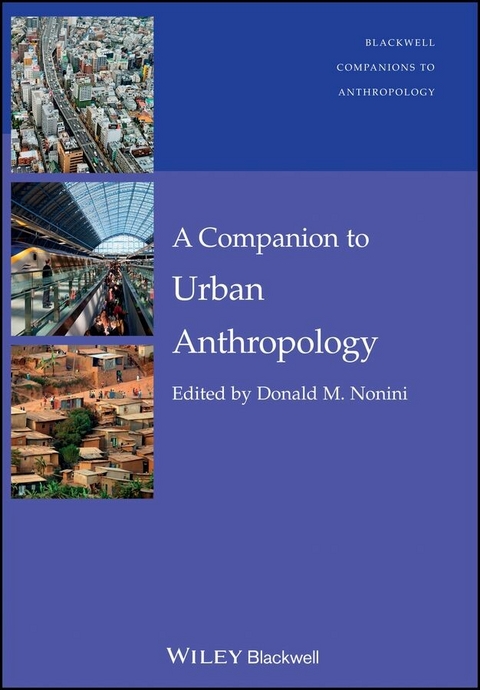
A Companion to Urban Anthropology (eBook)
- Features newly commissioned essays from 35 leading international scholars in urban and global studies
- Includes essays in classic areas of concern to urban anthropologists such as built structures and urban planning, community, security, markets, and race
- Covers emergent areas in the field including: 21st-century cities borders, citizenship, sustainability, and urban sexualities
Donald M. Nonini is Professor of Anthropology at the University of North Carolina, Chapel Hill, USA. He has written extensively on state formation, local politics, ethnic and class relations, the Chinese diaspora, and globalization in urban settings in Southeast Asia, Australia, and the southern United States. His latest book is “Getting By” among Chinese in Malaysia: An Historical Ethnography of Class and State Formation (2015).
The Editor Donald M. Nonini is Professor of Anthropology at the University of North Carolina, Chapel Hill, USA. He has written extensively on state formation, local politics, ethnic and class relations, the Chinese diaspora, and globalization in urban settings in Southeast Asia, Australia, and the southern United States. His latest book is "Getting By" among Chinese in Malaysia: An Historical Ethnography of Class and State Formation (2015).
Cover 1
Series page 4
Title page 5
Copyright page 6
Contents 7
Preface 10
Notes on Contributors 12
Introduction 19
What Are the Essays About? 21
In Search of Meta-Knowledge in Urban Anthropology: Dissonant and Generative Connections 26
References 29
PART I: Foundational Concepts: Affirmed and Contested 31
CHAPTER 1: Spatialities: The Rebirth of Urban Anthropology through Studies of Urban Space 33
Introduction 33
Methodology 34
History and Theoretical Background 35
The Spatial Turn 37
Contested Urban Space 39
Racialized Space 40
Landscapes of Fear 41
Global, Transnational and Translocal Spaces 42
Conclusion 43
References 44
CHAPTER 2: Flows 46
Worlds in Flux 48
Commodity Circuits: Goods in Movement 51
People Movers 55
Flows of Ideas: Languages, Religions, and the City as Flow 59
Conclusion 62
References 63
CHAPTER 3: Community 64
Community in the Anthropological Landscape 65
The Elusive Community 67
Community as Governable Space 73
The Obscure Object of Desire? 77
References 80
CHAPTER 4: Citizenship 83
Political Action and Citizenship Practice in Urban Spaces 85
The Urban as an Object of Citizenship Action as Well as Its Site 89
References 97
PART II: Materializations and Their Imaginaries 101
CHAPTER 5: Built Structures and Planning 103
Introduction 103
Premodern Cities: Variations on a Theme of the Cosmos, Market, and Religious/Political Authority 104
Premodern Cities of China and South Asia 105
Premodern African Cities 105
Walls, Defense, Boundaries 106
Gender Inequalities in Premodern Cities 106
The Colonial City 106
Spanish and Portuguese Cities of Empire, 1600s–1800s 107
African and South Asian Colonial Cities: Articulating European Obsessions with “the Natives” and Disease 108
Modernist Cities 110
Brasília, Modernist City Par Excellence 111
Modernist Cities Around the World 112
Modernism’s Shortcomings, Attempted State Solutions, Unplanned Growth 113
The Postmodern City 114
Postmodernist Aesthetic in Class Suppression 115
Postmodernist Obsessions with Shopping and the Consumption Experience 115
Gentrification, Branding, and the Policing of “Undesirables” 116
Gated Communities and the Cultural Production of Fear 117
Conclusion 118
References 119
CHAPTER 6: Borders: Cities, Boundaries, and Frontiers 121
State Borders: Sites, Symbols, Institutions, and Practices 122
Border Cities 125
Bordering and Bordered Cities 131
Conclusion 133
References 136
CHAPTER 7: Markets 138
The Political and Cultural Economy of Markets 139
Exchange Is Not the Same As Markets 139
Market Struggles and the Structuring of Social Space 142
Gender, Race, Ethnicity in the Market 142
Brokerage, Mediation, Networks 144
Modernity and Tactics of Resistance: The Knowledge of the Streets 145
How and Why Traders Perform 147
Markets and Language Aesthetics 147
Markets and Sight-Seeing 148
Markets and Festivals 149
Market Spaces of Formality–Informality: False Dualisms 151
Brave New Markets 153
Conclusion 155
References 156
CHAPTER 8: Cars and Transport: The Car-Made City 160
Inequality 163
Modernity 165
The Struggle for Sustainable Mobility Systems 167
References 170
PART III: Dividing Processes, Bases of Solidarity 173
CHAPTER 9: Class 175
Class: The Urban Commons and the Empty Sign of “The Middle Class” in the Twenty-First Century 175
Class Conundrums 176
The “Working Class” as a Project of the Urban Commons 180
Urban Crisis, Urban Rebellion 184
Neoliberal Unravelings 185
China and the New Urbanization 190
Conclusion 191
References 192
CHAPTER 10: Gender 195
“The Personal Is Political” and the City 196
Gender in Urban Anthropology from the 1950s–1980s 198
Globalization, Gender and Cities 205
Global Differences: Women in the North, Women in the South 207
References 208
CHAPTER 11: Sexualities 211
The Sexualities of Cities 211
San Francisco 214
Cities of Vice 216
Gay Publics 217
Sexual Cities 219
In Bed with Power 221
Gender 221
Intersectionality 222
Race 223
Liberalism 223
Methods 224
The Urbanity of Sex 224
References 226
CHAPTER 12: Race 228
Dispossession 230
Labor 232
Criminalization 234
Environmental Justice 235
References 238
CHAPTER 13: Extralegality 240
Introduction 240
The Limits of “Legality”: Legal, Illegal, Extra-Legal 241
Informality 244
Illegality 248
Not-Yet-(Il)Legal 250
Urban Government 253
Conclusion 254
References 256
PART IV: Abstractions of Consequence 257
CHAPTER 14: Global Systems and Globalization 259
The Urban in Global Historical Perspective 259
Anthropology of the Global and of the City: Globalization or Global Systems? 260
What Are the Tendencies of Urbanization in Periods of Globalization? 263
Beyond Cities as Sites of Consumption: Ethnic and Class Fragmentation Under Hegemonic Decline 265
Third-World Cities: Cosmopolitan Canopies, Street Children, and Peripheral Impoverishment 269
Conclusion 271
References 271
CHAPTER 15: Governance: Beyond the Neoliberal City 273
A Brief History of Urban Neoliberalism 274
Theorizing the Neoliberal City 277
The Anthropology of Contemporary Urban Governance 279
1. Neoliberalism Is Not Alone 280
2. Beyond the Neoliberalism/Resistance Duet 281
3. The Complex Trajectories of Neoliberalism 282
Conclusion 283
References 285
CHAPTER 16: Policing and Security 289
The Contradiction at the Heart of Policing 289
Policing, Security, and Social Power: Four Perspectives 290
Prefatory Comments on Studying Police 292
The History of Modern Cities and Police in the West 293
Urban Privatization and Policing 296
Innovations in Policing 298
Cities, Policing, and Crime: A Postcolonial Example 301
Security, Borders, and Migration 302
What Is Missing? Elite Crime 306
Conclusions: Inequality and Justice 306
References 307
CHAPTER 17: Transnationality: Transnationality and the City 309
Defining Terms 310
Transnationality and Urban Studies 312
Migration and Urban Transnationalities 314
A Comparative Perspective of the Varying Transnationality of Cities 316
Conclusion 318
References 320
CHAPTER 18: Cosmopolitanism: Cosmopolitan Cities and the Dialectics of Living Together with Difference 324
Introduction: Liberation Square 324
Breaching the Greek City Walls: From Polis to Metropolis 327
“Street” Cosmopolitanism: Merchants and Traders 330
Social Networks and Claims to Moral Citizenship 333
The Aesthetics and Cultural Politics of Cosmopolitanism 334
“Post-Cosmopolitan” Cities 338
Conclusion 341
References 341
PART V: Experiencing/Knowing the City in Everyday Life 345
CHAPTER 19: Practices of Sociality 347
Introduction 347
The Categories 350
The Ethnographies 352
Youth 352
Culture of the Outskirts 354
The Deaf 356
The Circuit of the Sateré-Mawé 358
References 363
CHAPTER 20: Memory and Narrative 365
Why Memory? 366
Sites of Memory2 367
Narrating the Past 368
The Past of the Jubilados 370
Activist Lives in Buenos Aires 372
The Past as a Resource 374
Some Cautionary Notes 377
Conclusion 378
References 380
CHAPTER 21: Religion 382
Colonial Epistemologies 383
The Sacred and the City 386
Sacred Signs and Marked Spaces in the City 389
From Ethnics to Ethics: The City and the Quest for Universality 392
References 396
PART VI: Nature and the City 399
CHAPTER 22: Nature 401
Definitions 401
Heterotopia 405
Nature in Urban Lives and Deaths 407
The Material Agency of Nature 409
Nature as a System of Signs 410
Nature at Every Turn 410
References 411
CHAPTER 23: Food and Farming 412
Introduction 412
Food Provisioning: A Multi-Scalar Phenomenon, and a Challenge for Urban Anthropology 414
Four Approaches to Food Provisioning by Urban Anthropologists 421
Urban Agriculture: How 800 Million–1 Billion People Get By 424
References 430
CHAPTER 24: Pollution 432
Introduction 432
Dirt, Difference, and Disease 434
Environmental Justice and Urban Political Ecology 436
Slum Tours in Mazatlán, Mexico 438
Environmentalism in Kingston, Jamaica 440
Conclusion 443
CHAPTER 25: Resilience 446
Introduction 446
Resilience: The Analytical Frame 447
Allotment Gardens and Community Gardens 448
Local Gardens and Agricultures as Sources for Food Security: Historical Examples 450
Social Ecological Memories in Contemporary Garden Communities 455
Discussion 459
Conclusion 462
References 463
PART VII: Challenging the Present, Anticipating Urban Futures 465
CHAPTER 26: The Commons 467
Introduction 467
Commons 469
Enclosure 471
Precarity 472
Commoning 473
Practices of Urban Commoning 475
Squatting 478
Commonfare 479
Commoning Practices of Cityzenship 481
Conclusion: On the Common of the Commons 483
References 485
CHAPTER 27: Social Movements 488
The Return of Social Movements: But Where Did They Go? 488
The Challenge of Contemporary Movements 491
A Brief Genealogy 493
Towards an Anthropology of Social Movements 494
Rethinking the Political: Culture, Meaning-Making and Knowledge Production 495
Space, Scale Globality and Translations 498
Emergence, Complexity and New Forms of Life 499
Conclusion 501
References 502
CHAPTER 28: Futures: Lifeform, Livelihood, and Lifeway 504
Introduction: Here Comes – the Anthropocene? 504
Tilting Toward the Urban 505
An Urbanizing Planet 506
Livelihoods and Privatized Ecologies 506
The Rural/Urban Divide: the Country and the City 508
Urban Political Ecology and Urban Futures 510
Lifeways and the “Natural City”: Cosmological Perspectives 511
From the Stars to the Street3 512
Conclusion 513
References 514
Index 516
"The city is becoming the basic currency of human -
and non-human - life: a pile of interconnections which makes
a series of difficult wholes. This volume navigates the
anthropology of this medium with the greatest aplomb."
Nigel
Thrift, The University of Warwick
| Erscheint lt. Verlag | 17.3.2014 |
|---|---|
| Reihe/Serie | Blackwell Companions to Anthropology |
| Blackwell Companions to Anthropology | Wiley Blackwell Companions to Anthropology |
| Sprache | englisch |
| Themenwelt | Geisteswissenschaften ► Archäologie |
| Geschichte ► Allgemeine Geschichte ► Vor- und Frühgeschichte | |
| Sozialwissenschaften ► Ethnologie | |
| Sozialwissenschaften ► Politik / Verwaltung | |
| Sozialwissenschaften ► Soziologie | |
| Schlagworte | Anthropologie • Anthropology • Geographie • Geography • Social & Cultural Anthropology • Sociology • Soziale u. kulturelle Anthropologie • Soziologie • Stadtgeographie • Stadtsoziologie • urban, city, urban planning, migration, transnationalism, globalization, development, ethnography, urban studies, urbanists, built structures, community, markets, race, borders, sexualities, nature, extra-legality, resilience, sustainability, citizenship, urban geography, sociology, architecture, space, planning, politics, built environment, cities • Urban Geography • Urban sociology |
| ISBN-13 | 9781118378656 / 9781118378656 |
| Informationen gemäß Produktsicherheitsverordnung (GPSR) | |
| Haben Sie eine Frage zum Produkt? |
 PDF (Adobe DRM)
Größe: 5,4 MB
Kopierschutz: Adobe-DRM
Adobe-DRM ist ein Kopierschutz, der das eBook vor Mißbrauch schützen soll. Dabei wird das eBook bereits beim Download auf Ihre persönliche Adobe-ID autorisiert. Lesen können Sie das eBook dann nur auf den Geräten, welche ebenfalls auf Ihre Adobe-ID registriert sind.
Details zum Adobe-DRM
Dateiformat: PDF (Portable Document Format)
Mit einem festen Seitenlayout eignet sich die PDF besonders für Fachbücher mit Spalten, Tabellen und Abbildungen. Eine PDF kann auf fast allen Geräten angezeigt werden, ist aber für kleine Displays (Smartphone, eReader) nur eingeschränkt geeignet.
Systemvoraussetzungen:
PC/Mac: Mit einem PC oder Mac können Sie dieses eBook lesen. Sie benötigen eine
eReader: Dieses eBook kann mit (fast) allen eBook-Readern gelesen werden. Mit dem amazon-Kindle ist es aber nicht kompatibel.
Smartphone/Tablet: Egal ob Apple oder Android, dieses eBook können Sie lesen. Sie benötigen eine
Geräteliste und zusätzliche Hinweise
Zusätzliches Feature: Online Lesen
Dieses eBook können Sie zusätzlich zum Download auch online im Webbrowser lesen.
Buying eBooks from abroad
For tax law reasons we can sell eBooks just within Germany and Switzerland. Regrettably we cannot fulfill eBook-orders from other countries.
 EPUB (Adobe DRM)
Kopierschutz: Adobe-DRM
Adobe-DRM ist ein Kopierschutz, der das eBook vor Mißbrauch schützen soll. Dabei wird das eBook bereits beim Download auf Ihre persönliche Adobe-ID autorisiert. Lesen können Sie das eBook dann nur auf den Geräten, welche ebenfalls auf Ihre Adobe-ID registriert sind.
Details zum Adobe-DRM
Dateiformat: EPUB (Electronic Publication)
EPUB ist ein offener Standard für eBooks und eignet sich besonders zur Darstellung von Belletristik und Sachbüchern. Der Fließtext wird dynamisch an die Display- und Schriftgröße angepasst. Auch für mobile Lesegeräte ist EPUB daher gut geeignet.
Systemvoraussetzungen:
PC/Mac: Mit einem PC oder Mac können Sie dieses eBook lesen. Sie benötigen eine
eReader: Dieses eBook kann mit (fast) allen eBook-Readern gelesen werden. Mit dem amazon-Kindle ist es aber nicht kompatibel.
Smartphone/Tablet: Egal ob Apple oder Android, dieses eBook können Sie lesen. Sie benötigen eine
Geräteliste und zusätzliche Hinweise
Buying eBooks from abroad
For tax law reasons we can sell eBooks just within Germany and Switzerland. Regrettably we cannot fulfill eBook-orders from other countries.
aus dem Bereich