
Kehbuma Langmia is an Associate Professor at Howard University within the Department of Strategic, Legal and Management Communications. Tia C. M. Tyree is an Associate Professor at Howard University within the Department of Strategic, Legal, and Management Communications. Pamela C. O’Brien is an Associate Professor and the Chair of the Department of Communications at Bowie State University. Ingrid Sturgis is an Assistant Professor/New Media in the Department of Media, Journalism and Film at Howard University.
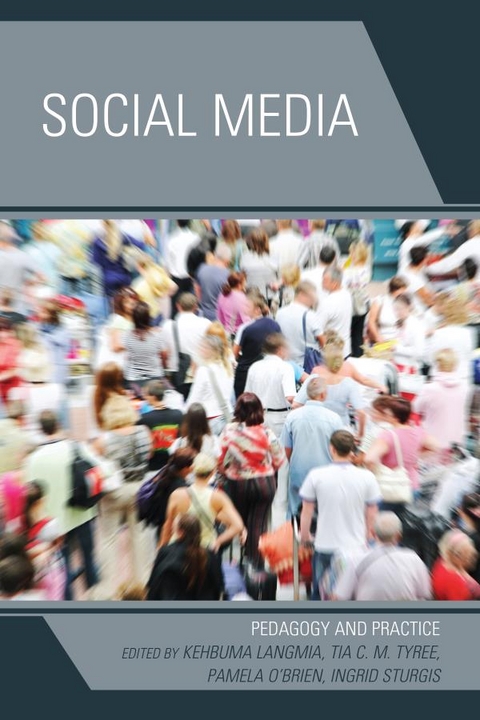
Preface Acknowledgments Introduction: Social Media History and Use, Pamela C. O’Brien Section I: PedagogyChapter 1: Using Social Media and Creating Social Media Courses, Tia C. M. Tyree Chapter 2: Twitter, Facebook, Blogs, and Media-Sharing Sites in the Classroom, Jennifer B. CoxChapter 3: Teaching Computational Literacy Through Game Design, Ingrid Sturgis & Todd ShurnChapter 4: Social Media and Critical Pedagogy, Kehbuma Langmia & Stella-Monica Mpande Chapter 5: How to Do Communication Research Using Social Media Data, William B. Hart & Erica C. TaylorChapter 6: Conducting Research Utilizing Social Media: Best Practices, Jamie Cohen & Paul MihailidisSection II: Social Media Practices in the United StatesChapter 7: African Americans and Social Media, Jayne CubbageChapter 8: The Seven Sisters and Their Siblings Go Digital: An Analysis of Women’s Magazine Content on Websites, iPads, and Cell Phones, Yanick Rice Lamb & Kendra DesrosiersChapter 9: Social Branding of College Students to Seek Employment, Jamila A Cupid & S. Lenise WallaceChapter 10: Social Media, Law, and Practice, Angela D. Minor Esq. Section III: International Social Media PracticesChapter 11: Participatory Media Impact on the Arab Spring, Adam KleinChapter 12: Social Media and Participatory Communication: The UNDP and the Diffusion of Empowerment, Nickesia S. GordonChapter 13: Cock Crow in the “Electronic Republic:” Social Media and Kenya’s 2013 Presidential Election, Kehbuma Langmia About the Editors About the Authors
| Informationen gemäß Produktsicherheitsverordnung (GPSR) | |
| Haben Sie eine Frage zum Produkt? |
 EPUB (Adobe DRM)
Kopierschutz: Adobe-DRM
Adobe-DRM ist ein Kopierschutz, der das eBook vor Mißbrauch schützen soll. Dabei wird das eBook bereits beim Download auf Ihre persönliche Adobe-ID autorisiert. Lesen können Sie das eBook dann nur auf den Geräten, welche ebenfalls auf Ihre Adobe-ID registriert sind.
Details zum Adobe-DRM
Dateiformat: EPUB (Electronic Publication)
EPUB ist ein offener Standard für eBooks und eignet sich besonders zur Darstellung von Belletristik und Sachbüchern. Der Fließtext wird dynamisch an die Display- und Schriftgröße angepasst. Auch für mobile Lesegeräte ist EPUB daher gut geeignet.
Systemvoraussetzungen:
PC/Mac: Mit einem PC oder Mac können Sie dieses eBook lesen. Sie benötigen eine
eReader: Dieses eBook kann mit (fast) allen eBook-Readern gelesen werden. Mit dem amazon-Kindle ist es aber nicht kompatibel.
Smartphone/Tablet: Egal ob Apple oder Android, dieses eBook können Sie lesen. Sie benötigen eine
Geräteliste und zusätzliche Hinweise
Buying eBooks from abroad
For tax law reasons we can sell eBooks just within Germany and Switzerland. Regrettably we cannot fulfill eBook-orders from other countries.
aus dem Bereich