


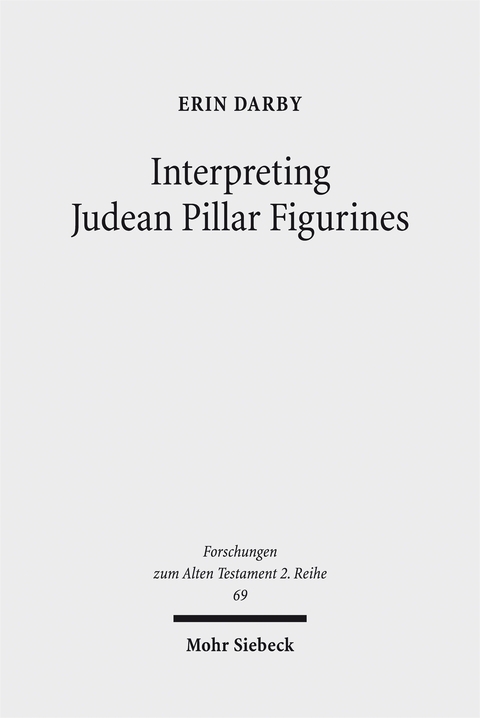
Interpreting Judean Pillar Figurines
Gender and Empire in Judean Apotropaic Ritual
Seiten
Judäische Säulen-Figurinen gehören zu den am meisten verbreiteten rituellen Objekten in Israel zur Eisenzeit II. Diese kleinen Terracotta-Frauen haben viel wissenschaftliche Aufmerksamkeit erhalten, dennoch werden die Figurinen kaum verstanden. Erin Darby befasst sich mit diesen Problemen und versucht, die Figurinen-Rituale in Jerusalem zu verstehen, indem sie Texte aus dem Nahen Osten auswertet, ebenso wie archäologische Kontexte, biblische Texte und Ikonographien aus dem Nahen Osten.
Judean pillar figurines are one of the most common ritual objects from Iron II Israel. These small terracotta females have received a great deal of scholarly attention, appearing in discussions about Israelite religion, monotheism, and women's practice. Yet the figurines are still poorly understood. Modern interpreters connect the figurines with goddesses, popular religion, and females but often base their arguments on the presumed significance of the figurines' breasts and the Hebrew Bible. In contrast, archaeological context is frequently overshadowed or oversimplified. In an attempt to address these problems and to understand figurine rituals in Jerusalem, Erin Darby evaluates relevant Near Eastern texts, archaeological context, biblical texts, and Near Eastern iconography. She also explores changes in figurine iconography, the function of the figurines in rituals of healing and protection and the gender of figurine users.
Judean pillar figurines are one of the most common ritual objects from Iron II Israel. These small terracotta females have received a great deal of scholarly attention, appearing in discussions about Israelite religion, monotheism, and women's practice. Yet the figurines are still poorly understood. Modern interpreters connect the figurines with goddesses, popular religion, and females but often base their arguments on the presumed significance of the figurines' breasts and the Hebrew Bible. In contrast, archaeological context is frequently overshadowed or oversimplified. In an attempt to address these problems and to understand figurine rituals in Jerusalem, Erin Darby evaluates relevant Near Eastern texts, archaeological context, biblical texts, and Near Eastern iconography. She also explores changes in figurine iconography, the function of the figurines in rituals of healing and protection and the gender of figurine users.
Born 1978; studied Hebrew Bible and Near Eastern archaeology, Duke University in Durham, North Carolina; since 2012 Assistant Professor of Religious Studies, University of Tennessee in Knoxville, Tennessee.
| Erscheint lt. Verlag | 11.9.2014 |
|---|---|
| Reihe/Serie | Forschungen zum Alten Testament 2. Reihe |
| Verlagsort | Tübingen |
| Sprache | englisch |
| Maße | 154 x 231 mm |
| Gewicht | 907 g |
| Themenwelt | Religion / Theologie ► Christentum ► Bibelausgaben / Bibelkommentare |
| Geisteswissenschaften ► Religion / Theologie ► Judentum | |
| Geisteswissenschaften ► Sprach- / Literaturwissenschaft ► Literaturwissenschaft | |
| Schlagworte | Ancient • Ancient Near East • archaeology • East • Gender Studies • Gender Studies / Gender-Forschung • Göttin (Motiv in d. bild. Kunst) • Iconography/Art • Israelite • Israelite Religion • Judentum, Kunst • Near • Religion • Terrakotten |
| ISBN-13 | 9783161524929 / 9783161524929 |
| Zustand | Neuware |
| Informationen gemäß Produktsicherheitsverordnung (GPSR) | |
| Haben Sie eine Frage zum Produkt? |
Mehr entdecken
aus dem Bereich


aus dem Bereich
Buch | Softcover (2021)
De Gruyter (Verlag)
CHF 44,90


