


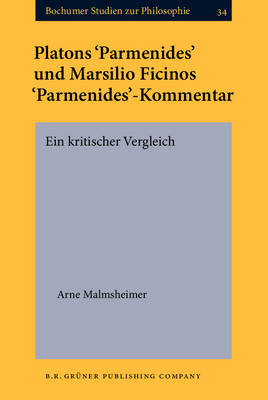
Platons ‘Parmenides’ und Marsilio Ficinos ‘Parmenides’-Kommentar
Ein kritischer Vergleich
Seiten
2001
John Benjamins Publishing Co (Verlag)
978-90-6032-363-2 (ISBN)
John Benjamins Publishing Co (Verlag)
978-90-6032-363-2 (ISBN)
Gemeinhin gilt der Platonische Dialog ‘Philosophos’, auf den Platon selbst im ‘Sophistes’ verweist, als verschollen. Eine genaue Analyse des ‘Theaitetos’ sowie der sog. Eleatischen Dialoge kann jedoch erweisen, dass Platon die Trilogie ‘Sophistes’, ‘Politikos’ und ‘Philosophos’ mit dem ‘Parmenides’ abschloss – dass der verschollene ‘Philosophos’ also mit dem existierenden 'Parmenides' identisch ist. Die dialektische Übung des ‘Parmenides’ führt dabei eine Art Subjektivitätsphilosophie vor, in der das Eine sich als menschliche Seele zeigt. Die Seele des Menschen lässt in der Vielheit ihrer Sätze und der dialogischen Einheit dieser Sätze Wirklichkeit überhaupt erst entstehen, ist in diesem subjektiven Entwurf von Welt aber immer auf die dialogische Prüfung eigener Vorstellungen durch den Anderen angewiesen.
Ein ganz anderes Verständnis des ‘Parmenides’ offenbart Marsilio Ficino in seinem ‘Parmenides’-Kommentar. Ficinos Exegese folgt im wesentlichen der des Proklos, so dass Wirklichkeit hier nicht als von der Seele entworfene, sondern als hierarchisch gestufte beschrieben wird. Das vorliegende Buch geht dieser Deutung nach, um sie schließlich als unhaltbar zurückzuweisen.
The Platonic dialogue ‘Philosophos’, which Plato himself mentions in the ‘Sophistes’, is usually considered to be a lost work. A detailed analysis of the ‘Theaitetos’ as well as the so-called Eleatic dialogues reveals that Plato completed the trilogy ‘Sophistes’, ‘Politikos’ and ‘Philosophos’ with the ‘Parmenides’ — hence, that the lost ‘Philosphos’ is identical with the existing ‘Parmenides’. The dialectical exercise of the ‘Parmenides’ demonstrates a kind of theory of subjectivity in which the One reveals itself to be the human soul. The human soul — through the multiplicity of its sentences and their dialogical unity — therefore creates reality. Nevertheless, the human soul is dependent on the examination of this very reality in dialogue with another.
In his ‘Parmenides’-commentary Marsilio Ficino shows a quite different understanding of the ‘Parmenides’. Ficino’s exegetical approach mainly follows Proclus’ commentary. As a result, reality is not described as a creation of the human soul — on the contrary, it appears to be a well-organised hierarchy. This volume analyzes Ficino’s argumentation and finally rejects it.
Ein ganz anderes Verständnis des ‘Parmenides’ offenbart Marsilio Ficino in seinem ‘Parmenides’-Kommentar. Ficinos Exegese folgt im wesentlichen der des Proklos, so dass Wirklichkeit hier nicht als von der Seele entworfene, sondern als hierarchisch gestufte beschrieben wird. Das vorliegende Buch geht dieser Deutung nach, um sie schließlich als unhaltbar zurückzuweisen.
The Platonic dialogue ‘Philosophos’, which Plato himself mentions in the ‘Sophistes’, is usually considered to be a lost work. A detailed analysis of the ‘Theaitetos’ as well as the so-called Eleatic dialogues reveals that Plato completed the trilogy ‘Sophistes’, ‘Politikos’ and ‘Philosophos’ with the ‘Parmenides’ — hence, that the lost ‘Philosphos’ is identical with the existing ‘Parmenides’. The dialectical exercise of the ‘Parmenides’ demonstrates a kind of theory of subjectivity in which the One reveals itself to be the human soul. The human soul — through the multiplicity of its sentences and their dialogical unity — therefore creates reality. Nevertheless, the human soul is dependent on the examination of this very reality in dialogue with another.
In his ‘Parmenides’-commentary Marsilio Ficino shows a quite different understanding of the ‘Parmenides’. Ficino’s exegetical approach mainly follows Proclus’ commentary. As a result, reality is not described as a creation of the human soul — on the contrary, it appears to be a well-organised hierarchy. This volume analyzes Ficino’s argumentation and finally rejects it.
1. Einleitung; 2. Der Dialog Parmenides; 3. 1. Zenons lesung (127A7-128E6); 4. 2. Sokrates' Ideenlehre (128E6-130A2); 5. 3. Aporien der Ideenlehre (130A3-135C7); 6. 4. Die dialektische Ubung (134E9-166c5); 7. 5. Anwendung der Ubung auf die Aporien; 8. Der Parmenides-Kommentar des Marsilio ficino; 9. 1. Inhaltliche Analyse; 10. 2. Formale Analyse; 11. Vergleich von Basistext und Kommentar; 12. Schluss; 13. Literaturverzeichnis; 14. Namenregister; 15. Sachregister
| Erscheint lt. Verlag | 18.9.2001 |
|---|---|
| Reihe/Serie | Bochumer Studien zur Philosophie ; 34 |
| Verlagsort | Amsterdam |
| Sprache | deutsch |
| Maße | 164 x 245 mm |
| Gewicht | 590 g |
| Einbandart | gebunden |
| Themenwelt | Geisteswissenschaften ► Philosophie ► Philosophie Altertum / Antike |
| Geisteswissenschaften ► Sprach- / Literaturwissenschaft ► Sprachwissenschaft | |
| ISBN-10 | 90-6032-363-7 / 9060323637 |
| ISBN-13 | 978-90-6032-363-2 / 9789060323632 |
| Zustand | Neuware |
| Informationen gemäß Produktsicherheitsverordnung (GPSR) | |
| Haben Sie eine Frage zum Produkt? |
Mehr entdecken
aus dem Bereich
aus dem Bereich
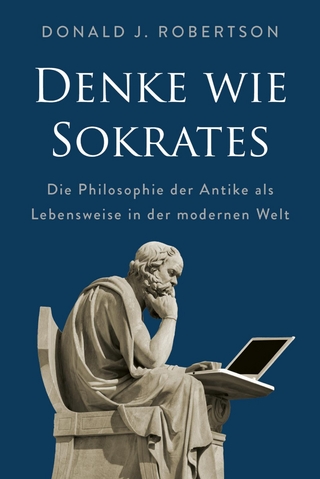
Die Philosophie der Antike als Lebensweise in der modernen Welt
Buch | Hardcover (2025)
FinanzBuch Verlag
CHF 25,20


