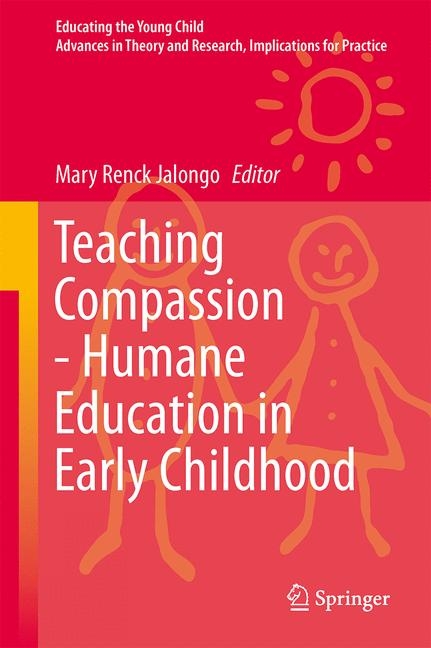
Teaching Compassion: Humane Education in Early Childhood (eBook)
XVI, 240 Seiten
Springer Netherlands (Verlag)
978-94-007-6922-9 (ISBN)
In response to highly publicized incidents of school violence, educators across the United States and in many other nations are seeking effective ways to prevent and modify aggressive and anti-social behaviors in students. One of the major recommendations of the research is that efforts to prevent cruelty need to begin early, during the early childhood years of birth through age eight.
The focus of Teaching Compassion: Humane Education in Early Childhood is guiding young children to accept responsibility for and to be kind in their interactions with fellow human beings, animals and the environment. Although humane education is a relatively new concept in the field of early childhood education, professionals in the field are very familiar with many of the related concepts, including: promoting positive interpersonal interactions, teaching children the skills of self-regulation, giving children experience in caring for living things and protecting the environment. This edited volume is an interdisciplinary compendium of professional wisdom gathered from experts in the fields of education, child development, science, psychology, sociology and humane organizations. As the book amply documents, the concept of humane education is powerful, integrative, timely and appropriate in work with young children.
Teaching Compassion: Humane Education in Early Childhood shows how it is possible for adults dedicated to the care and education of young children to balance attention to the cognitive and affective realms and, in so doing, to elevate the overall quality of early childhood programs for children, families and communities.
In response to highly publicized incidents of school violence, educators across the United States and in many other nations are seeking effective ways to prevent and modify aggressive and anti-social behaviors in students. One of the major recommendations of the research is that efforts to prevent cruelty need to begin early, during the early childhood years of birth through age eight. The focus of Teaching Compassion: Humane Education in Early Childhood is guiding young children to accept responsibility for and to be kind in their interactions with fellow human beings, animals and the environment. Although humane education is a relatively new concept in the field of early childhood education, professionals in the field are very familiar with many of the related concepts, including: promoting positive interpersonal interactions, teaching children the skills of self-regulation, giving children experience in caring for living things and protecting the environment. This edited volume is an interdisciplinary compendium of professional wisdom gathered from experts in the fields of education, child development, science, psychology, sociology and humane organizations. As the book amply documents, the concept of humane education is powerful, integrative, timely and appropriate in work with young children.Teaching Compassion: Humane Education in Early Childhood shows how it is possible for adults dedicated to the care and education of young children to balance attention to the cognitive and affective realms and, in so doing, to elevate the overall quality of early childhood programs for children, families and communities.
Foreword; Mary Rivkin.- Part One: Foundations of Humane Education.- Editor’s Introduction.- 1. Humane Education and the Development of Empathy in Early Childhood: Definition, Rationale and Outcomes; Mary Renck Jalongo.- 2. Short-Term Interventions that Accomplish Humane Education Goals: An International Review of the Research; Virginio Aguirre and Agustín Orihuela.- 3. Using Interactions between Children and Companion Animals to Build Skill in Self-Regulation and Emotional Regulation; Wanda Boyer.- 4. Teaching Preservice Early Childhood Educators about Humane Education; Tunde Szecsi.- 5. Humane Education and Education for Sustainable Development: Educational Initiatives with Common Goals; Nicole B. Stants.- Part Two: Homes and Communities.- 6. Animals in the Family: Antecedents of Compassion and Violence; Marjorie L. Stanek.- 7. Including Animals in Play Therapy for Young Children and Families; Risë VanFleet.- 8. Foundational Humane Education: Love of Nature and Affinity for Animals; Nancy Bires.- 9. Collaborating to Create Community Disaster Plans That Save Human and Animal Lives; Holly Travis.- Part Three: Humane Education in the Early Childhood Curriculum and Beyond.- 10. The Role of Therapy Animals in Promoting Humane Education Concepts; Lori Friesen.- 11. Beyond Words—Using Language and Literature to Teach Compassion for Others; Patricia A. Crawford.- 12. Initiatives of Intermountain Therapy Animals, Inc. that Promote Humane Education; Kathy Klotz.- 13. Guardians of the Earth: Teaching Children to Care for All Living Things; Audrey Rule and Ksenia S. Zhbanova.- 14. Humane Education in the Early Childhood Science Curriculum; Amanda K. Onion.- Epilogue: The Promise of Humane Education in the Early Years; Zoe Weil.
| Erscheint lt. Verlag | 23.7.2013 |
|---|---|
| Reihe/Serie | Educating the Young Child | Educating the Young Child |
| Zusatzinfo | XVI, 240 p. |
| Verlagsort | Dordrecht |
| Sprache | englisch |
| Themenwelt | Geisteswissenschaften ► Psychologie ► Pädagogische Psychologie |
| Sozialwissenschaften ► Pädagogik ► Bildungstheorie | |
| Sozialwissenschaften ► Pädagogik ► Vorschulpädagogik | |
| Sozialwissenschaften ► Politik / Verwaltung | |
| Schlagworte | animals in play therapy for young children • Early childhood education • early childhood science curriculum • Environmental education • humane education in • humane education in the early years • interactions between children and companion animals • Learning and Instruction • role of therapy animals • science education • self-regulation and emotional regulation • Socio-emotional development • sustainable development |
| ISBN-10 | 94-007-6922-9 / 9400769229 |
| ISBN-13 | 978-94-007-6922-9 / 9789400769229 |
| Informationen gemäß Produktsicherheitsverordnung (GPSR) | |
| Haben Sie eine Frage zum Produkt? |
 PDF (Wasserzeichen)
DRM: Digitales Wasserzeichen
Dieses eBook enthält ein digitales Wasserzeichen und ist damit für Sie personalisiert. Bei einer missbräuchlichen Weitergabe des eBooks an Dritte ist eine Rückverfolgung an die Quelle möglich.
Dateiformat: PDF (Portable Document Format)
Mit einem festen Seitenlayout eignet sich die PDF besonders für Fachbücher mit Spalten, Tabellen und Abbildungen. Eine PDF kann auf fast allen Geräten angezeigt werden, ist aber für kleine Displays (Smartphone, eReader) nur eingeschränkt geeignet.
Systemvoraussetzungen:
PC/Mac: Mit einem PC oder Mac können Sie dieses eBook lesen. Sie benötigen dafür einen PDF-Viewer - z.B. den Adobe Reader oder Adobe Digital Editions.
eReader: Dieses eBook kann mit (fast) allen eBook-Readern gelesen werden. Mit dem amazon-Kindle ist es aber nicht kompatibel.
Smartphone/Tablet: Egal ob Apple oder Android, dieses eBook können Sie lesen. Sie benötigen dafür einen PDF-Viewer - z.B. die kostenlose Adobe Digital Editions-App.
Buying eBooks from abroad
For tax law reasons we can sell eBooks just within Germany and Switzerland. Regrettably we cannot fulfill eBook-orders from other countries.
aus dem Bereich