


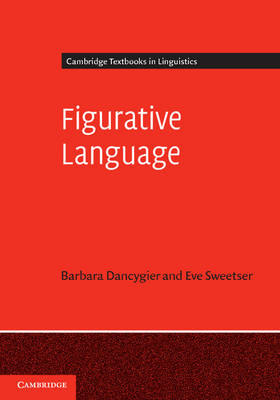
Figurative Language
Seiten
2014
Cambridge University Press (Verlag)
978-1-107-00595-2 (ISBN)
Cambridge University Press (Verlag)
978-1-107-00595-2 (ISBN)
This lively introduction to figurative language develops new analytical tools and proposes a cohesive view of a broad range of concepts, including metaphor, metonymy, simile, and irony. Comprehensive and practical, the book provides definitions of major concepts, offers in-depth analysis of examples and surveys figurative structures in different discourse genres.
This lively introduction to figurative language explains a broad range of concepts, including metaphor, metonymy, simile, and blending, and develops new tools for analyzing them. It coherently grounds the linguistic understanding of these concepts in basic cognitive mechanisms such as categorization, frames, mental spaces, and viewpoint; and it fits them into a consistent framework which is applied to cross-linguistic data and also to figurative structures in gesture and the visual arts. Comprehensive and practical, the book includes analyses of figurative uses of both word meanings and linguistic constructions. • Provides definitions of major concepts • Offers in-depth analyses of examples, exploring multiple levels of complexity • Surveys figurative structures in different discourse genres • Helps students to connect figurative usage with the conceptual underpinnings of language • Goes beyond English to explore cross-linguistic and cross-modal data
This lively introduction to figurative language explains a broad range of concepts, including metaphor, metonymy, simile, and blending, and develops new tools for analyzing them. It coherently grounds the linguistic understanding of these concepts in basic cognitive mechanisms such as categorization, frames, mental spaces, and viewpoint; and it fits them into a consistent framework which is applied to cross-linguistic data and also to figurative structures in gesture and the visual arts. Comprehensive and practical, the book includes analyses of figurative uses of both word meanings and linguistic constructions. • Provides definitions of major concepts • Offers in-depth analyses of examples, exploring multiple levels of complexity • Surveys figurative structures in different discourse genres • Helps students to connect figurative usage with the conceptual underpinnings of language • Goes beyond English to explore cross-linguistic and cross-modal data
Barbara Dancygier is Professor in the Department of English at the University of British Columbia. Eve Sweetser is Professor in the Department of Linguistics at the University of California, Berkeley.
1. Introduction; 2. The basics of metaphor; 3. Metaphoric structure: levels and relations; 4. Mental spaces and blending; 5. Metonymy; 6. Grammatical constructions and figurative meaning; 7. The cross-linguistic study of metaphor; 8. Figurative language in discourse; 9. Concluding remarks.
| Erscheint lt. Verlag | 6.3.2014 |
|---|---|
| Reihe/Serie | Cambridge Textbooks in Linguistics |
| Zusatzinfo | 8 Tables, black and white; 1 Halftones, unspecified; 5 Line drawings, unspecified |
| Verlagsort | Cambridge |
| Sprache | englisch |
| Maße | 170 x 249 mm |
| Gewicht | 620 g |
| Themenwelt | Geisteswissenschaften ► Psychologie ► Allgemeine Psychologie |
| Geisteswissenschaften ► Psychologie ► Verhaltenstherapie | |
| Geisteswissenschaften ► Sprach- / Literaturwissenschaft ► Sprachwissenschaft | |
| ISBN-10 | 1-107-00595-7 / 1107005957 |
| ISBN-13 | 978-1-107-00595-2 / 9781107005952 |
| Zustand | Neuware |
| Informationen gemäß Produktsicherheitsverordnung (GPSR) | |
| Haben Sie eine Frage zum Produkt? |
Mehr entdecken
aus dem Bereich

aus dem Bereich
Paket bestehend aus »Das Patienten-Manual« und »Das Trainer-Manual«
Buch | Softcover (2025)
Schattauer (Verlag)
CHF 125,95


