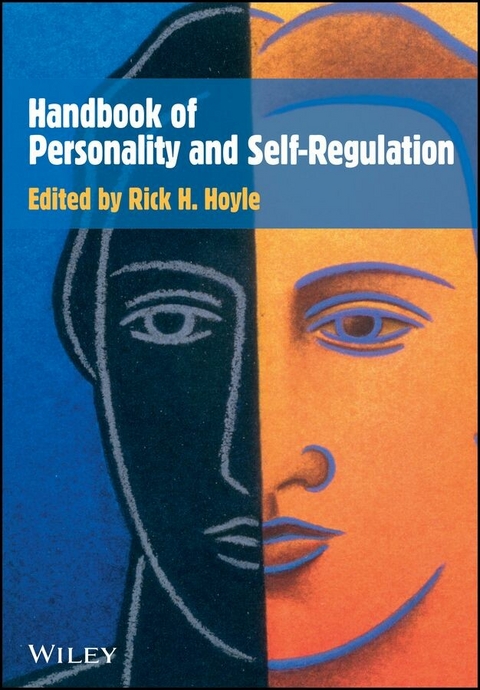
Handbook of Personality and Self-Regulation (eBook)
John Wiley & Sons (Verlag)
978-1-4443-1812-8 (ISBN)
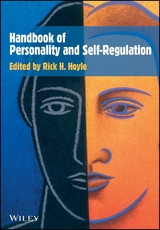
- Examines self-regulation as it influences and is influenced by basic personality processes in normal adults
- Offers 21 original contributions from an internationally respected group of scholars in the fields of personality and self-regulation
- Explores the causes and consequences of inadequate self-regulation and the means by which self-regulation might be improved
- Integrates empirical findings on basic personality traits with findings inspired by emerging models of self-regulation
- Provides a comprehensive, up-to-date, and stimulating view of the field for students and researchers in a wide range of disciplines
Rick H. Hoyle, PhD, is Professor of Psychology and Neuroscience at Duke University. He is a Fellow of the American Psychological Association (Divisions 5, Evaluation, Measurement, and Statistics, and 9, Society for the Psychological Study of Social Issues) and a Fellow and Charter Member of the Association for Psychological Science. Dr. Hoyle has served as Associate Editor of the Journal of Personality and Social Psychology, Journal of Personality, and Self and Identity and Editor of Journal of Social Issues. Among his book projects are, Selfhood: Identity, Esteem, Regulation (co-authored with Michael Kernis, Mark Leary, and Mark Baldwin) and the Handbook of Individual Differences in Social Behavior (co-edited with Mark Leary).
The Handbook of Personality and Self-Regulation integrates scholarly research on self-regulation in the personality, developmental, and social psychology traditions for a broad audience of social and behavioral scientists interested in the processes by which people control, or fail to control, their own behavior. Examines self-regulation as it influences and is influenced by basic personality processes in normal adults Offers 21 original contributions from an internationally respected group of scholars in the fields of personality and self-regulation Explores the causes and consequences of inadequate self-regulation and the means by which self-regulation might be improved Integrates empirical findings on basic personality traits with findings inspired by emerging models of self-regulation Provides a comprehensive, up-to-date, and stimulating view of the field for students and researchers in a wide range of disciplines
Rick H. Hoyle, PhD, is Professor of Psychology and Neuroscience at Duke University. He is a Fellow of the American Psychological Association (Divisions 5, Evaluation, Measurement, and Statistics, and 9, Society for the Psychological Study of Social Issues) and a Fellow and Charter Member of the Association for Psychological Science. Dr. Hoyle has served as Associate Editor of the Journal of Personality and Social Psychology, Journal of Personality, and Self and Identity and Editor of Journal of Social Issues. Among his book projects are, Selfhood: Identity, Esteem, Regulation (co-authored with Michael Kernis, Mark Leary, and Mark Baldwin) and the Handbook of Individual Differences in Social Behavior (co-edited with Mark Leary).
About the Editor viii
List of Contributors ix
Preface xii
1 Personality and Self-Regulation 1
Rick H. Hoyle
Part I Temperament and Early Personality 19
2 Relations of Self-Regulatory/Control Capacities to
Maladjustment, Social Competence, and Emotionality 21
Nancy Eisenberg, Natalie D. Eggum, Julie Sallquist, and Alison
Edwards
3 Delay of Gratification: A Review of Fifty Years of Regulation
Research 47
Renée M. Tobin and William G. Graziano
4 Self-Regulation as the Interface of Emotional and Cognitive
Development: Implications for Education and Academic Achievement
64
Clancy Blair, Susan Calkins, and Lisa Kopp
5 Exploring Response Monitoring: Developmental Differences and
Contributions to Self-Regulation 91
Jennifer M. McDermott and Nathan A. Fox
Part II Personality Processes 115
6 Self-Regulation Processes and Their Signatures: Dynamics of
the Self-System 117
Carolyn C. Morf and Stephan Horvath
7 Self-Regulation and the Five-Factor Model of Personality
Traits 145
Robert R. McCrae and Corinna E. Löckenhoff
8 Self-Determination Theory and the Relation of Autonomy to
Self-Regulatory Processes and Personality Development 169
Christopher P. Niemiec, Richard M. Ryan, and Edward L.
Deci
9 Interest and Self-Regulation: Understanding Individual
Variability in Choices, Efforts, and Persistence Over Time
192
Carol Sansone, Dustin B. Thoman, and Jessi L. Smith
10 Goal Systems and Self-Regulation: An Individual Differences
Perspective 218
Paul Karoly
11 Acting on Limited Resources: The Interactive Effects of
Self-Regulatory Depletion and Individual Differences 243
C. Nathan DeWall, Roy F. Baumeister, David R. Schurtz, and
Matthew T. Gailliot
Part III Individual Differences 263
12 Working Memory Capacity and Self-Regulation 265
Malgorzata Ilkowska and Randall W. Engle
13 Regulatory Focus in a Demanding World 291
Abigail A. Scholer and E. Tory Higgins
14 Self-Efficacy 315
James E. Maddux and Jeffrey Volkmann
15 Dealing with High Demands: The Role of Action Versus State
Orientation 332
Nils B. Jostmann and Sander L. Koole
16 The Cybernetic Process Model of Self-Control: Situation- and
Person-Specific Considerations 353
Eran Magen and James J. Gross
17 Modes of Self-Regulation: Assessment and Locomotion as
Independent Determinants in Goal Pursuit 375
Arie W. Kruglanski, Edward Orehek, E. Tory Higgins, Antonio
Pierro, and Idit Shalev
18 The Costly Pursuit of Self-Esteem: Implications for
Self-Regulation 403
Jennifer Crocker, Scott Moeller, and Aleah Burson
19 Self-Regulation of State Self-Esteem Following Threat:
Moderation by Trait Self-Esteem 430
Michelle R. vanDellen, Erin K. Bradfield, and Rick H.
Hoyle
20 Individual Differences in Approach and Avoidance: Behavioral
Activation /Inhibition and Regulatory Focus as Distinct Levels of
Analysis 447
Timothy J. Strauman and Wilkie A. Wilson
21 Hypo-egoic Self-Regulation 474
Mark R. Leary, Claire E. Adams, and Eleanor B. Tate
Author Index 498
Subject Index 524
"This handbook serves as a significant tool for those seeking to understand the complexities of self-regulation. Hoyle (Duke Univ.) has brought together an impressive contingent of authors and developed a work that balances theoretical foundations and practical applications. The contributors do a masterful job of integrating what have often seemed disparate findings in the self-regulation literature...Those working with individuals who have self-regulatory issues are likely to find this volume particularly useful. Summing Up: Highly recommended." (Choice, 1 May 2011)
"Rick H. Hoyle has used the study of self-regulation to draw
together exciting findings from the usually disparate areas of
information processing, temperament/personality, developmental and
social psychology. Psychologists from these areas will add breadth
and integration to their models of self-regulation, and clinical
psychologists will greatly benefit from reading this book."
--Mary K. Rothbart, Distinguished Professor of
Psychology Emerita, University of Oregon
"Failure to self-regulate is associated with personal and
societal costs (e.g., obesity, alcohol consumption, excessive
lending or borrowing, and high-risk investments). Zeal in
self-regulating can also be maladaptive, as it is associated with
inhibition of emotional expression and authentic behavior. Twenty
one chapters from front-line experts offer thoughtful analyses of
temperamental and personality substrates of self-regulation along
with their interplay with social behavior. This book promises to be
an indispensable resource for researchers and practitioners, as
well as both graduate and advanced undergraduate students."
--Constantine Sedikides, University of Southampton
| Erscheint lt. Verlag | 15.12.2009 |
|---|---|
| Sprache | englisch |
| Themenwelt | Geisteswissenschaften ► Psychologie ► Persönlichkeitsstörungen |
| Geisteswissenschaften ► Psychologie ► Psychoanalyse / Tiefenpsychologie | |
| Schlagworte | Developmental Psychology • Emotion • Entwicklungspsychologie • Identity • Individual differences • Persönlichkeitspsychologie • Persönlichkeit u. individuelle Unterschiede • Personality • Personality & Individual Differences • Persönlichkeitspsychologie • Persönlichkeit u. individuelle Unterschiede • Psychologie • Psychology • psychosocial • self control • Self regulation • Sozialpsychologie |
| ISBN-10 | 1-4443-1812-8 / 1444318128 |
| ISBN-13 | 978-1-4443-1812-8 / 9781444318128 |
| Informationen gemäß Produktsicherheitsverordnung (GPSR) | |
| Haben Sie eine Frage zum Produkt? |
 PDF (Adobe DRM)
Kopierschutz: Adobe-DRM
Adobe-DRM ist ein Kopierschutz, der das eBook vor Mißbrauch schützen soll. Dabei wird das eBook bereits beim Download auf Ihre persönliche Adobe-ID autorisiert. Lesen können Sie das eBook dann nur auf den Geräten, welche ebenfalls auf Ihre Adobe-ID registriert sind.
Details zum Adobe-DRM
Dateiformat: PDF (Portable Document Format)
Mit einem festen Seitenlayout eignet sich die PDF besonders für Fachbücher mit Spalten, Tabellen und Abbildungen. Eine PDF kann auf fast allen Geräten angezeigt werden, ist aber für kleine Displays (Smartphone, eReader) nur eingeschränkt geeignet.
Systemvoraussetzungen:
PC/Mac: Mit einem PC oder Mac können Sie dieses eBook lesen. Sie benötigen eine
eReader: Dieses eBook kann mit (fast) allen eBook-Readern gelesen werden. Mit dem amazon-Kindle ist es aber nicht kompatibel.
Smartphone/Tablet: Egal ob Apple oder Android, dieses eBook können Sie lesen. Sie benötigen eine
Geräteliste und zusätzliche Hinweise
Buying eBooks from abroad
For tax law reasons we can sell eBooks just within Germany and Switzerland. Regrettably we cannot fulfill eBook-orders from other countries.
aus dem Bereich