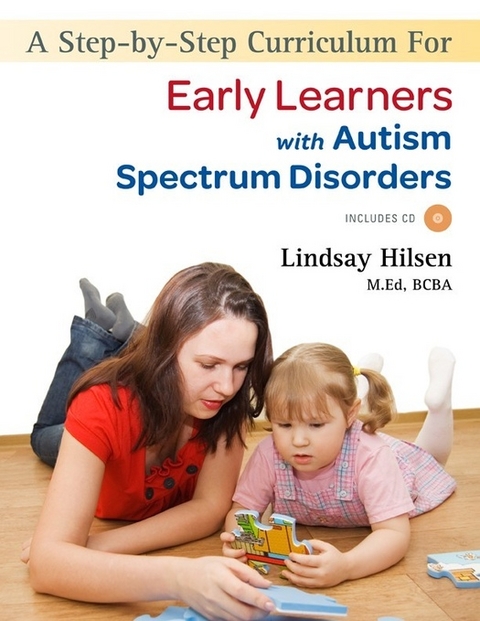
A Step-by-Step Curriculum for Early Learners with Autism Spectrum Disorders (eBook)
416 Seiten
Jessica Kingsley Publishers (Verlag)
978-0-85700-546-5 (ISBN)
Applied Behavior Analysis (ABA) is recognized as one of the most effective ways to teach children with autism and studies have shown that the earlier the interventions take place the more likely they are to have a profound, positive impact on a child's later development.Using the latest research into best practice for children with autism, this curriculum gives a clear outline on what to teach and how to teach it utilizing the principles of ABA. The book is divided up into three sections, each with built-in data collection, and features a CD with all the material in the book so you can print off the section you are working on. The Assessment section allows you to initially measure the child's level of learning and then track their progress over time. The Curriculum section covers nearly ninety crucial steps in a child's development spread over twelve chapters that each focus on a different pivotal area, such as 'Motor', 'Expressive' and 'Academic' Programs. These are broken down into simple tasks that can be taught and monitored easily. The final Mastered section guarantees that progress can be maintained by checking that learnt skills continue to be retained. Generalization assessment is included throughout to make sure the child has adapted to using the skills in a variety of settings.This book will equip teachers, therapists and parents with a thorough and comprehensive program to help ensure the young learners in their care are achieving developmental goals and are able to reach their full potential as they grow.
Lindsay Hilsen is a Board Certified Behavior Analyst who has dedicated her career to working with children on the Autism Spectrum. She is a qualified elementary level and special education teacher with master's degrees in both special education and education. She has worked as an ABA teacher and is currently the Autism Clinical Educator for Sunny Days Early Childhood Developmental Services, New Jersey. Lindsay is a frequent presenter and lecturer on Autism and ABA topics. She lives in Monroe Township, New Jersey with her husband and daughter.
Dedication Page. Acknowledgements. Introduction. About the Author. 1. ASSESSMENT. 1.1. Choosing programs to work on. 1.2. Assessment Directions. 1.3. Total Percentages.1.4. Assessment Section Example. 1.5. Quiet Hands. 1.6. Attending.1.7. Responds to Name. 1.8. Eye Contact. 1.9. Pointing Program. 1.10. Responds to Various Directions to Identify an Object/Picture/Item. 1.11. Wait Program.1.12. Transition. 1.13. Desensitization to Touch. 1.14. Desensitization to the Dentist. 1.15. Desensitization to the Doctor's Office. 1.16. Desensitization to Getting Haircuts. 1.17. Clean Up.1.18. Gross Motor Imitation. 1.19. Motor Imitation. 1.20. Fine Motor Imitation. 1.21. Oral Motor Imitation. 1.22. Color Between the Lines. 1.23. Copy Straight Lines. 1.24. One Step Direction. 1.25. Two Step Directions. 1.26. Receptive Identification of Pictures. 1.27. Receptive Identification of Objects. 1.28. Receptive Identification of Body Parts. 1.29. Receptive Identification of Articles of Clothing. 1.30. Receptive Identification of Familiar People. 1.31. Receptive Identification of Emotions. 1.32. Receptive Identification of Community Helpers. 1.33. Receptive Identification of Environmental Sounds. 1.34. Expressive Identification of Pictures. 1.35. Expressive Identification of Objects. 1.36. Expressive Identification of Body Parts. 1.37. Expressive Identification of Articles of Clothing. 1.38. Expressive Identification of Familiar People. 1.39. Expressive Identification of Emotions. 1.40. Expressive Identification of Community Helpers. 1.41. Expressive Identification of Environmental Sounds. 1.42. Receptive Identification of Actions. 1.43. Expressive Identification of Actions. 1.44. Imitates Actions of Others. 1.45. Imitation of Two Step Actions. 1.46. Pretends to do an Action. 1.47. Point to Communicate. 1.48. Yes/No. 1.49. Manding. 1.50. Requests with Eye Contact. 1.51. Gets Attention of Others. 1.52. Says Bye. 1.53. Says Hi. 1.54. Imitation of Sounds. 1.55. Uses different words to request. 1.56. Common Animal Intraverbals. 1.57. Common Intraverbals. 1.58. Daily Activity Intraverbals. 1.59. Social Questions. 1.60. Puzzle. 1.61. Shape Sorter. 1.62. Plays By Self. 1.63. Various Methods of Play. 1.64. Ball Play. 1.65. Plays with Indoor Toys. 1. 66. Outdoor Play. 1.67. Uses Language While Playing. 1.68. Sings Songs. 1.69. Games. 1.70. Pretend Play. 1.71. Drinks from a Cup. 1.72. Uses a Spoon. 1.73. Uses a Fork. 1.74. Getting Dressed: Shoes. 1.75. Getting Dressed: Pants. 1.76. Getting Dressed: Shirt. 1.77. Wash Hands. 1.78. Dry Hands. 1.79. Match Identical Picture to Picture. 1.80. Match Identical Object to Object. 1.81. Match Object to Picture. 1.82. Sort Identical Items. 1.83. Sort Non-Identical Items. 1.84. Receptive Identification of Colors. 1.85. Expressive Identification of Colors. 1.86. Receptive Identification of Shapes. 1.87. Expressive Identification of Shapes. 1.88. Receptive Identification of Upper Case Letters. 1.89. Receptive Identification of Lower Case Letters. 1.90. Expressive Identification of Upper Case Letters. 1. 91. Expressive Identification of Lower Case Letters. 1.92. Rote Count. 1.93. Count Objects. 1.94. Receptive Identification of Numbers. 1.95. Expressive Identification of Numbers. 2. CURRICULUM. 2.1. Curriculum Directions. 2.2. Curriculum Section Example. 2.3. BASIC PROGRAMS. 2.3.1. Quiet Hands. 2.3.2. Attending. 2.3.3. Responds to Name. 2.3.4. Eye Contact. 2.3.5. Pointing Program. 2.3.6. Responds to Various Directions to Identify An Object/Picture/Item. 2.4. BEHAVIOR PROGRAMS. 2.4.1. Wait Program. 2.4.2. Transition. 2.4.3. Desensitization to Touch. 2.4.4. Desensitization to the Dentist. 2.4.5. Desensitization to the Doctor's Office. 2.4.6. Desensitization to Getting Haircuts. 2.4.7. Clean Up. 2.5. MOTOR PROGRAMS. 2.5.1. Gross Motor Imitation. 2.5.2. Motor Imitation. 2.5.3. Fine Motor Imitation. 2.5.4. Oral Motor Imitation. 2.5.5. Color Between the Lines. 2.5.6. Copy Straight Lines. 2.6. RECEPTIVE PROGRAMS. 2.6.1. One Step Direction. 2.6.2. Two Step Directions. 2.6.3. Receptive Identification of Pictures. 2.6.4. Receptive Identification of Objects. 2.6.5. Receptive Identification of Body Parts. 2.6.6. Receptive Identification of Articles of Clothing. 2.6.7. Receptive Identification of Familiar People. 2.6.8. Receptive Identification of Emotions. 2.6.9. Receptive Identification of Community Helpers. 2.6.10. Receptive Identification of Environmental Sounds. 2.7. EXPRESSIVE PROGRAMS. 2.7.1. Expressive Identification of Pictures. 2.7.2. Expressive Identification of Objects. 2.7.3. Expressive Identification of Body Parts. 2.7.4. Expressive Identification of Articles of Clothing. 2.7.5. Expressive Identification of Familiar People. 2.7.6. Expressive Identification of Emotions. 2.7.7. Expressive Identification of Community Helpers. 2.7.8. Expressive Identification of Environmental Sounds. 2.8. ACTION PROGRAMS. 2.8.1. Receptive Identification of Actions. 2.8.2. Expressive Identification of Actions. 2.8.3. Imitates Actions of Others. 2.8.4. Imitation of Two Step Actions. 2.8.5. Pretends To Do an Action. 2.9. COMMUNICATION PROGRAMS. 2.9.1. Point to Communicate. 2.9.2. Yes/No. 2.9.3. Manding. 2.9.4. Requests with Eye Contact. 2.9.5. Gets Attention of Others. 2.9.6. Says Bye. 2.9.7. Says Hi. 2.9.8. Imitation of Sounds. 2.9.9. Uses different words to request. 2.10. INTRAVERBAL PROGRAMS. 2.10.1. Common Animal Intraverbals. 2.10.2. Common Intraverbals. 2.10.3. Daily Activity Intraverbals. 2.10.4. Social Questions. 2.11. PLAY PROGRAMS. 2.11.1. Puzzle. 2.11.2. Shape Sorter. 2.11.3. Plays by Self. 2.11.4. Various Methods of Play. 2.11.5. Ball Play. 2.11.6. Plays with Indoor Toys. 2.11.7. Outdoor Play. 2.11.8. Uses Language While Playing. 2.11.9. Sings Songs. 2.11.10. Games. 2.11.11. Pretend Play. 2.12. SELF HELP PROGRAMS. 2.12.1. Drinks from a Cup. 2.12.2. Uses a Spoon. 2.12.3. Uses a Fork. 2.12.4. Getting Dressed: Shoes. 2.12.5. Getting Dressed: Pants. 2.12.6. Getting Dressed: Shirt. 2.12.7. Wash Hands. 2.12.8. Dry Hands. 2.13. SORT/MATCH PROGRAMS. 2.13.1. Match Identical Picture to Picture. 2.13.2. Match Identical Object to Object. 2.13.3. Match Object to Picture. 2.13.4. Sort Identical Items. 2.13.5. Sort Non-Identical Items. 2.14. ACADEMIC PROGRAMS. 2.14.1. Receptive Identification of Colors. 2.14.2. Expressive Identification of Colors. 2.14.3. Receptive Identification of Shapes. 2.14.4. Expressive Identification of Shapes. 2.14.5. Receptive Identification of Letters. 2.14.6. Expressive Identification of Letters. 2.14.7. Rote Count. 2.14.8. Count Objects. 2.14.9. Receptive Identification of Numbers. 2.14.10. Expressive Identification of Numbers. 3. Mastered Programs. 3.1. Mastered Programs Directions. 3.2. Mastered Section Example. 3.3. Quiet Hands. 3.4. Attending. 3.5. Responds to Name. 3.6. Eye Contact. 3.7. Pointing Program. 3.8. Responds to Various Directions to Identify an Object/Picture/Item. 3.9. Wait Program. 3.10. Transition. 3.11. Desensitization to Touch. 3.12. Desensitization to the Dentist. 3.13. Desensitization to the Doctor's Office. 3.14. Desensitization to Getting Haircuts. 3.15. Clean Up. 3.16. Gross Motor Imitation. 3.17. Motor Imitation. 3.18. Fine Motor Imitation. 3.19. Oral Motor Imitation. 3.20. Color Between the Lines. 3.21. Copy Straight Lines. 3.22. One Step Direction. 3.23. Two Step Directions. 3.24. Receptive Identification of Pictures. 3.25. Receptive Identification of Objects. 3.26. Receptive Identification of Body Parts. 3.27. Receptive Identification of Articles of Clothing. 3.28. Receptive Identification of Familiar People. 3.29. Receptive Identification of Emotions. 3.30. Receptive Identification of Community Helpers. 3.31. Receptive Identification of Environmental Sounds. 3.32. Expressive Identification of Pictures. 3.33. Expressive Identification of Objects. 3.34. Expressive Identification of Body Parts. 3.35. Expressive Identification of Articles of Clothing. 3.36. Expressive Identification of Familiar People. 3.37. Expressive Identification of Emotions. 3.38. Expressive Identification of Community Helpers. 3.39. Expressive Identification of Environmental Sounds. 3.40. Receptive Identification of Actions. 3.41. Expressive Identification of Actions. 3.42. Imitates Actions of Others. 3.43. Imitation of Two Step Actions. 3.44. Pretends to do an Action. 3.45. Point to Communicate. 3.46. Yes/No. 3.47. Manding. 3.48. Requests with Eye Contact. 3.49. Gets Attention of Others. 3.50. Says Bye. 3.51. Says Hi. 3.52. Imitation of Sounds. 3.53. Uses different words to request. 3.54. Common Animal Intraverbals. 3.55. Common Intraverbals. 3.56. Daily Activity Intraverbals. 3.57. Social Questions. 3.58. Puzzle. 3.59. Shape Sorter. 3.60. Plays By Self. 3.61. Various Methods of Play. 3.62. Ball Play. 3.63. Plays with Indoor Toys. 3.64. Outdoor Play. 3.65. Uses Language While Playing. 3.66. Sings Songs. 3.67. Games. 3.68. Pretend Play. 3.69. Drinks from a Cup. 3.70. Uses a Spoon. 3.71. Uses a Fork. 3. 72. Getting Dressed: Shoes. 3.73. Getting Dressed: Pants. 3.74. Getting Dressed: Shirt. 3. 75. Wash Hands. 3.76. Dry Hands. 3.77. Match Identical Picture to Picture. 3.78. Match Identical Object to Object. 3.79. Match Object to Picture. 3.80. Sort Identical Items. 3.81. Sort Non-Identical Items. 3.82. Receptive Identification of Colors. 3.83. Expressive Identification of Colors. 3.84. Receptive Identification of Shapes. 3.85. Expressive Identification of Shapes. 3.86. Receptive Identification of Upper Case Letters. 3.87. Receptive Identification of Lower Case Letters. 3.88. Expressive Identification of Upper Case Letters. 3.89. Expressive Identification of Lower Case Letters. 3.90. Rote Count. 3. 91. Count Objects. 3.92. Receptive Identification of Numbers. 3.93. Expressive Identification of Numbers. 4. References.
| Erscheint lt. Verlag | 15.11.2011 |
|---|---|
| Verlagsort | London |
| Sprache | englisch |
| Maße | 140 x 140 mm |
| Themenwelt | Geisteswissenschaften ► Psychologie ► Persönlichkeitsstörungen |
| Sozialwissenschaften ► Pädagogik ► Sonder-, Heil- und Förderpädagogik | |
| Sozialwissenschaften ► Pädagogik ► Vorschulpädagogik | |
| Schlagworte | aba • Programme • Teach |
| ISBN-10 | 0-85700-546-4 / 0857005464 |
| ISBN-13 | 978-0-85700-546-5 / 9780857005465 |
| Informationen gemäß Produktsicherheitsverordnung (GPSR) | |
| Haben Sie eine Frage zum Produkt? |
 PDF (Adobe DRM)
Kopierschutz: Adobe-DRM
Adobe-DRM ist ein Kopierschutz, der das eBook vor Mißbrauch schützen soll. Dabei wird das eBook bereits beim Download auf Ihre persönliche Adobe-ID autorisiert. Lesen können Sie das eBook dann nur auf den Geräten, welche ebenfalls auf Ihre Adobe-ID registriert sind.
Details zum Adobe-DRM
Dateiformat: PDF (Portable Document Format)
Mit einem festen Seitenlayout eignet sich die PDF besonders für Fachbücher mit Spalten, Tabellen und Abbildungen. Eine PDF kann auf fast allen Geräten angezeigt werden, ist aber für kleine Displays (Smartphone, eReader) nur eingeschränkt geeignet.
Systemvoraussetzungen:
PC/Mac: Mit einem PC oder Mac können Sie dieses eBook lesen. Sie benötigen eine
eReader: Dieses eBook kann mit (fast) allen eBook-Readern gelesen werden. Mit dem amazon-Kindle ist es aber nicht kompatibel.
Smartphone/Tablet: Egal ob Apple oder Android, dieses eBook können Sie lesen. Sie benötigen eine
Geräteliste und zusätzliche Hinweise
Buying eBooks from abroad
For tax law reasons we can sell eBooks just within Germany and Switzerland. Regrettably we cannot fulfill eBook-orders from other countries.
aus dem Bereich