
- Focuses on the concept of the sublime as it clarifies Schopenhauer's aesthetic theory, moral theory and asceticism
- Explores the substantial relationships between Schopenhauer's philosophy and Buddhism, Hinduism, and Christianity
- Defends Schopenhauer's position that absolute truth can be known and described as a blindly striving, all-permeating, universal 'Will'
- Examines the influence of Asian philosophy on Schopenhauer
- Describes the relationships between Schopenhauer's thought and that of Hegel, Nietzsche, and Wittgenstein.
Robert Wicks is Associate Professor of Philosophy at the University of Auckland. He is the author of Modern French Philosophy: From Existentialism to Postmodernism (2003), Nietzsche (2002), and Hegel's Theory of Aesthetic Judgment (1994). He is also the author of the Stanford Encyclopedia of Philosophy entry on Schopenhauer.
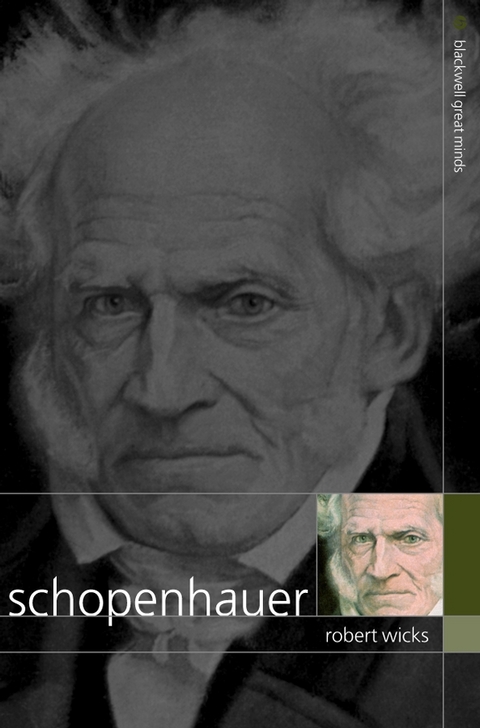
This innovative volume presents an insightful philosophical portrait of the life and work of Arthur Schopenhauer. Focuses on the concept of the sublime as it clarifies Schopenhauer s aesthetic theory, moral theory and asceticism Explores the substantial relationships between Schopenhauer s philosophy and Buddhism, Hinduism, and Christianity Defends Schopenhauer s position that absolute truth can be known and described as a blindly striving, all-permeating, universal Will Examines the influence of Asian philosophy on Schopenhauer Describes the relationships between Schopenhauer s thought and that of Hegel, Nietzsche, and Wittgenstein.
Robert Wicks is Associate Professor of Philosophy at the University of Auckland. He is the author of Modern French Philosophy: From Existentialism to Postmodernism (2003), Nietzsche (2002), and Hegel's Theory of Aesthetic Judgment (1994). He is also the author of the Stanford Encyclopedia of Philosophy entry on Schopenhauer.
Preface.
Acknowledgments.
Abbreviations.
Chapter One: The Philosophy of a Nonconformist (1788-1860).
I. The Unsettled Years: 1788-1831.
II. The Stable Years: 1833-1860.
Part I: Schopenhauer's Theoretical Philosophy.
Chapter Two: Historical Background.
I. Mind-Dependent Qualities versus Mind-Independent
Qualities.
II. Space and Time.
Chapter Three: The Principle of Sufficient Reason.
I. The Root of All Explanation.
II. The Four Basic Forms of Explanation.
Chapter Four: Schopenhauer's Idealism and his Criticism of
Kant.
I. The Rejection of a Mind-Independent Reality.
II. Kant's Theory of Perception.
III. Kant's Use of the Term "Object".
IV. The Logic of Manifestation.
Chapter Five: The World in Itself as a Meaningless and Almighty
Will.
I. Universal Subjectivity.
II. The World as Will.
III. The Two-Tiered Objectification of the Will: Platonic Ideas
and Spatio-Temporal Individuals.
Chapter Six: Critical Interpretations of the World as Will.
I. Scientific Knowledge, Philosophical Knowledge, and Mystical
Knowledge.
II. Regular Time versus the Eternal Present.
Part II: Schopenhauer's Practical Philosophy.
Chapter Seven: Endless Suffering in the Daily World.
I. A Universal Will Without Purpose.
II. The Purposelessness of Schopenhauer's
Thing-in-Itself.
III. Life as Embittering: Schopenhauer and Buddhism.
Chapter Eight: Tranquility I: Sublimity, Genius, and Aesthetic
Experience.
I. Platonic Ideas and Aesthetic Experience.
II. Artistic Genius and the Communication Theory of Art.
III. The Hierarchy of the Visual and Verbal Arts.
IV. Tragedy and Sublimity.
V. Music and Metaphysical Experience.
Chapter Nine: Tranquility II: Christlike Virtue and Moral
Awareness.
I. Empathy as the Foundation of Moral Awareness.
II. Intelligible, Empirical, and Acquired Character.
III. Humanity's Sublime Anguish.
Chapter Ten: Tranquility III: Asceticism, Mysticism, and
Buddhism.
I. The Possibility of the Denial-of-the-Will.
II. Christian Quietism, Yogic Ecstasy, and Buddhist
Enlightenment.
III. Asceticism and Spiritual Purification.
Part III: Schopenhauer in Perspective.
Chapter Eleven: Schopenhauer, Nietzsche, and Eternal Life.
I. The Question of Life's Value.
II. Funereal Imagery and Nietzsche's Theory of
Tragedy.
III. Schopenhauer's Moral Awareness and Eternal
Recurrence.
IV. The Eternalistic Illusion of Supreme Health.
V. Nietzsche's Madness and Eternalistic Consciousness.
Chapter Twelve: Schopenhauer, Hegel, and Alienated Labor.
I. The World's Essence: Rational or Irrational?.
II. Labor, Imprisonment, and Christianity.
III. The World as Will and Representation and
"Self-Consciousness" in Hegel's.
Phenomenology.
Chapter Thirteen: Schopenhauer, Wittgenstein, and the
Unspeakable.
I. The Quest for Absolute Value.
II. What the Philosophical Investigations Cannot Say.
Conclusion: Idealism and the Will to Peace.
I. The Plausibility of Schopenhauer's Idealism.
II. The Explanatory Weakness of a Blind and Senseless Will.
III. The Prospect of Peace.
Bibliography
"Robert Wicks offers a highly accessible introduction to
Schopenhauer's philosophy, giving prominence to the central ethical
notions of tranquility and wanting less, which he compares in
illuminating fashion with Buddhism."
- Chris Janaway, University of Southampton
"Robert Wicks' Schopenhauer is a perspicacious and
perspicuous elucidation of the great pessimist's thoughts. This is
a fine work of philosophical scholarship, valuable for those
approaching Schopenhauer for the first time and for those who have
been with him for years."
- David Cartwright, University of Wisconsin-Whitewater
"Robert Wicks offers a highly accessible introduction to
Schopenhauer's philosophy, giving prominence to the central ethical
notions of tranquility and wanting less, which he compares in
illuminating fashion with Buddhism."
-Chris Janaway, University of Southampton
"Robert Wicks' Schopenhauer is a perspicacious and
perspicuous elucidation of the great pessimist's thoughts. This is
a fine work of philosophical scholarship, valuable for those
approaching Schopenhauer for the first time and for those who have
been with him for years."
-David Cartwright, University of Wisconsin-Whitewater
| Erscheint lt. Verlag | 30.4.2008 |
|---|---|
| Reihe/Serie | Blackwell Great Minds |
| Blackwell Great Minds | Blackwell Great Minds |
| Sprache | englisch |
| Themenwelt | Geisteswissenschaften ► Philosophie ► Allgemeines / Lexika |
| Geisteswissenschaften ► Philosophie ► Geschichte der Philosophie | |
| Geisteswissenschaften ► Philosophie ► Philosophie der Neuzeit | |
| Schlagworte | 19th Century Philosophy • accepted • Arthur Schopenhauers • Breaks • ConText • Continental Philosophy • cynic • Humanity • incurable • Innovative • insightful • Kontinentalphilosophie • Life • Look • Misanthrope • Obscures • oversimplification • People • Pessimist • Philosophie • Philosophie des 19. Jhd. • Philosophy • Portrait • Reputation • Robert • Schopenhauer • Volume • Wicks |
| ISBN-13 | 9780470695906 / 9780470695906 |
| Informationen gemäß Produktsicherheitsverordnung (GPSR) | |
| Haben Sie eine Frage zum Produkt? |
 PDF (Adobe DRM)
Kopierschutz: Adobe-DRM
Adobe-DRM ist ein Kopierschutz, der das eBook vor Mißbrauch schützen soll. Dabei wird das eBook bereits beim Download auf Ihre persönliche Adobe-ID autorisiert. Lesen können Sie das eBook dann nur auf den Geräten, welche ebenfalls auf Ihre Adobe-ID registriert sind.
Details zum Adobe-DRM
Dateiformat: PDF (Portable Document Format)
Mit einem festen Seitenlayout eignet sich die PDF besonders für Fachbücher mit Spalten, Tabellen und Abbildungen. Eine PDF kann auf fast allen Geräten angezeigt werden, ist aber für kleine Displays (Smartphone, eReader) nur eingeschränkt geeignet.
Systemvoraussetzungen:
PC/Mac: Mit einem PC oder Mac können Sie dieses eBook lesen. Sie benötigen eine
eReader: Dieses eBook kann mit (fast) allen eBook-Readern gelesen werden. Mit dem amazon-Kindle ist es aber nicht kompatibel.
Smartphone/Tablet: Egal ob Apple oder Android, dieses eBook können Sie lesen. Sie benötigen eine
Geräteliste und zusätzliche Hinweise
Buying eBooks from abroad
For tax law reasons we can sell eBooks just within Germany and Switzerland. Regrettably we cannot fulfill eBook-orders from other countries.
aus dem Bereich