Bipolar Disorder (eBook)
John Wiley & Sons (Verlag)
978-0-470-66126-0 (ISBN)
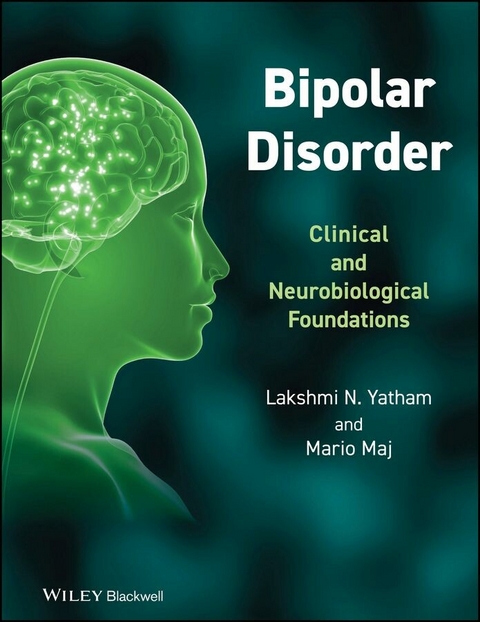
There has been an explosion of research into the causes and treatment of this condition over the past two decades. It is a daunting task for a practising clinician to make sense of this research and to remain up to date with progress in the understanding of the neurobiology and treatment of bipolar disorder. This book synthesizes and translates the vast array of research knowledge into information that is clinically relevant and meaningful for a clinician.
The book provides a comprehensive, yet focused, reference work on bipolar disorder for both trainees and practising psychiatrists. The two editors are leaders in the field who have published extensively on bipolar disorder. They have assembled a team of experts from around the world: in many instances, chapters are co-authored by people from different continents, bringing a truly international perspective to this important topic. The book covers the basic science of the pathology underlying bipolar disorder but addresses the clinical aspects of the disease throughout.
The book comprises four sections:
- Descriptive Aspects-issues ranging from how the concept of bipolar disorder has evolved over the years to new information about neurocognitive impairment, creativity and economic productivity, and to discussion of the deliberations of the DSM-V committee on changes in diagnostic categories and criteria.
- Biology-the contribution of genes to this disorder, changes in circadian rhythms, what we know about brain changes and the role of oxidative stress.
- Biological Treatment and Psychosocial Treatment- all the latest information about pharmacological and psychological treatments and the optimal management of this condition.
If you want to provide state-of-the-art care to your bipolar patients, be sure to consult this authoritative reference.
Dr. Yatham leads a Canadian consortium on bipolar disorder, testing new treatments for bipolar disorder using pragmatic and controlled trials with substantial funding from the Canadian Institutes of Health Research. He co-led the development of the Canadian guidelines for treatment of bipolar disorder in 1997; revised the guidelines for 2005 which were published with International Commentaries in Bipolar Disorders Journal. Dr Yatham is Chair of the bipolar group of the Canadian Network for Mood and Anxiety Treatments ; actively involved at a national and international level in continuing medical education and public education on diagnosis and treatment of bipolar disorder for psychiatrists, family physicians, and the general public. Currently the President for the International Society for Bipolar Disorders and on the editorial boards of a number of journals including Bipolar Disorders, Brain Pharmacology, Human Psychopharmacology, Quarterly Journal of Mental Health. He has published over 140 papers in peer-reviewed international journals and presented his research work at numerous international conferences. He was a recipient of the Michael Smith Foundation Senior Scholar Award (2001).
Professor Maj is President of the World Psychiatric Association; President of the Italian Psychiatric Association (since 2000); President of the Italian Society of Biological Psychiatry (since 1990); Association of European Psychiatrists Secretary-General (2001-2002) and President (2003-4); Editor of World Psychiatry and member of the Editorial Board of several scientific journals.
Bipolar Disorder Bipolar disorder is the most complex psychiatric disorder with different types of mood episodes, subtypes, varied course, and significant comorbidity. Not surprisingly, this complexity poses unique challenges to clinicians for optimal management of those with bipolar disorder. There has been an explosion of research into the causes and treatment of this condition over the past two decades. It is a daunting task for a practising clinician to make sense of this research and to remain up to date with progress in the understanding of the neurobiology and treatment of bipolar disorder. This book synthesizes and translates the vast array of research knowledge into information that is both relevant and meaningful for a clinician. The book provides a comprehensive, yet focused, reference work on bipolar disorder for both trainees and practising psychiatrists. The two editors are leaders in the field who have published extensively on bipolar disorder. They have assembled a team of experts from around the world: in many instances, chapters are co-authored by people from different continents, bringing a truly international perspective to this important topic. The book covers the basic science of the pathology underlying bipolar disorder but addresses the clinical aspects of the disease throughout. The book comprises four sections: Descriptive Aspects issues ranging from how the concept of bipolar disorder has evolved over the years to new information about neurocognitive impairment, creativity and economic productivity, and to discussion of the deliberations of the DSM-V committee on changes in diagnostic categories and criteria. Biological Aspects the contribution of genes to this disorder, changes in circadian rhythms, what we know about brain changes and the role of oxidative stress. Management all the latest information about pharmacological and other somatic treatments plus psychological therapies for the optimal management of this condition. Special Populations detailed descriptions of bipolar disorder in women, children and the elderly. If you want to provide state-of-the-art care to your bipolar patients, be sure to consult this authoritative reference.
Lakshmi N. Yatham Department of Psychiatry, The University of British Columbia, Vancouver, Canada Mario Maj Department of Psychiatry, University of Naples SUN, Naples, Italy
1, From Mania to Bipolar Disorder, David Healy
2, Clinical Features and Subtypes of Bipolar Disorder, Fred Goodwin and DZ Lieberman
3, The Long term Course and Outcome of Bipolar I and Bipolar II Disorder, Lewis Judd and Pamela J. Schettler
4, Comorbidity in Bipolar Disorder: A Focus on Addiction and Anxiety Disorders, Mark Frye and Guilio, Perugi
5, DSM-V Perspectives on Classification of Bipolar Disorder, Jan Fawcett
6, Update on the Epidemiology of Bipolar Disorder, Kathleen Merikangas and Tracy L. Peters
7, Suicide and Bipolar Disorder, Zoltan Rihmer and Jan Fawcett
8, Neurocognition in Bipolar Disorder, Ivan Torres and Gin Malhi
9, The Genius-Insanity Debate: Focus on Bipolarity, Temperament, Creativity and Leadership, Hagop Akiskal and Kareen K. Akiskal
10, Economics of Bipolar Disorder, Paul E., McCrone, R. Sabes-Figuera and D. Razzouk
11, An introduction to the neurobiology of bipolar illness onset, recurrence and progression, Robert Post and Marcia Kauer-Sant'Anna
12, Genetics of Bipolar Disorder, Wade Berrettini and Falk Lohoff
13, Structural Brain Imaging in Bipolar Disorder, Jair Soares and Paolo Brambilla
14, Functional Magnetic Resonance Imaging, Diffusion Tensor Imaging, and Magnetic Resonance Spectroscopy in Bipolar Disorder, Perry Renshaw and Inkyoon, Lyoo
15, Functional Brain Imaging Studies in Bipolar Disorder: Focus on Cerebral Metabolism and Blood Flow, John Brooks, Terry Ketter and Po W. Wang
16, Neurotransmitter Systems in Bipolar Disorder, John H. Krystal, Zubin Bhagwagar and Marina Nakic
17, Molecular Biology of Bipolar Disorder, Trevor Young, Ana Andreazza and Jun Feng Wang
18, Mitochondrial Dysfunction and Oxidative Stress, Michael Berk, Tadafumi Kato and Flavio Kapczinski
19, Neuroendocrinology of Bipolar Illness, Timothy Dinan and Michael Bauer
20, Circadian Rhythms and Sleep in Bipolar Disorder, Greg, Murray and Allison Harvey
21, Treatment Adherence in Bipolar Disorder, Jan Scott
22, Acute Mania, Paul E. Keck Jnr, Susan L., McElroy and John M., Hawkins
23, Pharmacological Treatment of Bipolar Depression, Allan Young and Charles Nemeroff
24, Maintenance Treatment, Allan Swann
25, Rapid Cycling Bipolar Disorder: Phenomenology and Treatment, Joe Goldberg and Michael Berk
26, Management of Bipolar II Disorder, Gordon Parker and Terry Ketter
27, Management of Comorbidity in Bipolar Disorder, Ihsan Salloum, Tiffany Cooke and Luca Pani
28, Bipolar disorder and safety monitoring for clinicians in 2009: A review of the evidence and the implications, Mauricio Tohen and Chris,Bushe
29, Somatic Treatments for Bipolar Disorder, Mark George NB THIS CHAPTER DUE ON 30TH NOV
30, Novel Therapeutic Strategies for Bipolar Disorder, Carlos Zarate, Husseini Manji and Rodrigo Machado-Vieira
31, Psychoeducation as a core element of psychological approaches for Bipolar Disorder, Francesc Colom and Lesley Berk
32, Cognitive-Behavioural Therapy for Bipolar Disorder, Sagar Parikh and Jan Scott
33, Interpersonal and Social RhythmTherapy for Bipolar Disorder, Ellen Frank, Holly Swartz, Laura Zajac and David Kupfer
34, Family therapy approaches to Bipolar Disorder, David J. Miklowitz
35, Collaborative Care for Bipolar Disorder, Amy M., Kilbourne, Mark S.Bauer and David E.Goodrich
36, Bipolar Disorder in Women, Meir Steiner, Benecio N. Frey, Claudio N. Soares and Karen A. Macritchie
37, Phenomenology and Treatment of Bipolar I Disorder in Children: A Critical Review, Gabrielle Carson
38, Bipolar Disorder in the Elderly, Martha Sajatovic and Lars Vedel Kessing
"...The textbook is also an ideal starting point for trainees and
young investigators just beginning to explore these subjects.
Biopolar Disorder: Clinical and Neurobiological Foundations,
then, is a useful addition to the library of most clinicians and
academic psychiatrists" (Journal of Clinical Psychiatry,
2011)
"The book is a valuable guide to every psychiatrist. It contains
a rich and wide range of information about bipolar disorder,
step by step from criteria and definitions through biological
changes to medical and psychotherapeutic treatment. The reader gets
an overview over the newest findings which are presented in a very
accessible way. It is definitely a book necessary for each modern
psychiatrist!" (Acta Psychiatrica Scandinavica, 2011)
"Contributors to 38 chapters offer international perspectives on
the disorder's clinical and neurobiological foundations as defined
by the American Psychiatric Association's Diagnostic and
Statistical Manual of Mental Disorders and the International
Classification of Diseases." (SciTech Book News, December
2010)
| Erscheint lt. Verlag | 13.8.2010 |
|---|---|
| Sprache | englisch |
| Themenwelt | Geisteswissenschaften |
| Medizin / Pharmazie ► Medizinische Fachgebiete ► Neurologie | |
| Medizin / Pharmazie ► Medizinische Fachgebiete ► Psychiatrie / Psychotherapie | |
| Schlagworte | Bipolar • causes • challenges • clinical neuropsychology • Clinicians • Complex • complexity poses • Condition • decades • Different • disorder • episodes • Explosion • Klinische Neuropsychologie • Medical Science • Medizin • Mood • Neurobiologie • Neurologie • Neurology • Optimal • PAST • practising clinician • Psychiatric • Psychiatrie • Psychiatry • Psychologie • Psychology • Research • Treatment • two • Types • Unique |
| ISBN-10 | 0-470-66126-7 / 0470661267 |
| ISBN-13 | 978-0-470-66126-0 / 9780470661260 |
| Informationen gemäß Produktsicherheitsverordnung (GPSR) | |
| Haben Sie eine Frage zum Produkt? |
 PDF (Adobe DRM)
Kopierschutz: Adobe-DRM
Adobe-DRM ist ein Kopierschutz, der das eBook vor Mißbrauch schützen soll. Dabei wird das eBook bereits beim Download auf Ihre persönliche Adobe-ID autorisiert. Lesen können Sie das eBook dann nur auf den Geräten, welche ebenfalls auf Ihre Adobe-ID registriert sind.
Details zum Adobe-DRM
Dateiformat: PDF (Portable Document Format)
Mit einem festen Seitenlayout eignet sich die PDF besonders für Fachbücher mit Spalten, Tabellen und Abbildungen. Eine PDF kann auf fast allen Geräten angezeigt werden, ist aber für kleine Displays (Smartphone, eReader) nur eingeschränkt geeignet.
Systemvoraussetzungen:
PC/Mac: Mit einem PC oder Mac können Sie dieses eBook lesen. Sie benötigen eine
eReader: Dieses eBook kann mit (fast) allen eBook-Readern gelesen werden. Mit dem amazon-Kindle ist es aber nicht kompatibel.
Smartphone/Tablet: Egal ob Apple oder Android, dieses eBook können Sie lesen. Sie benötigen eine
Geräteliste und zusätzliche Hinweise
Buying eBooks from abroad
For tax law reasons we can sell eBooks just within Germany and Switzerland. Regrettably we cannot fulfill eBook-orders from other countries.
aus dem Bereich