Psychology of Learning and Motivation (eBook)
384 Seiten
Elsevier Science (Verlag)
9780080922775 (ISBN)
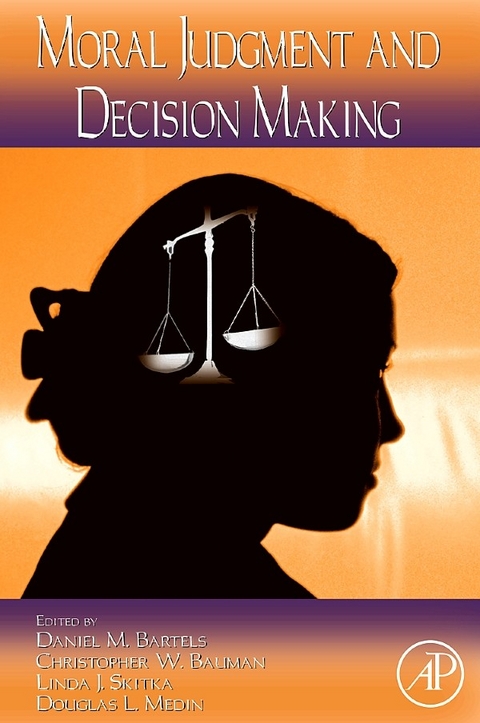
This volume presents a variety of perspectives from within and outside moral psychology. Recently there has been an explosion of research in moral psychology, but it is one of the subfields most in need of bridge-building, both within and across areas. Interests in moral phenomena have spawned several separate lines of research that appear to address similar concerns from a variety of perspectives. The contributions to this volume examine key theoretical and empirical issues these perspectives share that connect these issues with the broader base of theory and research in social and cognitive psychology.
The first two chapters discuss the role of mental representation in moral judgment and reasoning. Sloman, Fernbach, and Ewing argue that causal models are the canonical representational medium underlying moral reasoning, and Mikhail offers an account that makes use of linguistic structures and implicates legal concepts. Bilz and Nadler follow with a discussion of the ways in which laws, which are typically construed in terms of affecting behavior, exert an influence on moral attitudes, cognition, and emotions.
Baron and Ritov follow with a discussion of how people's moral cognition is often driven by law-like rules that forbid actions and suggest that value-driven judgment is relatively less concerned by the consequences of those actions than some normative standards would prescribe. Iliev et al. argue that moral cognition makes use of both rules and consequences, and review a number of laboratory studies that suggest that values influence what captures our attention, and that attention is a powerful determinant of judgment and preference. Ginges follows with a discussion of how these value-related processes influence cognition and behavior outside the laboratory, in high-stakes, real-world conflicts.
Two subsequent chapters discuss further building blocks of moral cognition. Lapsley and Narvaez discuss the development of moral characters in children, and Reyna and Casillas offer a memory-based account of moral reasoning, backed up by developmental evidence. Their theoretical framework is also very relevant to the phenomena discussed in the Sloman et al., Baron and Ritov, and Iliev et al. chapters.
The final three chapters are centrally focused on the interplay of hot and cold cognition. They examine the relationship between recent empirical findings in moral psychology and accounts that rely on concepts and distinctions borrowed from normative ethics and decision theory. Connolly and Hardman focus on bridge-building between contemporary discussions in the judgment and decision making and moral judgment literatures, offering several useful methodological and theoretical critiques. Ditto, Pizarro, and Tannenbaum argue that some forms of moral judgment that appear objective and absolute on the surface are, at bottom, more about motivated reasoning in service of some desired conclusion. Finally, Bauman and Skitka argue that moral relevance is in the eye of the perceiver and emphasize an empirical approach to identifying whether people perceive a given judgment as moral or non-moral. They describe a number of behavioral implications of people's reported perception that a judgment or choice is a moral one, and in doing so, they suggest that the way in which researchers carve out the moral domain a priori might be dubious.
This volume presents a variety of perspectives from within and outside moral psychology. Recently there has been an explosion of research in moral psychology, but it is one of the subfields most in need of bridge-building, both within and across areas. Interests in moral phenomena have spawned several separate lines of research that appear to address similar concerns from a variety of perspectives. The contributions to this volume examine key theoretical and empirical issues these perspectives share that connect these issues with the broader base of theory and research in social and cognitive psychology. The first two chapters discuss the role of mental representation in moral judgment and reasoning. Sloman, Fernbach, and Ewing argue that causal models are the canonical representational medium underlying moral reasoning, and Mikhail offers an account that makes use of linguistic structures and implicates legal concepts. Bilz and Nadler follow with a discussion of the ways in which laws, which are typically construed in terms of affecting behavior, exert an influence on moral attitudes, cognition, and emotions. Baron and Ritov follow with a discussion of how people's moral cognition is often driven by law-like rules that forbid actions and suggest that value-driven judgment is relatively less concerned by the consequences of those actions than some normative standards would prescribe. Iliev et al. argue that moral cognition makes use of both rules and consequences, and review a number of laboratory studies that suggest that values influence what captures our attention, and that attention is a powerful determinant of judgment and preference. Ginges follows with a discussion of how these value-related processes influence cognition and behavior outside the laboratory, in high-stakes, real-world conflicts. Two subsequent chapters discuss further building blocks of moral cognition. Lapsley and Narvaez discuss the development of moral characters in children, and Reyna and Casillas offer a memory-based account of moral reasoning, backed up by developmental evidence. Their theoretical framework is also very relevant to the phenomena discussed in the Sloman et al., Baron and Ritov, and Iliev et al. chapters. The final three chapters are centrally focused on the interplay of hot and cold cognition. They examine the relationship between recent empirical findings in moral psychology and accounts that rely on concepts and distinctions borrowed from normative ethics and decision theory. Connolly and Hardman focus on bridge-building between contemporary discussions in the judgment and decision making and moral judgment literatures, offering several useful methodological and theoretical critiques. Ditto, Pizarro, and Tannenbaum argue that some forms of moral judgment that appear objective and absolute on the surface are, at bottom, more about motivated reasoning in service of some desired conclusion. Finally, Bauman and Skitka argue that moral relevance is in the eye of the perceiver and emphasize an empirical approach to identifying whether people perceive a given judgment as moral or non-moral. They describe a number of behavioral implications of people's reported perception that a judgment or choice is a moral one, and in doing so, they suggest that the way in which researchers carve out the moral domain a priori might be dubious.
Front Cover 1
Moral Judgment and Decision Making 4
Copyright Page 5
Contents 6
Contributors 10
Preface 12
Chapter 1: Causal Models: The Representational Infrastructure for Moral Judgment 14
1. Introduction 15
2. Causal Models 17
3. Architectural Considerations 20
4. Roles for Causal Models 22
5. Moral Principles that Draw on Causal Structure 24
6. Conclusions 35
References 36
Chapter 2: Moral Grammar and Intuitive Jurisprudence: A Formal Model of Unconscious Moral and Legal Knowledge 40
1. The Moral Grammar Hypothesis 42
2. The Problem of Descriptive Adequacy 44
3. Intuitive Legal Appraisal 58
4. Deontic Rules 64
5. A Periodic Table of Moral Elements 84
6. Conversion Rules 94
7. Conclusion 105
Acknowledgments 106
References 106
Chapter 3: Law, Psychology, and Morality 114
1. Introduction 115
2. How Does Law Shape Morally Laden Cognitions? 120
3. How Does Law Shape Morally Laden Behaviors? 126
4. The Effect of Law on Moral Expression 132
5. Conclusion 137
Acknowledgments 137
References 137
Chapter 4: Protected Values and Omission Bias as Deontological Judgments 146
1. Introduction 147
2. Protected Values 150
3. Relation of PVs to Other Types of Judgment 151
4. Omission Bias 152
5. Relation of Omission Bias to Other Biases 154
6. Study 1: Relation of PVs to Omission Bias 156
7. Study 2: Relation to Emotion 163
8. Study 3: The Nature of Omission Bias 169
9. Conclusion 176
Acknowledgments 178
References 178
Chapter 5: Attending to Moral Values 182
1. Introduction 183
2. Moral Values in the Laboratory 186
3. A Cognitive Perspective on Sacred Values 191
4. Attentional Influences and the Acceptability of Trade-Offs 195
5. General Discussion 201
References 203
Chapter 6: Noninstrumental Reasoning over Sacred Values: An Indonesian Case Study 206
1. Introduction 207
2. Testing the "Backfire Effect" in the Israeli-Palestinian Conflict 211
3. Sequential Offers in Negotiations over Sacred Values 212
4. Retesting the Backfire Effect in a Study of Indonesian Madrassah Students 213
5. General Discussion 217
References 218
Chapter 7: Development and Dual Processes in Moral Reasoning: A Fuzzy-trace Theory Approach 220
1. Overview 221
2. An Introduction to Fuzzy-trace Theory 222
3. Building Blocks of Moral Reasoning 223
4. Explaining Reversals and Paradoxes in Moral Reasoning 229
5. Moral Values and Risky Decisions in Adolescence 240
6. Conclusions 242
References 245
Chapter 8: Moral Identity, Moral Functioning, and the Development of Moral Character 250
1. Introduction 251
2. Moral Self-Identity 252
3. Development of Moral Self-Identity 261
4. Schemas and Moral Information Processing 269
5. Moral Development as Ethical Expertise Development 271
6. New Directions: Neuroscience and Moral Personality 274
7. Conclusions 277
References 278
Chapter 9: "Fools Rush In": A JDM Perspective on the Role of Emotions in Decisions, Moral and Otherwise 288
1. Introduction 289
2. The Emergence of Emotion Research in JDM 293
3. Feelings and Emotions in Moral Decisions 302
4. Some Conclusions and Some Suggestions 311
Acknowledgments 314
References 314
Chapter 10: Motivated Moral Reasoning 320
1. Introduction 320
2. Motivated Reasoning 322
3. Motivated Moral Reasoning 325
4. Motivated Assessments of Moral Accountability 328
5. Motivated Use of Moral Principles 335
6. Motivated Moral Reasoning and Views of the Moral Thinker 345
References 347
Chapter 11: In the Mind of the Perceiver: Psychological Implications of Moral Conviction 352
1. Introduction 353
2. What Is Moral Conviction? 354
3. How Does Research on Moral Conviction and Moral Judgment Differ? 358
4. The Consequences of Moral Conviction on Choice and Action 366
5. Implications 371
References 372
Subject Index 376
Contents of recent volumes 382
| Erscheint lt. Verlag | 9.2.2009 |
|---|---|
| Mitarbeit |
Herausgeber (Serie): Brian H. Ross |
| Sprache | englisch |
| Themenwelt | Geisteswissenschaften ► Psychologie ► Allgemeine Psychologie |
| Geisteswissenschaften ► Psychologie ► Verhaltenstherapie | |
| ISBN-13 | 9780080922775 / 9780080922775 |
| Informationen gemäß Produktsicherheitsverordnung (GPSR) | |
| Haben Sie eine Frage zum Produkt? |
 EPUB (Adobe DRM)
Kopierschutz: Adobe-DRM
Adobe-DRM ist ein Kopierschutz, der das eBook vor Mißbrauch schützen soll. Dabei wird das eBook bereits beim Download auf Ihre persönliche Adobe-ID autorisiert. Lesen können Sie das eBook dann nur auf den Geräten, welche ebenfalls auf Ihre Adobe-ID registriert sind.
Details zum Adobe-DRM
Dateiformat: EPUB (Electronic Publication)
EPUB ist ein offener Standard für eBooks und eignet sich besonders zur Darstellung von Belletristik und Sachbüchern. Der Fließtext wird dynamisch an die Display- und Schriftgröße angepasst. Auch für mobile Lesegeräte ist EPUB daher gut geeignet.
Systemvoraussetzungen:
PC/Mac: Mit einem PC oder Mac können Sie dieses eBook lesen. Sie benötigen eine
eReader: Dieses eBook kann mit (fast) allen eBook-Readern gelesen werden. Mit dem amazon-Kindle ist es aber nicht kompatibel.
Smartphone/Tablet: Egal ob Apple oder Android, dieses eBook können Sie lesen. Sie benötigen eine
Geräteliste und zusätzliche Hinweise
Buying eBooks from abroad
For tax law reasons we can sell eBooks just within Germany and Switzerland. Regrettably we cannot fulfill eBook-orders from other countries.
aus dem Bereich