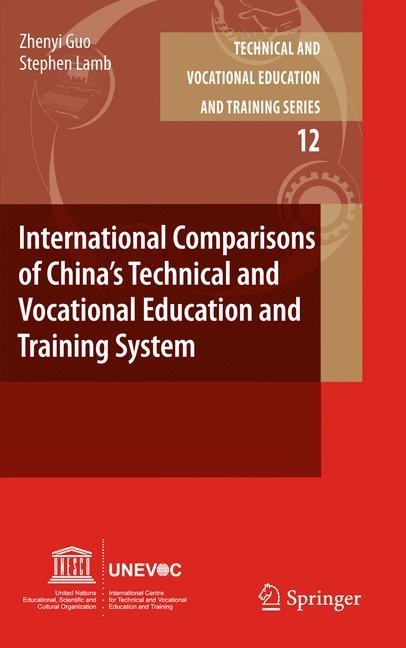
International Comparisons of China’s Technical and Vocational Education and Training System (eBook)
X, 198 Seiten
Springer Netherland (Verlag)
978-90-481-8743-0 (ISBN)
China is experiencing an unprecedented phenomenon: breakneck industrialization on a scale and at a pace not seen before. It is trying to achieve in just a few decades what Western nations took more than a century to do. The arrival in the country's cities of tens of millions of rural dwellers, at most semi-skilled, has put huge strain on the country's system of vocational education, known as TVET. How have the Chinese authorities and their education administrators responded? Is China's TVET system adapting to the rapidly evolving needs of its industry? Using the province of Yunnan as a subject, this detailed case study is a closely argued and sanguine analysis of the operation of TVET in China. The authors deployed a set of internationally comparable criteria to offer a searching assessment of current performance, at the same time documenting areas of strength and weakness. The question the authors' methodology answers is how well China's TVET system is performing compared to technical and vocational education structures in other countries. In fact, they discover that in Yunnan, a province representative of the challenges faced nationwide, much has indeed been done, from a wholesale overhaul of programs to make them relevant to industry requirements, to major investment in infrastructure. Teacher training has been reformed, and take-up of professional master's and doctoral courses has been encouraged. Joint initiatives with bodies such as UNESCO have improved training and vocational education at high school level.
While there is a strong international history of such comparative evaluations, which are essential for policy makers to benchmark their administration, few studies have included China despite the enormous amount of value that can be learned from that country's experience. This work will provide vital material for researchers, governments and development agencies alike.
China is experiencing an unprecedented phenomenon: breakneck industrialization on a scale and at a pace not seen before. It is trying to achieve in just a few decades what Western nations took more than a century to do. The arrival in the country's cities of tens of millions of rural dwellers, at most semi-skilled, has put huge strain on the country's system of vocational education, known as TVET. How have the Chinese authorities and their education administrators responded? Is China's TVET system adapting to the rapidly evolving needs of its industry? Using the province of Yunnan as a subject, this detailed case study is a closely argued and sanguine analysis of the operation of TVET in China. The authors deployed a set of internationally comparable criteria to offer a searching assessment of current performance, at the same time documenting areas of strength and weakness. The question the authors' methodology answers is how well China's TVET system is performing compared to technical and vocational education structures in other countries. In fact, they discover that in Yunnan, a province representative of the challenges faced nationwide, much has indeed been done, from a wholesale overhaul of programs to make them relevant to industry requirements, to major investment in infrastructure. Teacher training has been reformed, and take-up of professional master's and doctoral courses has been encouraged. Joint initiatives with bodies such as UNESCO have improved training and vocational education at high school level.While there is a strong international history of such comparative evaluations, which are essential for policy makers to benchmark their administration, few studies have included China despite the enormous amount of value that can be learned from that country s experience. This work will provide vital material for researchers, governments and development agencies alike.
Introduction by the Series Editor 6
Contents 8
1 Introduction 12
Undertaking a Comparative Evaluation 13
Some Terms and Definitions 16
Outline of the Book 18
2 Education and Training in China 21
Overview of the Education System 22
Primary Schooling 22
Junior Secondary Schooling 23
Senior Secondary Schooling 25
Higher Education 27
Technical and Vocational Education and Training 28
Development of School-Level TVET 30
Vocational High Schools 31
Skilled Workers' Schools 32
Tertiary-Level TVET 33
Apprenticeship Training 34
Other Dedicated Centres of Training 35
Administrative Structure of TVET in China 35
Developments in TVET in a Broader Context 36
Continuing TVET in China 38
Work-Based Training 39
Conclusion 39
3 International Comparisons of TVET 40
Aims of International Comparisons 41
Strategies for Making International Comparisons 42
Brief History of International Indicators 42
Indicator Approaches to International Comparisons 43
What Are Indicators? 43
What Are Indicator Systems? 44
Models and Frameworks of Education Indicators 45
Main International Comparisons Using Indicator Systems 46
Education at a Glance 46
Key Data on Education in the European Union 46
Global Education Digest 47
Comparative Indicators of Education in the USA and Other G8 Countries 48
TVET-Specific Comparisons 48
Key Data on Vocational Training in the European Union 48
TVET in Central and Eastern Europe---Key Indicators 49
TVET Indicator Study in Korea 50
Occasional or Periodic Comparisons with Other Countries 50
Comparisons Involving China 52
The Importance of Continuing TVET 53
How Has Work-Based Training Been Studied in the Developed World? 54
Europe 55
Australia 57
Canada 60
Conclusion 62
4 A Review of Current Practice in China 64
Types of Research 64
Types of Comparisons 66
Indicator-Related Comparisons 66
Case-Study Comparisons 67
Key Studies Relevant to Educational Indicators 68
Published Articles on Indicators 74
Examples of Case-Study Comparisons with Other Countries 76
How Has Continuing Education and Training Been Studied in China? 78
Existing Surveys 78
Non-survey-Based Research 80
Examples of Multi-nation Comparisons in the Field of Training 81
Conclusion 81
5 Framework for Comparing Chinas TVET System 83
Requirements for Making International Comparisons 83
The International Standard Classification for Education 84
The Application of ISCED to Chinese Education 86
TVET Policy Priorities in China 88
Selection of Indicators 91
Context Indicators 91
Input Indicators 91
Process Indicators 92
Outputs/Outcomes Indicators 92
Outcomes 93
Data Sources 93
The Educational Statistics Yearbook of China 94
The Educational Finance Statistical Yearbook of China 94
The Labor and Social Security Yearbook of China 94
Labor Statistical Yearbook of China 95
The Fifth National Population Census 95
Countries Selected for Comparison 95
Conclusion 96
6 Comparisons of Social and Economic Context 97
Context Comparisons Using Selected Indicators 98
Indicator 1.1: The Educational Attainment of the Adult Population (25--64), by Age 98
Indicator 1.2: GDP Per Capita in Different Countries 102
Indicator 1.3: Labour Force Participation Rates 104
Indicator 1.4: Unemployment Rates by Level of Educational Attainment and Gender 107
7 Resources 112
Input Indicators 112
Comparisons Using Selected Input Indicators 113
Indicator 2.1: Public Expenditure on Education as a Percentage of GDP (2004) 113
Indicator 2.2: Public Expenditure on Education as a Percentage of Government Expenditure 117
Indicator 2.3: Expenditure on Education Institutions per Student Across Levels of Education 119
Indicator 2.4: Per Student Expenditure on Secondary Education by Programme 126
Indicator 2.5: Public and Private Investment in Educational Institutions at All Levels 129
Additional Possible Input Indicators 132
Conclusion 133
8 Participation and Outcome Indicators 134
Participation in Initial TVET 135
Indicator 3.1: Participation Rates in Upper Secondary TVET Programmes 136
Indicator 3.2: Participation in Initial TVET by Gender 140
Indicator 3.3: Participation in Initial TVET by Age 141
Indicator 3.4: Participation in Initial TVET by Location 142
Indicator 3.5: Duration of Initial TVET Programmes 144
Indicator 3.6: Participation in Programmes Giving Access to Further Education 146
Graduation 147
Indicator 3.7: Upper Secondary Gross Graduation Rates, by Programme and Gender 147
Participation in Continuing TVET 150
Indicator 3.8: Participation Rates in Continuing TVET 151
Indicator 3.9: Participation in Continuing TVET by Gender 153
Indicators That Cannot Yet Be Included 153
Access and Transition 154
Completion 154
Labour Market Outcomes 154
Productivity Outcomes 154
Conclusion 154
9 Work-Based Education and Training 156
Considering TVET in the Context of Yunnan 156
The Economy and Labour Force of Yunnan 157
Segmented Labour Market 157
Urban and Rural Employment in Yunnan 159
Enterprise Registration (Ownership) Status in Yunnan 161
Data Collection Survey on Continuing Vocational Training in Yunnan 162
The Enterprises Selected for the Survey 162
The Questionnaires 163
Survey Process 164
Employee Feedback on the Survey 164
Employer Feedback 165
Analysis of Data from the Employee and Employer Questionnaires 166
General Characteristics of the Surveyed Enterprises 166
General Characteristics of the Employee Sample Reflected in the Data 166
Funding of Enterprise Training 167
Participation in Work-Based Training 168
Applying the Survey Results from Yunnan to International Comparisons 170
Comparisons with the EU Based on Key Quantitative CVT Indicators 171
Training Incidence 172
Training Access 172
Training Intensity 173
Training Cost 173
Comparisons of CVT (Work-Based Formal Training) 173
Surface Measures of Overall Performance 174
Comparisons of Aggregate Performance 177
10 Conclusion 180
The Performance of the Chinese TVET System 180
On International Comparisons and TVET Data 183
Final Note 188
References 189
Author Index 198
Subject Index 201
| Erscheint lt. Verlag | 3.7.2010 |
|---|---|
| Reihe/Serie | Technical and Vocational Education and Training: Issues, Concerns and Prospects | Technical and Vocational Education and Training: Issues, Concerns and Prospects |
| Zusatzinfo | X, 198 p. |
| Verlagsort | Dordrecht |
| Sprache | englisch |
| Themenwelt | Geisteswissenschaften |
| Sozialwissenschaften ► Pädagogik ► Berufspädagogik | |
| Sozialwissenschaften ► Pädagogik ► Bildungstheorie | |
| Sozialwissenschaften ► Politik / Verwaltung | |
| Schlagworte | China • Chinese Education • continuing education • Education • Evaluation • international comparisons • technical and vocational education • TVET • vocational education |
| ISBN-10 | 90-481-8743-5 / 9048187435 |
| ISBN-13 | 978-90-481-8743-0 / 9789048187430 |
| Informationen gemäß Produktsicherheitsverordnung (GPSR) | |
| Haben Sie eine Frage zum Produkt? |
 PDF (Wasserzeichen)
DRM: Digitales Wasserzeichen
Dieses eBook enthält ein digitales Wasserzeichen und ist damit für Sie personalisiert. Bei einer missbräuchlichen Weitergabe des eBooks an Dritte ist eine Rückverfolgung an die Quelle möglich.
Dateiformat: PDF (Portable Document Format)
Mit einem festen Seitenlayout eignet sich die PDF besonders für Fachbücher mit Spalten, Tabellen und Abbildungen. Eine PDF kann auf fast allen Geräten angezeigt werden, ist aber für kleine Displays (Smartphone, eReader) nur eingeschränkt geeignet.
Systemvoraussetzungen:
PC/Mac: Mit einem PC oder Mac können Sie dieses eBook lesen. Sie benötigen dafür einen PDF-Viewer - z.B. den Adobe Reader oder Adobe Digital Editions.
eReader: Dieses eBook kann mit (fast) allen eBook-Readern gelesen werden. Mit dem amazon-Kindle ist es aber nicht kompatibel.
Smartphone/Tablet: Egal ob Apple oder Android, dieses eBook können Sie lesen. Sie benötigen dafür einen PDF-Viewer - z.B. die kostenlose Adobe Digital Editions-App.
Buying eBooks from abroad
For tax law reasons we can sell eBooks just within Germany and Switzerland. Regrettably we cannot fulfill eBook-orders from other countries.
aus dem Bereich