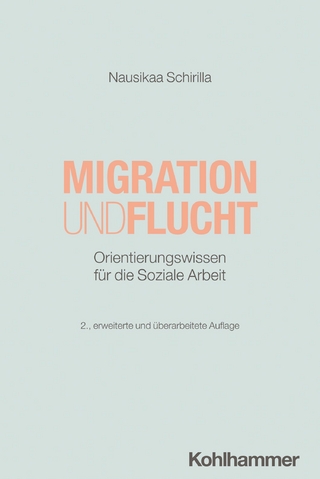
Grenzenlose Cyberwelt? (eBook)
224 Seiten
VS Verlag für Sozialwissenschaften
978-3-531-90519-8 (ISBN)
Kompetenzzentrum Informelle Bildung KIB
Die HerausgeberInnen:
Dr. Dr. h. c. Hans-Uwe Otto, Professor an der Fakultät für Pädagogik der Universität Bielefeld;
Dr. Nadia Kutscher, Professorin für Soziale Arbeit am Fachbereich Sozialwesen der Katholischen Fachhochschule NRW (Abteilung Aachen);
Dipl.-Päd. Alexandra Klein, wiss. Mitarbeiterin an der Universität Potsdam;
Dr. Stefan Iske, Postdoktorand im DGF-Graduiertenkolleg 'Qualitätsverbesserung im E-Learning durch rückgekoppelte Prozesse' an der TU Darmstadt.
Kompetenzzentrum Informelle Bildung KIB Die HerausgeberInnen: Dr. Dr. h. c. Hans-Uwe Otto, Professor an der Fakultät für Pädagogik der Universität Bielefeld; Dr. Nadia Kutscher, Professorin für Soziale Arbeit am Fachbereich Sozialwesen der Katholischen Fachhochschule NRW (Abteilung Aachen); Dipl.-Päd. Alexandra Klein, wiss. Mitarbeiterin an der Universität Potsdam; Dr. Stefan Iske, Postdoktorand im DGF-Graduiertenkolleg „Qualitätsverbesserung im E-Learning durch rückgekoppelte Prozesse“ an der TU Darmstadt.
Inhaltsverzeichnis 5
Vorwort 7
Dimensions of Educational Policy / Gesellschaftliche Herausforderungen für Bildungspolitik im Kontext des Internet 12
Implications for social inequality in internet use for educational policies and programs 13
New technologies, young people and social inclusion 28
Education and Participation in the Virtual Space and its Limitations / Bildung und Teilhabe im virtuellen Raum und ihre Grenzen 42
Social Facilitators and Inhibitors to Internet Access and Use 43
Virtuelle Ungleichheit und informelle Bildung. Eine empirische Analyse der Internetnutzung Jugendlicher und ihre Bedeutung für Bildung und gesellschaftliche Teilhabe 60
Erinnerungskulturen im Internet 87
Social Diversification: A Perspective for the Study of Social networks of Adolescents Offline and Online 98
Use Differences and Social Inequality in the Internet / Nutzungsdifferenzen und Soziale Ungleichheit im Internet 111
A framework for studying differences in people’s digital media uses 112
Alte und neue Medien im Leben von Jugendlichen mit Migrationshintergrund 128
Medienpädagogik, Mediensozialisation und soziale Benachteiligung 143
New Perspectives for Media Education / Neue Perspektiven für Medienbildung 165
Digital Culture, Media Education and the Place of Schooling 166
Ästhetik in der zielgruppenorientierten Medienbildung 187
Autorinnen und Autoren 208
A framework for studying differences in people’s digital media uses (S. 112-113)
Introduction
Information technologies have become a staple of adolescents’ lives with young people among the most connected in countries that have seen high levels of Internet and cell phone diffusion by the first decade of the 21st century (Livingstone and Bober 2004, National Telecommunications and Information Administration 2004). However, merely knowing various digital media’s rates of use says little about how young people are incorporating IT into their everyday lives. Ignoring nuanced measures of use, it is difficult to determine whether digital media are leveling the playing field for youth or whether they are raising new barriers for some while advantaging the societal positions of others.
While many have suggested that we must move past the binary classification of haves and have-nots when it comes to information technology uses, few have offered a detailed conceptual framework for such an undertaking, one that can then inform empirical studies of usage differences. This chapter considers the various domains in which users of the Internet may possess different levels of knowhow. In addition to presenting the conceptual framework, it also draws on unique data about a diverse group of young people’s Internet uses to illustrate existing differences along the lines of the discussed dimensions.
Refined approaches to the digital divide
Initial work looking at differences in the Internet’s diffusion looked at the so-called "digital divide" focusing on a binary classification of haves and have-nots regar ding digital technologies (for a review, see DiMaggio et al. 2004). Findings from the first investigations showed that while the Internet was diffusing to an increasing number of users, the spread of the medium happened at unequal rates depending on the population segment (Bimber 2000, Bucy 2000, Hargittai 2003, Hargittai 2004b, Loges and Jung 2001, NTIA 2000, 2004, Norris 2001, Wilhelm 2000).
Moving the agenda forward, recent work has increasingly broadened the research program to focus on refined measures of access and use including quality of access, context and intensity of use, types of utilization and user abilities (Attewell 2001, Bonfadelli 2002, Bunz 2004, DiMaggio et al. 2004, Hargittai 2002, Hargittai 2004b, Howard, Rainie and Jones 2001, Katz and Rice 2002, Mossberger, Tolbert and Stansbury 2003, van Dijk 2005, Warschauer 2003, Wellman et al. 2002).
In these investigations, the differences are no longer considered as a dichotomous property, rather, they exist on a spectrum. In fact, DiMaggio et al. (2004) advocate the use of the term "digital inequality" instead of "digital divide" to reflect more accurately the varying levels of use and their potential social implications. In this chapter, I continue the tradition of exploring refined measures of digital inequality. In particular, I focus on ways in which differences in users’ understanding of online tools and services may encourage or hinder the extent to which people can optimally benefit from their use of digital media.
| Erscheint lt. Verlag | 22.7.2008 |
|---|---|
| Mitarbeit |
Stellvertretende Herausgeber: Stefan Iske, Alexandra Klein, Nadia Kutscher, Hans-Uwe Otto |
| Zusatzinfo | 224 S. |
| Verlagsort | Wiesbaden |
| Sprache | deutsch |
| Themenwelt | Geisteswissenschaften |
| Sozialwissenschaften ► Pädagogik ► Sozialpädagogik | |
| Sozialwissenschaften ► Politik / Verwaltung | |
| Schlagworte | Benachteiligte Jugendliche • Bildung • Bildungspolitik • Bildungszugänge • Erziehungswissenschaft • Internet • Medienbildung • Mediengeneration • Medienpädagogik • Soziale Ungleichheit • Teilhabe • Wissensgesellschaft |
| ISBN-10 | 3-531-90519-8 / 3531905198 |
| ISBN-13 | 978-3-531-90519-8 / 9783531905198 |
| Informationen gemäß Produktsicherheitsverordnung (GPSR) | |
| Haben Sie eine Frage zum Produkt? |
 PDF (Wasserzeichen)
DRM: Digitales Wasserzeichen
Dieses eBook enthält ein digitales Wasserzeichen und ist damit für Sie personalisiert. Bei einer missbräuchlichen Weitergabe des eBooks an Dritte ist eine Rückverfolgung an die Quelle möglich.
Dateiformat: PDF (Portable Document Format)
Mit einem festen Seitenlayout eignet sich die PDF besonders für Fachbücher mit Spalten, Tabellen und Abbildungen. Eine PDF kann auf fast allen Geräten angezeigt werden, ist aber für kleine Displays (Smartphone, eReader) nur eingeschränkt geeignet.
Systemvoraussetzungen:
PC/Mac: Mit einem PC oder Mac können Sie dieses eBook lesen. Sie benötigen dafür einen PDF-Viewer - z.B. den Adobe Reader oder Adobe Digital Editions.
eReader: Dieses eBook kann mit (fast) allen eBook-Readern gelesen werden. Mit dem amazon-Kindle ist es aber nicht kompatibel.
Smartphone/Tablet: Egal ob Apple oder Android, dieses eBook können Sie lesen. Sie benötigen dafür einen PDF-Viewer - z.B. die kostenlose Adobe Digital Editions-App.
Buying eBooks from abroad
For tax law reasons we can sell eBooks just within Germany and Switzerland. Regrettably we cannot fulfill eBook-orders from other countries.
aus dem Bereich