


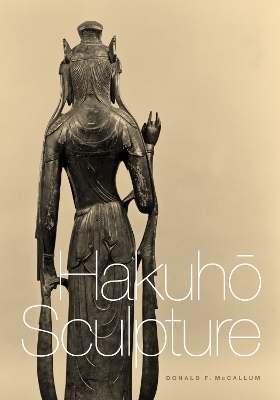
Hakuho Sculpture
Seiten
2012
University of Washington Press (Verlag)
978-0-295-99130-6 (ISBN)
University of Washington Press (Verlag)
978-0-295-99130-6 (ISBN)
Hakuho Sculpture is the first book in any language devoted entirely to Japanese sculpture of the Hakuho period (c. This close analysis of practically all extant Hakuho images reveals much about the creative activities of the ancient sculptors.The Hakuho period is frequently considered alongside the preceding Asuka period (c.
Hakuho Sculpture is the first book in any language devoted entirely to Japanese sculpture of the Hakuho period (c. 650-710 CE). It focuses on the stylistic development and aesthetic qualities of Buddhist imagery through a careful study of gilt-bronze Buddhist icons from one of the most creative periods of Japanese Buddhist art. This close analysis of practically all extant Hakuho images reveals much about the creative activities of the ancient sculptors.
The Hakuho period is frequently considered alongside the preceding Asuka period (c. 590-650), suggesting some type of organic development from one period to the next. This understanding is somewhat distorted, given the significant differences in sculptural styles between the two periods. Donald McCallum explains the differences as resulting from divergent sources in China and Korea and unique attitudes toward the making of images.
Hakuho Sculpture is the first book in any language devoted entirely to Japanese sculpture of the Hakuho period (c. 650-710 CE). It focuses on the stylistic development and aesthetic qualities of Buddhist imagery through a careful study of gilt-bronze Buddhist icons from one of the most creative periods of Japanese Buddhist art. This close analysis of practically all extant Hakuho images reveals much about the creative activities of the ancient sculptors.
The Hakuho period is frequently considered alongside the preceding Asuka period (c. 590-650), suggesting some type of organic development from one period to the next. This understanding is somewhat distorted, given the significant differences in sculptural styles between the two periods. Donald McCallum explains the differences as resulting from divergent sources in China and Korea and unique attitudes toward the making of images.
Donald McCallum is professor of Japanese art history at the University of California, Los Angeles, and author of Zenkoji and Its Icon: A Study of Medieval Japanese Religious Art and The Four Great Temples: Buddhist Archaeology, Architecture, and Icons of Seventh-Century Japan.
| Reihe/Serie | Hakuho Sculpture |
|---|---|
| Zusatzinfo | 50 illus. |
| Verlagsort | Seattle |
| Sprache | englisch |
| Maße | 178 x 254 mm |
| Gewicht | 544 g |
| Themenwelt | Kunst / Musik / Theater ► Kunstgeschichte / Kunststile |
| Kunst / Musik / Theater ► Malerei / Plastik | |
| Geisteswissenschaften ► Geschichte ► Regional- / Ländergeschichte | |
| ISBN-10 | 0-295-99130-5 / 0295991305 |
| ISBN-13 | 978-0-295-99130-6 / 9780295991306 |
| Zustand | Neuware |
| Informationen gemäß Produktsicherheitsverordnung (GPSR) | |
| Haben Sie eine Frage zum Produkt? |
Mehr entdecken
aus dem Bereich


aus dem Bereich
die Geschichte meiner Urgroßmutter
Buch | Hardcover (2025)
C.H.Beck (Verlag)
CHF 32,15


