


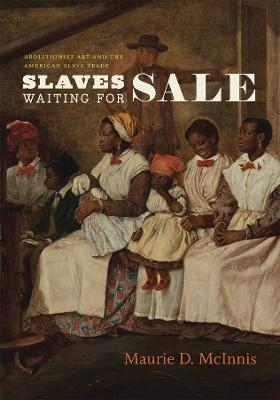
Slaves Waiting for Sale
Abolitionist Art and the American Slave Trade
Seiten
2011
University of Chicago Press (Verlag)
978-0-226-55933-9 (ISBN)
University of Chicago Press (Verlag)
978-0-226-55933-9 (ISBN)
- Titel z.Zt. nicht lieferbar
- Versandkostenfrei
- Auch auf Rechnung
- Artikel merken
In 1853, Eyre Crowe, a young British artist, visited a slave auction in Richmond, Virginia. Harrowed by what he witnessed, he captured the scene in sketches that he would later develop into a series of illustrations and paintings. This book uses Crowe's paintings to explore the texture of the slave trade in Richmond, Charleston, and New Orleans.
In 1853, Eyre Crowe, a young British artist, visited a slave auction in Richmond, Virginia. Harrowed by what he witnessed, he captured the scene in sketches that he would later develop into a series of illustrations and paintings, including the culminating painting, "Slaves Waiting for Sale", Richmond, Virginia. This innovative book uses Crowe's paintings to explore the texture of the slave trade in Richmond, Charleston, and New Orleans, the evolving iconography of abolitionist art, and the role of visual culture in the transatlantic world of abolitionism. Tracing Crowe's trajectory from Richmond across the American South and back to London - where his paintings were exhibited just a few weeks after the start of the Civil War - Maurie D. McInnis illuminates not only how his abolitionist art was inspired and made, but also how it influenced the international public's grasp of slavery in America. With nearly 140 illustrations, "Slaves Waiting for Sale" brings a fresh perspective to the American slave trade and abolitionism as we enter the sesquicentennial of the Civil War.
In 1853, Eyre Crowe, a young British artist, visited a slave auction in Richmond, Virginia. Harrowed by what he witnessed, he captured the scene in sketches that he would later develop into a series of illustrations and paintings, including the culminating painting, "Slaves Waiting for Sale", Richmond, Virginia. This innovative book uses Crowe's paintings to explore the texture of the slave trade in Richmond, Charleston, and New Orleans, the evolving iconography of abolitionist art, and the role of visual culture in the transatlantic world of abolitionism. Tracing Crowe's trajectory from Richmond across the American South and back to London - where his paintings were exhibited just a few weeks after the start of the Civil War - Maurie D. McInnis illuminates not only how his abolitionist art was inspired and made, but also how it influenced the international public's grasp of slavery in America. With nearly 140 illustrations, "Slaves Waiting for Sale" brings a fresh perspective to the American slave trade and abolitionism as we enter the sesquicentennial of the Civil War.
Maurie D. McInnis is professor in the McIntire Department of Art and associate dean for the College and Graduate School of Arts and Sciences at the University of Virginia. She is the author of The Politics of Taste in Antebellum Charleston.
| Erscheint lt. Verlag | 2.12.2011 |
|---|---|
| Sprache | englisch |
| Maße | 19 x 27 mm |
| Gewicht | 709 g |
| Themenwelt | Kunst / Musik / Theater ► Kunstgeschichte / Kunststile |
| Kunst / Musik / Theater ► Malerei / Plastik | |
| Geschichte ► Allgemeine Geschichte ► Neuzeit (bis 1918) | |
| Geisteswissenschaften ► Geschichte ► Regional- / Ländergeschichte | |
| ISBN-10 | 0-226-55933-5 / 0226559335 |
| ISBN-13 | 978-0-226-55933-9 / 9780226559339 |
| Zustand | Neuware |
| Informationen gemäß Produktsicherheitsverordnung (GPSR) | |
| Haben Sie eine Frage zum Produkt? |
Mehr entdecken
aus dem Bereich



aus dem Bereich
Geschichte einer wilden Handlung
Buch | Hardcover (2024)
C.H.Beck (Verlag)
CHF 47,60


