


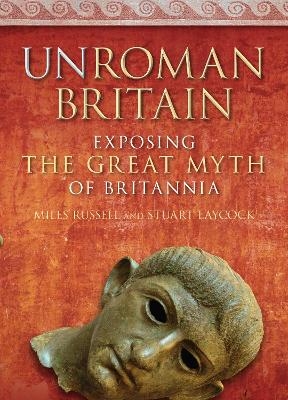
UnRoman Britain
Exposing the Great Myth of Britannia
Seiten
2011
The History Press Ltd (Verlag)
978-0-7524-6285-1 (ISBN)
The History Press Ltd (Verlag)
978-0-7524-6285-1 (ISBN)
- Titel erscheint in neuer Auflage
- Artikel merken
Zu diesem Artikel existiert eine Nachauflage
Roman Britain is usually thought of as a land full of togas, towns and baths with Britons happily going about their Roman lives under the benign gaze of Rome. As Roman power weakened, the Britons abandoned both Rome and almost all Roman culture, and the island became a land of warring kingdoms, as it had been before.
When we think of Roman Britain we tend to think of a land of togas and richly decorated palaces with Britons happily going about their much improved daily business under the benign gaze of Rome. This image is to a great extent a fiction. In fact, Britons were some of the least enthusiastic members of the Roman Empire. A few adopted roman ways to curry favour with the invaders. A lot never adopted a Roman lifestyle at all and remained unimpressed and riven by deep-seated tribal division. It wasn't until the late third/early fourth century that a small minority of landowners grew fat on the benefits of trade and enjoyed the kind of lifestyle we have been taught to associate with period.
Britannia was a far-away province which, whilst useful for some major economic reserves, fast became a costly and troublesome concern for Rome, much like Iraq for the British government today. Huge efforts by the state to control the hearts and minds of the Britons were met with at worst hostile resistance and rebellion, and at best by steadfast indifference. The end of the Roman Empire largely came as 'business as usual' for the vast majority of Britons as they simply hadn't adopted the Roman way of life in the first place.
When we think of Roman Britain we tend to think of a land of togas and richly decorated palaces with Britons happily going about their much improved daily business under the benign gaze of Rome. This image is to a great extent a fiction. In fact, Britons were some of the least enthusiastic members of the Roman Empire. A few adopted roman ways to curry favour with the invaders. A lot never adopted a Roman lifestyle at all and remained unimpressed and riven by deep-seated tribal division. It wasn't until the late third/early fourth century that a small minority of landowners grew fat on the benefits of trade and enjoyed the kind of lifestyle we have been taught to associate with period.
Britannia was a far-away province which, whilst useful for some major economic reserves, fast became a costly and troublesome concern for Rome, much like Iraq for the British government today. Huge efforts by the state to control the hearts and minds of the Britons were met with at worst hostile resistance and rebellion, and at best by steadfast indifference. The end of the Roman Empire largely came as 'business as usual' for the vast majority of Britons as they simply hadn't adopted the Roman way of life in the first place.
STUART LAYCOCK studied Classics at Cambridge, before working as a writer in advertising. He is now a historian and writer, and has written a number of history books, including Britannia: The Failed State (nominated for Current Archaeology Book of the Year) and the bestselling All the Countries We’ve Ever Invaded.
| Erscheint lt. Verlag | 1.9.2011 |
|---|---|
| Verlagsort | Stroud |
| Sprache | englisch |
| Maße | 170 x 250 mm |
| Gewicht | 750 g |
| Themenwelt | Geisteswissenschaften ► Archäologie |
| Geschichte ► Allgemeine Geschichte ► Altertum / Antike | |
| ISBN-10 | 0-7524-6285-7 / 0752462857 |
| ISBN-13 | 978-0-7524-6285-1 / 9780752462851 |
| Zustand | Neuware |
| Informationen gemäß Produktsicherheitsverordnung (GPSR) | |
| Haben Sie eine Frage zum Produkt? |
Mehr entdecken
aus dem Bereich


aus dem Bereich
ohne den ganzen langweiligen Kram
Buch | Hardcover (2025)
C.H.Beck (Verlag)
CHF 36,40
von den Anfängen bis zum Untergang
Buch | Hardcover (2025)
Alfred Kröner Verlag
CHF 48,95
von den Anfängen bis zur Spätantike
Buch | Softcover (2024)
C.H.Beck (Verlag)
CHF 16,80


