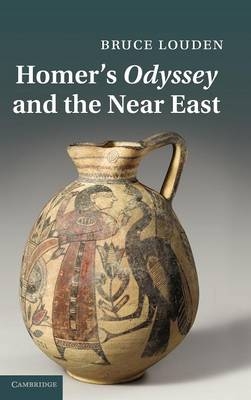
Homer's Odyssey and the Near East
Cambridge University Press (Verlag)
978-0-521-76820-7 (ISBN)
The Odyssey's larger plot is composed of a number of distinct genres of myth, all of which are extant in various Near Eastern cultures (Mesopotamian, West Semitic, and Egyptian). Unexpectedly, the Near Eastern culture with which the Odyssey has the most parallels is the Old Testament. Consideration of how much of the Odyssey focuses on non-heroic episodes - hosts receiving guests, a king disguised as a beggar, recognition scenes between long-separated family members - reaffirms the Odyssey's parallels with the Bible. In particular the book argues that the Odyssey is in a dialogic relationship with Genesis, which features the same three types of myth that comprise the majority of the Odyssey: theoxeny, romance (Joseph in Egypt), and Argonautic myth (Jacob winning Rachel from Laban). The Odyssey also offers intriguing parallels to the Book of Jonah, and Odysseus' treatment by the suitors offers close parallels to the Gospels' depiction of Christ in Jerusalem.
Bruce Louden is Professor in the Languages and Linguistics Department at the University of Texas, El Paso. His previous books are The Odyssey: Structure, Narration, and Meaning (1999) and The Iliad: Structure, Myth, and Meaning (2006).
Introduction; 1. Divine councils and apocalyptic myth; 2. Theoxeny: Odyssey 1, 3, 13–22, and Genesis 18–19; 3. Romance: the Odyssey and the myth of Joseph (Genesis 37, 39–47); 4. Helen and Rahab (Joshua 2), Menelaus and Jacob (Genesis 32:22–32); 5. Ogygia and creation myth, Kalypso and Ishtar; 6. Argonautic myth: Odysseus and Nausikaa/Circe, Jason and Medea, Jacob and Rachel (Odyssey 6–8, 10–12, 13.1–187, Genesis 28–33); 7. Odysseus and Jonah: sea-monsters and the fantastic voyage; 8. The combat myth: Polyphemos and Humbaba; 9. Catabasis, consultation, and the vision: Odyssey 11, 1 Samuel 28, Gilgamesh 12, Aeneid 6, and the Book of Revelation; 10. Odyssey 12 and Exodus 32: Odysseus and Moses, the people defy their leader and rebel against God; 11. The suitors and the depiction of impious men in wisdom literature; 12. Odysseus and Jesus: the King returns, unrecognized and abused in his own Kingdom; 13. Contained apocalypse: Odyssey 12, 13, 22 and 24, Exodus 32 (and Genesis 18–19); Conclusion.
| Erscheint lt. Verlag | 6.1.2011 |
|---|---|
| Verlagsort | Cambridge |
| Sprache | englisch |
| Maße | 152 x 229 mm |
| Gewicht | 720 g |
| Themenwelt | Geschichte ► Allgemeine Geschichte ► Altertum / Antike |
| Geisteswissenschaften ► Religion / Theologie ► Weitere Religionen | |
| Geisteswissenschaften ► Sprach- / Literaturwissenschaft ► Anglistik / Amerikanistik | |
| Geisteswissenschaften ► Sprach- / Literaturwissenschaft ► Literaturwissenschaft | |
| ISBN-10 | 0-521-76820-9 / 0521768209 |
| ISBN-13 | 978-0-521-76820-7 / 9780521768207 |
| Zustand | Neuware |
| Informationen gemäß Produktsicherheitsverordnung (GPSR) | |
| Haben Sie eine Frage zum Produkt? |
aus dem Bereich