


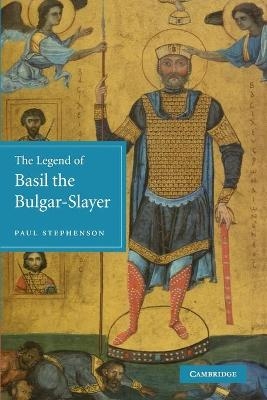
The Legend of Basil the Bulgar-Slayer
Seiten
2010
Cambridge University Press (Verlag)
978-0-521-15883-1 (ISBN)
Cambridge University Press (Verlag)
978-0-521-15883-1 (ISBN)
This 2003 illustrated, revisionary account of the long reign of the Byzantine emperor Basil II (976–1025) establishes that the 'Bulgar-slayer' legend was in fact created long after Basil's death, and shows how the emperor's supposedly fearsome reputation was seized upon by scholars and politicians in the modern period.
The reign of Basil II (976–1025), the longest of any Byzantine emperor, has long been considered as a 'golden age', in which his greatest achievement was the annexation of Bulgaria. This, we have been told, was achieved through a long and bloody war of attrition which won Basil the grisly epithet Voulgartoktonos, 'the Bulgar-slayer'. In this 2003 study Paul Stephenson argues that neither of these beliefs is true. Instead, Basil fought far more sporadically in the Balkans and his reputation as 'Bulgar-slayer' was created only a century and a half later. Thereafter the 'Bulgar-slayer' was periodically to play a galvanizing role for the Byzantines, returning to centre-stage as Greeks struggled to establish a modern nation state. As Byzantium was embraced as the Greek past by scholars and politicians, the 'Bulgar-slayer' became an icon in the struggle for Macedonia (1904–1908) and the Balkan Wars (1912–1913).
The reign of Basil II (976–1025), the longest of any Byzantine emperor, has long been considered as a 'golden age', in which his greatest achievement was the annexation of Bulgaria. This, we have been told, was achieved through a long and bloody war of attrition which won Basil the grisly epithet Voulgartoktonos, 'the Bulgar-slayer'. In this 2003 study Paul Stephenson argues that neither of these beliefs is true. Instead, Basil fought far more sporadically in the Balkans and his reputation as 'Bulgar-slayer' was created only a century and a half later. Thereafter the 'Bulgar-slayer' was periodically to play a galvanizing role for the Byzantines, returning to centre-stage as Greeks struggled to establish a modern nation state. As Byzantium was embraced as the Greek past by scholars and politicians, the 'Bulgar-slayer' became an icon in the struggle for Macedonia (1904–1908) and the Balkan Wars (1912–1913).
List of illustrations; Preface; Annotated and translation; List of abbreviations; 1. Basil the Bulgar-slayer: an introduction; 2. Basil and Samuel; 3. Basil annexes Bulgaria; 4. Victory and its representations; 5. Basil the younger, porphyrogennetos; 6. The origins of a legend; 7. Basile après Byzance; 8. Basil and the 'Macedonian question'; Conclusion; Bibliography; Index.
| Erscheint lt. Verlag | 25.11.2010 |
|---|---|
| Zusatzinfo | Worked examples or Exercises |
| Verlagsort | Cambridge |
| Sprache | englisch |
| Maße | 152 x 229 mm |
| Gewicht | 290 g |
| Themenwelt | Geschichte ► Allgemeine Geschichte ► Mittelalter |
| Geisteswissenschaften ► Geschichte ► Regional- / Ländergeschichte | |
| ISBN-10 | 0-521-15883-4 / 0521158834 |
| ISBN-13 | 978-0-521-15883-1 / 9780521158831 |
| Zustand | Neuware |
| Informationen gemäß Produktsicherheitsverordnung (GPSR) | |
| Haben Sie eine Frage zum Produkt? |
Mehr entdecken
aus dem Bereich

aus dem Bereich
Geschichte einer Augsburger Familie (1367-1650)
Buch | Softcover (2024)
Kohlhammer (Verlag)
CHF 47,60


