


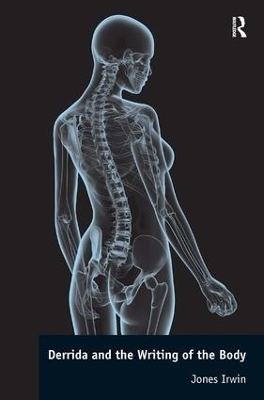
Derrida and the Writing of the Body
Seiten
2010
Routledge (Verlag)
978-0-7546-7865-6 (ISBN)
Routledge (Verlag)
978-0-7546-7865-6 (ISBN)
Michel Foucault refers to 1965-1970 as, in philosophical terms, 'the five brief, impassioned, jubilant, enigmatic years'. This book reinterprets Jacques Derrida's work from this period, most especially in L'Ecriture et la Difference, and argues that a transformation takes place here which has been marginalized in readings of his work.
Michel Foucault refers to 1965-1970 as, in philosophical terms, 'the five brief, impassioned, jubilant, enigmatic years'. This book reinterprets Jacques Derrida's work from this period, most especially in L'Écriture et la Différence (Writing and Difference), and argues that a transformation takes place here which has been marginalized in readings of his work to date. Irwin follows with a look at how the 'grammatological opening' becomes crucial for Derrida's work in the 1970s and beyond, incorporating one of his last readings of embodiment from 2000. By drawing our attention to the politics of desire and sexuality, this groundbreaking book engages with the work of key continental theorists, including Artaud, Bataille, Nietzsche, Heidegger, Habermas and Cixous, whilst also examining Derrida's relationship with Plato and feminist theory. It will appeal to a wide range of readers within the social sciences and philosophy, particularly those with interests in gender and sexuality, social theory, continental thought, queer studies and literary theory.
Michel Foucault refers to 1965-1970 as, in philosophical terms, 'the five brief, impassioned, jubilant, enigmatic years'. This book reinterprets Jacques Derrida's work from this period, most especially in L'Écriture et la Différence (Writing and Difference), and argues that a transformation takes place here which has been marginalized in readings of his work to date. Irwin follows with a look at how the 'grammatological opening' becomes crucial for Derrida's work in the 1970s and beyond, incorporating one of his last readings of embodiment from 2000. By drawing our attention to the politics of desire and sexuality, this groundbreaking book engages with the work of key continental theorists, including Artaud, Bataille, Nietzsche, Heidegger, Habermas and Cixous, whilst also examining Derrida's relationship with Plato and feminist theory. It will appeal to a wide range of readers within the social sciences and philosophy, particularly those with interests in gender and sexuality, social theory, continental thought, queer studies and literary theory.
Jones Irwin is Lecturer in Philosophy and Human Development at St. Patrick's College, Dublin City University, Ireland
Acknowledgments; Introduction; Chapter 1 Derrida, Artaud’s Theatre of Cruelty and the ‘Writing of the Body’; Chapter 2 ‘Except for a Certain Laughter’; Chapter 3 From the ‘Outwork’ to ‘Plato’s Pharmacy’; Chapter 4 Mallarmé After Plato; Chapter 5 What if Truth Were a Woman? On Spurs; Chapter 6 On Derrida and Feminism; Chapter 7 Re-Politicising Deconstruction; Chapter 101 Conclusion;
| Erscheint lt. Verlag | 28.6.2010 |
|---|---|
| Verlagsort | London |
| Sprache | englisch |
| Maße | 156 x 234 mm |
| Gewicht | 521 g |
| Themenwelt | Geisteswissenschaften ► Philosophie ► Philosophie der Neuzeit |
| Sozialwissenschaften ► Ethnologie | |
| Sozialwissenschaften ► Soziologie ► Allgemeines / Lexika | |
| Sozialwissenschaften ► Soziologie ► Gender Studies | |
| ISBN-10 | 0-7546-7865-2 / 0754678652 |
| ISBN-13 | 978-0-7546-7865-6 / 9780754678656 |
| Zustand | Neuware |
| Informationen gemäß Produktsicherheitsverordnung (GPSR) | |
| Haben Sie eine Frage zum Produkt? |
Mehr entdecken
aus dem Bereich

aus dem Bereich
ein Dialog mit Simone Weil
Buch | Softcover (2025)
Matthes & Seitz Berlin (Verlag)
CHF 19,55


