


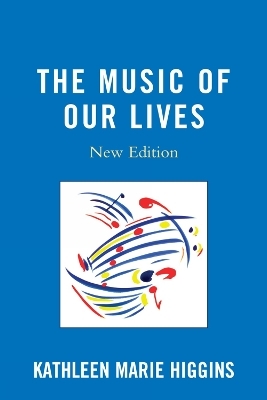
The Music of Our Lives
Seiten
2011
Lexington Books (Verlag)
978-0-7391-2085-9 (ISBN)
Lexington Books (Verlag)
978-0-7391-2085-9 (ISBN)
Kathleen Higgins argues that the arguments that Plato used to defend the ethical value of music are still applicable today. Music encourages ethically valuable attitudes and behavior, provides practice in skills that are valuable in ethical life, and symbolizes ethical ideals.
Although many of the world's musical traditions recognize the positive value of music for ethical life, the Western philosophical tradition has largely forgotten this idea. The dominance of formalism in musical aesthetics has encouraged this abandonment of the idea that music has an ethical dimension. Greater attention to musical experience and to the way that context affects the meaning that music has to performers and listeners helps to bring music's ethical potential into focus. In The Music of Our Lives, Kathleen Higgins argues that the arguments that Plato used to defend the ethical value of music are still applicable today. Music encourages ethically valuable attitudes and behavior, provides practice in skills that are valuable in ethical life, and symbolizes ethical ideals and the possibility of interpersonal harmony. In these ways it develops our ability to live well and to think clearly about our ethical situation. Music provides a model for the good human life.
Although many of the world's musical traditions recognize the positive value of music for ethical life, the Western philosophical tradition has largely forgotten this idea. The dominance of formalism in musical aesthetics has encouraged this abandonment of the idea that music has an ethical dimension. Greater attention to musical experience and to the way that context affects the meaning that music has to performers and listeners helps to bring music's ethical potential into focus. In The Music of Our Lives, Kathleen Higgins argues that the arguments that Plato used to defend the ethical value of music are still applicable today. Music encourages ethically valuable attitudes and behavior, provides practice in skills that are valuable in ethical life, and symbolizes ethical ideals and the possibility of interpersonal harmony. In these ways it develops our ability to live well and to think clearly about our ethical situation. Music provides a model for the good human life.
Kathleen Marie Higgins is professor of philosophy at the University of Texas at Austin and author of Nietzsche's Zarathustra.
Chapter 1 Foreword to the Revised Edition
Chapter 2 Introduction
Chapter 3 Music "in Itself": Its Development and Status
Chapter 4 The Many Faces of Form
Chapter 5 Music and Emotions: The History
Chapter 6 Music and Emotions: Theories, Problems, and Solutions
Chapter 7 The Ethical Aspects of Music: Music as Influence and Educator
Chapter 8 The Ethical Aspects of Music: Music as Metaphor, Symbol, and Model
Chapter 9 How Music can Assist Philosophical Ethics
| Sprache | englisch |
|---|---|
| Maße | 156 x 232 mm |
| Gewicht | 397 g |
| Themenwelt | Kunst / Musik / Theater ► Musik ► Musiktheorie / Musiklehre |
| Sonstiges ► Geschenkbücher | |
| Geisteswissenschaften ► Philosophie ► Ethik | |
| ISBN-10 | 0-7391-2085-9 / 0739120859 |
| ISBN-13 | 978-0-7391-2085-9 / 9780739120859 |
| Zustand | Neuware |
| Informationen gemäß Produktsicherheitsverordnung (GPSR) | |
| Haben Sie eine Frage zum Produkt? |
Mehr entdecken
aus dem Bereich


aus dem Bereich
ein reisender Virtuose erzählt
Buch | Softcover (2025)
Butz, Josef, Dr. (Verlag)
CHF 25,20
Grundbegriffe, Harmonik, Formen, Instrumente
Buch | Softcover (2021)
Philipp Reclam (Verlag)
CHF 15,90


