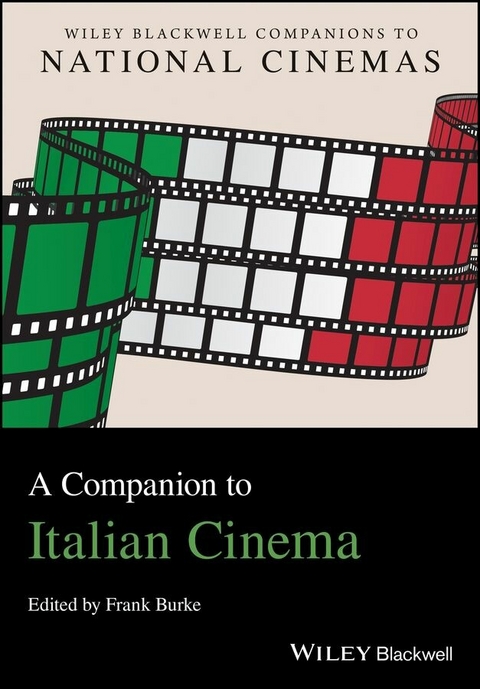
Written by leading figures in the field, A Companion to Italian Cinema re-maps Italian cinema studies, employing new perspectives on traditional issues, and fresh theoretical approaches to the exciting history and field of Italian cinema.
- Offers new approaches to Italian cinema, whose importance in the post-war period was unrivalled
- Presents a theory based approach to historical and archival material
- Includes work by both established and more recent scholars, with new takes on traditional critical issues, and new theoretical approaches to the exciting history and field of Italian cinema
- Covers recent issues such as feminism, stardom, queer cinema, immigration and postcolonialism, self-reflexivity and postmodernism, popular genre cinema, and digitalization
- A comprehensive collection of essays addressing the prominent films, directors and cinematic forms of Italian cinema, which will become a standard resource for academic and non-academic purposes alike
Written by leading figures in the field, A Companion to Italian Cinema re-maps Italian cinema studies, employing new perspectives on traditional issues, and fresh theoretical approaches to the exciting history and field of Italian cinema. Offers new approaches to Italian cinema, whose importance in the post-war period was unrivalled Presents a theory based approach to historical and archival material Includes work by both established and more recent scholars, with new takes on traditional critical issues, and new theoretical approaches to the exciting history and field of Italian cinema Covers recent issues such as feminism, stardom, queer cinema, immigration and postcolonialism, self-reflexivity and postmodernism, popular genre cinema, and digitalization A comprehensive collection of essays addressing the prominent films, directors and cinematic forms of Italian cinema, which will become a standard resource for academic and non-academic purposes alike
Frank Burke is Professor Emeritus of Film at Queen's University, Canada. He is the author of Fellini's Films: From Postwar to Postmodern (1996) and Federico Fellini: Variety Lights to Dolce Vita (1984) and has co-edited Federico Fellini: Contemporary Perspectives (with Marguerite R. Waller, 2002). He has produced over 100 publications, keynote addresses, invited lectures, and special sessions on Italian and North American cinema, and has edited for the Canadian Journal of Political and Social Theory and Literature/Film Quarterly.
Title Page 5
Copyright Page 6
Contents 9
Acknowledgments 13
Notes on Contributors 14
Editor’s Notes 21
Glossary 22
Preface and In Memoriam 26
Part I First Things 29
Chapter 1 Introduction 31
Italian Cinema and (Very Briefly) Visual Culture 31
Contributors and Aims of This Volume 33
The Contents of the Companion 34
“Metathemes” 37
Italian Cinema as Other 40
Notes 41
References 42
Chapter 2 Italian Cinema Studies: A Conversation with Peter Bondanella 44
Notes 54
References 54
Part II Historical/Chronological Perspectives: Silent Cinema 57
Chapter 3 Silent Italian Cinema: A New Medium for Old Geographies 59
Before 1905: Films about Italy 60
Domestic Production 62
Arte Muta, Dive, and Auteurs 67
Vernacular Realism 69
The Great War and Beyond 71
Film Discourse 72
Notes 73
References 74
Chapter 4 Stardom in Italian Silent Cinema 76
Introduction 76
Terminology 77
The Birth of Divismo 79
The Dive, and the Diva Film 81
The Divo 85
Note 90
References 90
Fascism and Italian Cinema 93
Chapter 5 Genre, Politics, and the Fascist Subject in the Cinema of Italy (1922–1945) 94
Industrial and Political Efforts to Create a Popular Film Industry 94
Refashioning Genres: Directors and the Comedy 96
Comedy and Stardom 98
The Forms of Melodrama 99
History, Politics, and Myth: Luis Trenker and Alessandro Blasetti 100
Melodrama and Stardom 104
Calligraphism: Melodrama, Formalism, and War 106
Afterthoughts 108
Note 109
References 109
The Italian Film Industry 111
Chapter 6 Staying Alive: The Italian Film Industry from the Postwar to Today 112
Notes 128
References 129
Cinema and Religion 131
Chapter 7 Italian Cinema and Catholicism: From Vigilanti cura to Vatican II and Beyond 132
Introduction 132
First Stage: Art or Morality? 132
Second Stage: Catholic Production 135
Third Stage: The “Folly” of the “Povericristi” 139
Fourth Stage: Toward the Second Vatican Council and Beyond 144
Notes 146
References 147
Neorealism 149
Chapter 8 The Italian Neorealist Experience: The Orphan Child and New Ways of Looking at the World 150
Introduction 150
Rossellini’s (Anti-)War Trilogy 153
De Sica’s Subversive Orphan Children 157
The Italian Neorealist Experience: Beyond Camps 161
Notes 164
References 164
Chapter 9 Italian Neorealism: Quotidian Storytelling and Transnational Horizons 167
Introduction 167
Initial Observations on Neorealism 168
Italian Neorealism Beyond the First Years 170
Multiple Directions of Influence 172
Roma città aperta and Ladri di biciclette: Echoes, Parallels, Influence 177
The Most Quotidian Story, an Epilogue 180
Notes 180
References 181
Stardom and the 1950s 185
Chapter 10 Italian Female Stars and Their Fans in the 1950s and 1960s 186
Introduction 187
Italian Fan Studies 188
Methodology 189
The Peculiarity of Fandom in Italy 189
The Magazines 190
The Place of Fan Mail in the Stars’ Relationship with Their Fans 193
The Fans’ Relationships to the Stars 197
Conclusion 203
Notes 204
References 204
Film Comedy—the 1950s and Beyond 207
Chapter 11 The Popularity of Italian Film Comedy 208
From Early Italian Comedy to the Hunger and Harmony of Pink Neorealism 209
Toward commedia all’italiana: Spectacle, Masks, Totò, and Sordi 212
The Economic Miracle and commedia all’italiana 215
After the “Boom”: The 1970s and Beyond 217
What’s So Funny? 218
Notes 224
References 224
Chapter 12 The Question of Italian National Character and the Limits of Commedia all’italiana: Alberto Sordi, Federico Fellini, and Carlo Lizzani 226
Cinema and Social Commentary 227
The Sordi Persona and Italian Modernity 230
Fellini and National Vices and Virtues 233
Carlo Lizzani and the Cinema of History and Actuality 237
Conclusion 240
Note 241
References 241
French-Italian Film Collaborations into the 1960s 243
Chapter 13 Cross-Fertilization between France and Italy from Neorealism through the 1960s 244
Before Neorealism 244
Neorealism between France and Italy 246
The Case of Rossellini 247
De Sica and Zavattini 248
Coproductions 249
The 1960s 249
The Nouvelle Vague and New Italian Cinema of the 1960s 250
New Theoretical Perspectives 251
Note 252
References 252
Auteur Cinema (1960s and 1970s) 255
Chapter 14 Italian 1960s Auteur Cinema (and beyond): Classic, Modern, Postmodern 256
Theoretical Introduction 256
Visconti, Popular Auteur 259
Antonioni, the Modern Auteur Par Excellence 265
Fellini, from the “World Text” to the “Self Text” 268
From Modern to Postmodern Auteur 272
Notes 274
References 275
Popular Film Genres (1950s to 1970s) 277
Chapter 15 Italian Popular Film Genres 278
The Peplum 281
The Spaghetti Western 283
Italian Horror 286
The Poliziottesco 289
Conclusion 291
Notes 292
References 293
Politics and/of Terrorism (1960s to the Present) 295
Chapter 16 The Representation of Terrorism in Italian Cinema 296
The Warning Signs 296
Genre Cinema and the Affairs of State 297
The Auteurs’ Disorientation 300
The 1980s: Between the Political and the Individual Spheres 301
A Rendering of Accounts: The 1990s 305
The New Millennium: “Vintage” and Revival 306
Notes 309
References 309
Italian Cinema from the 1970s to the Present 311
Chapter 17 From Cinecittà to the Small Screen: Italian Cinema After the Mid-1970s Crisis 312
Prologue 312
Introduction 313
The End of the “Golden Age” 314
The April 7 Trial 316
Politics and Economy of the Intimate Screen 318
1968: “Like Polaroids” 320
How to Make a Movie in Time of Crisis 324
Conclusion 328
Notes 328
References 329
Chapter 18 Contemporary Italian Film in the New Media World 331
Notes 347
References 348
Part III Alternative Film Forms 351
Chapter 19 Thinking Cinema: The Essay Film Tradition in Italy 353
The Origins and Development of the Essay Film 353
Essayist Nonfiction Today 360
Notes 365
References 365
Chapter 20 Italian Experimental Cinema: Art, Politics, Poetry 368
Sandra Lischi 368
Avant-garde, Independents, Experimentalists: A Premise 369
The Italian Panorama: From the Futurists Onward 371
The 1960s and Beyond 373
Boundary Crossings: Pathways in Artist Cinema 376
Alchemies, Memory, History 378
Animations, Research, Theater 381
The Passage to Video 382
Notes 386
References 387
Chapter 21 Notes on the History of Italian Nonfiction Film 389
Beginnings 389
Italian Documentary after World War II 392
Notes 399
References 400
Part IV Critical, Aesthetic, and Theoretical Issues 403
Chapter 22 A Century of Music in Italian Cinema 405
The Sound of Silence (1896–1930) 406
It’s Time to Sing a Song (1930–1945) 408
Reconstructing the Country: The “Liberation” of Film Music (1945–1960) 410
Specialists and Film Genres (1960–1980) 413
The Auteur Is Dead, Long Live the Auteur (1980–2010) 416
Notes 418
References 419
Chapter 23 The Practice of Dubbing and the Evolution of the Soundtrack in Italian Cinema: A Schizophonic Take 421
Celluloid Hybrids and Greta Garbo 422
Patrolling the Soundtrack 424
The Visual Regime of Cinema 426
Crafting Sound in National Cinema 428
Antonioni and the New Sound of Cinema 429
Listening to Make Sense 431
Note 434
References 434
Chapter 24 Watching Italians Turn Around: Gender, Looking, and Roman/Cinematic Modernity 436
Rome’s Awkward Modernity 437
Looking (for Love) in the Neorealist City 439
Seeing What Is and Is Not There 443
Conclusion (Looking and Seeing) 450
Notes 452
References 453
Chapter 25 Women in Italian Cinema: From the Age of Silent Cinema to the Third Millennium 455
From the Silent Era to Fascism 457
The Post–World War II Period 459
From the 1980s to the End of the Twentieth Century 464
The Third Millennium 467
Conclusion 470
Notes 471
References 473
Chapter 26 Imagining the Mezzogiorno: Old and New Paradigms 475
Preface 475
The Sociohistorical Mezzogiorno: A Theoretical Framework 475
Filmic Representations of the Mezzogiorno, Part 1: Until 1989 477
Filmic Representations of the Mezzogiorno, Part 2: After 1989 486
Notes 491
References 492
Chapter 27 The Queerness of Italian Cinema 495
Introduction 495
Queer Cinemas 496
Queering Italians 501
The Queer Signature 504
The New Queer Cinema 506
Notes 510
References 510
Chapter 28 An Accented Gaze: Italy’s Transmigrant Filmmakers 512
Notes 526
References 526
Chapter 29 How to Tell Time: Deleuze and Italian Cinema 528
Crisis in the Action-Image 529
The Crystals of Time 533
Pasolini and Free Indirect Discourse 535
Time, Thought, and Body 537
Notes 539
References 539
Chapter 30 The Screen in the Mirror: Thematic and Textual Reflexivity in Italian Cinema 540
The Concept of Reflexivity 540
The Postmodern Gaze 541
A Classic Spectacle of Modernity 544
Cinema’s Modern Conscience 550
The Archive of Dreams, Bodies, and Tales 556
Notes 557
References 557
Chapter 31 Deterritorialized Spaces and Queer Clocks: Intertextuality in Italian Cinema 559
Literary and Visual Contexts 559
Theory 561
Practice 565
A Worldwide Hyperfilm 573
“Queer Clocks” 574
Notes 575
References 576
Part V Last Things 579
Chapter 32 Forum: The Present State and Likely Prospects of Italian Cinema and Cinema Studies 581
Editor’s Introduction 581
On (the Notion of) Methodology 582
Cinema, Impegno, and the Local 583
Globalization, Transnationalism, Translocality, Nationality 585
Ecocinema 587
The Current Cinematic and Cultural Scene 589
The Crisis of Exhibition/Importance of Curatorial Work 592
(Other) Material and Institutional Conditions and Limitations 592
Current Areas of Investigation 593
Pleasure, the Popular (Again), Cultural and Gender Studies 594
Italian Cinema and Cinema Studies: The Road from Here 595
Notes 596
References 596
Index 600
EULA 647
| Erscheint lt. Verlag | 13.4.2017 |
|---|---|
| Reihe/Serie | CNCZ - The Wiley-Blackwell Companions to National Cinemas |
| CNCZ - The Wiley-Blackwell Companions to National Cinemas | Wiley Blackwell Companions to National Cinemas |
| Sprache | englisch |
| Themenwelt | Kunst / Musik / Theater ► Film / TV |
| Sozialwissenschaften ► Kommunikation / Medien ► Medienwissenschaft | |
| Schlagworte | alberto sordi • auteur cinema • Carlo Lizzani • Catholicism and Italian cinema • Commedia all'italiana • Communism/Socialism/Catholicism • contemporary Italian cinema • Cultural Studies • Digitalization • Fascism • Federico Fellini • feminism in Italian cinema • Film • Filmforschung • Film Studies • Gilles Deleuze • immigration and postcolonialism • Italian Cinema • Italian film stars • Italian genre film • Italian Silent Cinema • Italien /Film • Kino • Kulturwissenschaften • music in Italian cinema • nation cinema • Neorealism • popular genre cinema • queer Italian cinema • self-reflexivity and postmodernism • Stardom • ” terrorism in Italian cinema • the Italian character • the Mezzogiorno • the “southern question |
| ISBN-10 | 1-119-04399-9 / 1119043999 |
| ISBN-13 | 978-1-119-04399-7 / 9781119043997 |
| Informationen gemäß Produktsicherheitsverordnung (GPSR) | |
| Haben Sie eine Frage zum Produkt? |
 PDF (Adobe DRM)
Kopierschutz: Adobe-DRM
Adobe-DRM ist ein Kopierschutz, der das eBook vor Mißbrauch schützen soll. Dabei wird das eBook bereits beim Download auf Ihre persönliche Adobe-ID autorisiert. Lesen können Sie das eBook dann nur auf den Geräten, welche ebenfalls auf Ihre Adobe-ID registriert sind.
Details zum Adobe-DRM
Dateiformat: PDF (Portable Document Format)
Mit einem festen Seitenlayout eignet sich die PDF besonders für Fachbücher mit Spalten, Tabellen und Abbildungen. Eine PDF kann auf fast allen Geräten angezeigt werden, ist aber für kleine Displays (Smartphone, eReader) nur eingeschränkt geeignet.
Systemvoraussetzungen:
PC/Mac: Mit einem PC oder Mac können Sie dieses eBook lesen. Sie benötigen eine
eReader: Dieses eBook kann mit (fast) allen eBook-Readern gelesen werden. Mit dem amazon-Kindle ist es aber nicht kompatibel.
Smartphone/Tablet: Egal ob Apple oder Android, dieses eBook können Sie lesen. Sie benötigen eine
Geräteliste und zusätzliche Hinweise
Buying eBooks from abroad
For tax law reasons we can sell eBooks just within Germany and Switzerland. Regrettably we cannot fulfill eBook-orders from other countries.
aus dem Bereich