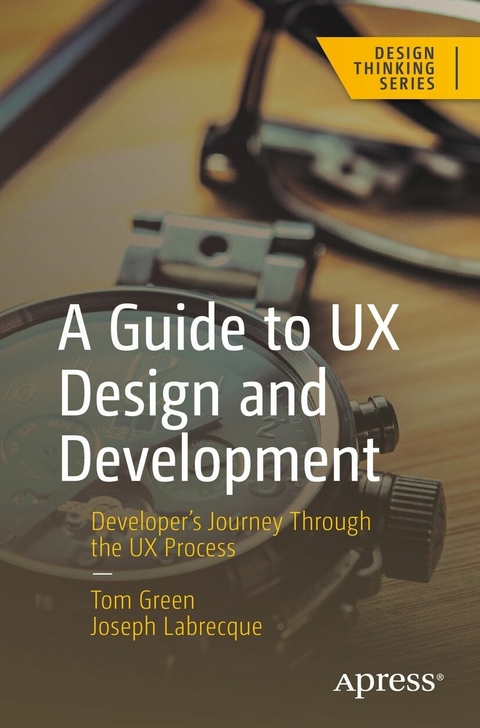
A Guide to UX Design and Development (eBook)
246 Seiten
Apress (Verlag)
978-1-4842-9576-2 (ISBN)
Gain a thorough understanding of the two pillars of any User Experience project: the mission and the process. The mission is to keep the user in mind at each step or milestone as the developer progresses through the project. The process is how that mission is accomplished through collaboration and the use of research, design and development technologies. This book walks you through a developer's journey through the UX process, from start to finish.
A Guide to UX Design and Development concentrates on the intersection of what is called “DesignOps” and “DevOps.” That intersection is where collaboration between all members of the team, including stakeholders and clients, occurs and neither DesignOps nor DevOps can go beyond being considered just buzzwords if they instead silo design and development. To highlight the UX Mission and illustrate the responsibility developers also hold for the user experience, authors Tom Green and Joseph Labrecque take you througha hypothetical project involving the development of a parking app for a municipal parking authority. As the book progresses, they concentrate on the developer's journey through the whole project from discovery to product release. In this journey, you will see how developers can make an impact and contribute to the user experience.
This will include such topics as why there is a need for both a user journey map and a technical journey map. The authors explain why prototyping is not as complicated as it is made out to be because it is simply an early low-cost and disposable minimal viable product that gives the developer a deep understanding of the project's intent in support of the UX Mission. You will also explore the creation and use of design systems and why the developer's role is just as important as the people who create the design system. The role and responsibility of the developer in user testing is discussed in the context of a variety of testing and assessment methodsconducted to achieve the UX mission.
Finally, you’ll gain an understanding of how design and development deliverables are negotiated, prepared and sent out for research at each step of the process, and how the developer is involved.
What You Will Learn
- Understand the evolving role of the developer in a team-based environment
- Learn the five stages of the UX process
- Discover the importance of collaboration and communication with stakeholders, designers, and developers at every stage of the process
- Learn a variety of design and development documents created during the UX process
Who This Book Is For
Developers and designers involved in the UX Process, as well as developers trying to make sense of the confusing amount of information out there regarding their role in the UX process.
Gain a thorough understanding of the two pillars of any User Experience project: the mission and the process. The mission is to keep the user in mind at each step or milestone as the developer progresses through the project. The process is how that mission is accomplished through collaboration and the use of research, design and development technologies. This book walks you through a developer's journey through the UX process, from start to finish. A Guide to UX Design and Development concentrates on the intersection of what is called DesignOps and DevOps. That intersection is where collaboration between all members of the team, including stakeholders and clients, occurs and neither DesignOps nor DevOps can go beyond being considered just buzzwords if they instead silo design and development. To highlight the UX Mission and illustrate the responsibility developers also hold for the user experience, authors Tom Green and Joseph Labrecque take you througha hypothetical project involving the development of a parking app for a municipal parking authority. As the book progresses, they concentrate on the developer's journey through the whole project from discovery to product release. In this journey, you will see how developers can make an impact and contribute to the user experience.This will include such topics as why there is a need for both a user journey map and a technical journey map. The authors explain why prototyping is not as complicated as it is made out to be because it is simply an early low-cost and disposable minimal viable product that gives the developer a deep understanding of the project's intent in support of the UX Mission. You will also explore the creation and use of design systems and why the developer's role is just as important as the people who create the design system. The role and responsibility of the developer in user testing is discussed in the context of a variety of testing and assessment methodsconducted to achieve the UX mission.Finally, you ll gain an understanding of how design and development deliverables are negotiated, prepared and sent out for research at each step of the process, and how the developer is involved.What You Will LearnUnderstand the evolving role of the developer in a team-based environmentLearn the five stages of the UX process Discover the importance of collaboration and communication with stakeholders, designers, and developers at every stage of the processLearn a variety of design and development documents created during the UX processWho This Book Is ForDevelopers and designers involved in the UX Process, as well as developers trying to make sense of the confusing amount of information out there regarding their role in the UX process.
| Erscheint lt. Verlag | 8.7.2023 |
|---|---|
| Reihe/Serie | Design Thinking | Design Thinking |
| Zusatzinfo | XXIII, 246 p. 91 illus., 84 illus. in color. |
| Sprache | englisch |
| Themenwelt | Informatik ► Software Entwicklung ► User Interfaces (HCI) |
| Mathematik / Informatik ► Informatik ► Web / Internet | |
| Schlagworte | DesignOps • DevOps • UX • UXDesign • UXDevelopment |
| ISBN-10 | 1-4842-9576-5 / 1484295765 |
| ISBN-13 | 978-1-4842-9576-2 / 9781484295762 |
| Informationen gemäß Produktsicherheitsverordnung (GPSR) | |
| Haben Sie eine Frage zum Produkt? |
 PDF (Wasserzeichen)
Größe: 8,9 MB
DRM: Digitales Wasserzeichen
Dieses eBook enthält ein digitales Wasserzeichen und ist damit für Sie personalisiert. Bei einer missbräuchlichen Weitergabe des eBooks an Dritte ist eine Rückverfolgung an die Quelle möglich.
Dateiformat: PDF (Portable Document Format)
Mit einem festen Seitenlayout eignet sich die PDF besonders für Fachbücher mit Spalten, Tabellen und Abbildungen. Eine PDF kann auf fast allen Geräten angezeigt werden, ist aber für kleine Displays (Smartphone, eReader) nur eingeschränkt geeignet.
Systemvoraussetzungen:
PC/Mac: Mit einem PC oder Mac können Sie dieses eBook lesen. Sie benötigen dafür einen PDF-Viewer - z.B. den Adobe Reader oder Adobe Digital Editions.
eReader: Dieses eBook kann mit (fast) allen eBook-Readern gelesen werden. Mit dem amazon-Kindle ist es aber nicht kompatibel.
Smartphone/Tablet: Egal ob Apple oder Android, dieses eBook können Sie lesen. Sie benötigen dafür einen PDF-Viewer - z.B. die kostenlose Adobe Digital Editions-App.
Buying eBooks from abroad
For tax law reasons we can sell eBooks just within Germany and Switzerland. Regrettably we cannot fulfill eBook-orders from other countries.
aus dem Bereich