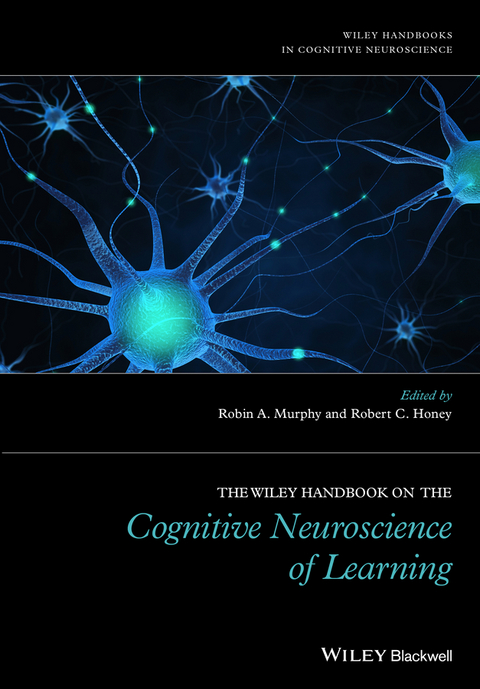
- Covers a broad range of topics while maintaining an overarching integrative approach
- Includes contributions from leading authorities in the fields of cognitive neuroscience, associative learning, and behavioral psychology
- Extends beyond the psychological study of learning to incorporate coverage of the latest developments in neuroscientific research
About the Contributors vii
Preface x
1 The Cognitive Neuroscience of Learning: Introduction and Intent 1
Robert C. Honey and Robin A. Murphy
Part I Associative Learning 5
2 The Determining Conditions for Pavlovian Learning: Psychological and Neurobiological Considerations 7
Helen M. Nasser and Andrew R. Delamater
3 Learning to Be Ready: Dopamine and Associative Computations 47
Nicola C. Byrom and Robin A. Murphy
4 Learning About Stimuli That Are Present and Those That Are Not: Separable Acquisition Processes for Direct and Mediated Learning 69
Tzu-Ching E. Lin and Robert C. Honey
5 Neural Substrates of Learning and Attentive Processes 86
David N. George
6 Associative Learning and Derived Attention in Humans 114
Mike Le Pelley, Tom Beesley, and Oren Griffiths
7 The Epigenetics of Neural Learning 136
Zohar Bronfman, Simona Ginsburg, and Eva Jablonka
Part II Associative Representations Memory, Recognition, and Perception 177
8 Associative and Nonassociative Processes in Rodent Recognition Memory 179
David J. Sanderson
9 Perceptual Learning: Representations and Their Development 201
Dominic M. Dwyer and Matthew E. Mundy
10 Human Perceptual Learning and Categorization 223
Paulo F. Carvalho and Robert L. Goldstone
11 Computational and Functional Specialization of Memory 249
Rosie Cowell, Tim Bussey, and Lisa Saksida
Space and Time 283
12 Mechanisms of Contextual Conditioning: Some Thoughts on Excitatory and Inhibitory Context Conditioning 285
Robert J. McDonald and Nancy S. Hong
13 The Relation Between Spatial and Nonspatial Learning 313
Anthony McGregor
14 Timing and Conditioning: Theoretical Issues 348
Charlotte Bonardi, Timothy H. C. Cheung, Esther Mondragón, and Shu K. E. Tam
15 Human Learning About Causation 380
Irina Baetu and Andy G. Baker
Part III Associative Perspectives on the Human Condition 409
16 The Psychological and Physiological Mechanisms of Habit Formation 411
Nura W. Lingawi, Amir Dezfouli, and Bernard W. Balleine
17 An Associative Account of Avoidance 442
Claire M. Gillan, Gonzalo P. Urcelay, and Trevor W. Robbins
18 Child and Adolescent Anxiety: Does Fear Conditioning Play a Role? 468
Katharina Pittner, Kathrin Cohen Kadosh, and Jennifer Y. F. Lau
19 Association, Inhibition, and Action 489
Ian McLaren and Frederick Verbruggen
20 Mirror Neurons from Associative Learning 515
Caroline Catmur, Clare Press, and Cecilia Heyes
21 Associative Approaches to Lexical Development 538
Kim Plunkett
22 Neuroscience of Value?]Guided Choice 554
Gerhard Jocham, Erie Boorman, and Tim Behrens
Index 592
The Wiley Handbook on the Cognitive Neuroscience of Learning charts the evolution of associative analysis and the neuroscientific study of behavior as parallel approaches to understanding how the brain learns that both challenge and inform each other. Covers a broad range of topics while maintaining an overarching integrative approach Includes contributions from leading authorities in the fields of cognitive neuroscience, associative learning, and behavioral psychology Extends beyond the psychological study of learning to incorporate coverage of the latest developments in neuroscientific research
About the Contributors vii Preface x 1 The Cognitive Neuroscience of Learning: Introduction and Intent 1 Robert C. Honey and Robin A. Murphy Part I Associative Learning 5 2 The Determining Conditions for Pavlovian Learning: Psychological and Neurobiological Considerations 7 Helen M. Nasser and Andrew R. Delamater 3 Learning to Be Ready: Dopamine and Associative Computations 47 Nicola C. Byrom and Robin A. Murphy 4 Learning About Stimuli That Are Present and Those That Are Not: Separable Acquisition Processes for Direct and Mediated Learning 69 Tzu-Ching E. Lin and Robert C. Honey 5 Neural Substrates of Learning and Attentive Processes 86 David N. George 6 Associative Learning and Derived Attention in Humans 114 Mike Le Pelley, Tom Beesley, and Oren Griffiths 7 The Epigenetics of Neural Learning 136 Zohar Bronfman, Simona Ginsburg, and Eva Jablonka Part II Associative Representations Memory, Recognition, and Perception 177 8 Associative and Nonassociative Processes in Rodent Recognition Memory 179 David J. Sanderson 9 Perceptual Learning: Representations and Their Development 201 Dominic M. Dwyer and Matthew E. Mundy 10 Human Perceptual Learning and Categorization 223 Paulo F. Carvalho and Robert L. Goldstone 11 Computational and Functional Specialization of Memory 249 Rosie Cowell, Tim Bussey, and Lisa Saksida Space and Time 283 12 Mechanisms of Contextual Conditioning: Some Thoughts on Excitatory and Inhibitory Context Conditioning 285 Robert J. McDonald and Nancy S. Hong 13 The Relation Between Spatial and Nonspatial Learning 313 Anthony McGregor 14 Timing and Conditioning: Theoretical Issues 348 Charlotte Bonardi, Timothy H. C. Cheung, Esther Mondragón, and Shu K. E. Tam 15 Human Learning About Causation 380 Irina Baetu and Andy G. Baker Part III Associative Perspectives on the Human Condition 409 16 The Psychological and Physiological Mechanisms of Habit Formation 411 Nura W. Lingawi, Amir Dezfouli, and Bernard W. Balleine 17 An Associative Account of Avoidance 442 Claire M. Gillan, Gonzalo P. Urcelay, and Trevor W. Robbins 18 Child and Adolescent Anxiety: Does Fear Conditioning Play a Role? 468 Katharina Pittner, Kathrin Cohen Kadosh, and Jennifer Y. F. Lau 19 Association, Inhibition, and Action 489 Ian McLaren and Frederick Verbruggen 20 Mirror Neurons from Associative Learning 515 Caroline Catmur, Clare Press, and Cecilia Heyes 21 Associative Approaches to Lexical Development 538 Kim Plunkett 22 Neuroscience of Value?]Guided Choice 554 Gerhard Jocham, Erie Boorman, and Tim Behrens Index 592
About the Contributors vii
Preface x
1 The Cognitive Neuroscience of Learning: Introduction and Intent 1
Robert C. Honey and Robin A. Murphy
Part I Associative Learning 5
2 The Determining Conditions for Pavlovian Learning: Psychological and Neurobiological Considerations 7
Helen M. Nasser and Andrew R. Delamater
3 Learning to Be Ready: Dopamine and Associative Computations 47
Nicola C. Byrom and Robin A. Murphy
4 Learning About Stimuli That Are Present and Those That Are Not: Separable Acquisition Processes for Direct and Mediated Learning 69
Tzu-Ching E. Lin and Robert C. Honey
5 Neural Substrates of Learning and Attentive Processes 86
David N. George
6 Associative Learning and Derived Attention in Humans 114
Mike Le Pelley, Tom Beesley, and Oren Griffiths
7 The Epigenetics of Neural Learning 136
Zohar Bronfman, Simona Ginsburg, and Eva Jablonka
Part II Associative Representations Memory, Recognition, and Perception 177
8 Associative and Nonassociative Processes in Rodent Recognition Memory 179
David J. Sanderson
9 Perceptual Learning: Representations and Their Development 201
Dominic M. Dwyer and Matthew E. Mundy
10 Human Perceptual Learning and Categorization 223
Paulo F. Carvalho and Robert L. Goldstone
11 Computational and Functional Specialization of Memory 249
Rosie Cowell, Tim Bussey, and Lisa Saksida
Space and Time 283
12 Mechanisms of Contextual Conditioning: Some Thoughts on Excitatory and Inhibitory Context Conditioning 285
Robert J. McDonald and Nancy S. Hong
13 The Relation Between Spatial and Nonspatial Learning 313
Anthony McGregor
14 Timing and Conditioning: Theoretical Issues 348
Charlotte Bonardi, Timothy H. C. Cheung, Esther Mondragón, and Shu K. E. Tam
15 Human Learning About Causation 380
Irina Baetu and Andy G. Baker
Part III Associative Perspectives on the Human Condition 409
16 The Psychological and Physiological Mechanisms of Habit Formation 411
Nura W. Lingawi, Amir Dezfouli, and Bernard W. Balleine
17 An Associative Account of Avoidance 442
Claire M. Gillan, Gonzalo P. Urcelay, and Trevor W. Robbins
18 Child and Adolescent Anxiety: Does Fear Conditioning Play a Role? 468
Katharina Pittner, Kathrin Cohen Kadosh, and Jennifer Y. F. Lau
19 Association, Inhibition, and Action 489
Ian McLaren and Frederick Verbruggen
20 Mirror Neurons from Associative Learning 515
Caroline Catmur, Clare Press, and Cecilia Heyes
21 Associative Approaches to Lexical Development 538
Kim Plunkett
22 Neuroscience of Value ]Guided Choice 554
Gerhard Jocham, Erie Boorman, and Tim Behrens
Index 592
1
The Cognitive Neuroscience of Learning: Introduction and Intent
Robert C. Honey and Robin A. Murphy
If an organism’s behavior is to become better tuned to its environment, then there must be plasticity in those systems that interact with that environment. One consequence of such plasticity is that the organism’s mental life is no longer bound to the here and now but reflects the interplay between the here and now and the there and then. Scientists from a variety of disciplines have studied the processes of learning that provide the basis for this interplay. While some have inferred the nature of the underlying conceptual or hypothetical processes through the detailed analysis of behavior in a range of experimental preparations, others have examined the neural processes and brain systems involved by making use of these and other preparations. To be sure, the preparations that have been employed often vary considerably in terms of their surface characteristics and the uses to which they are put. But this fact should not distract one from attempting to develop a parsimonious analysis, and it with this principle in mind that this handbook was conceived. Its focus is on the cognitive neuroscience of learning. Our frequent use of the qualifier Associative, as in Associative Learning, reflects either our bias or the acknowledgment of the fact that the formal analysis of all learning requires an associative perspective.
According to an associative analysis of learning, past experiences are embodied in the changes in the efficacy of links among the constituents of that experience. These associative links allow the presence of a subset of the constituents to affect the retrieval of a previous experience in its entirety: they provide a link, both theoretically and metaphorically, between the past and the present. We focus on this process because it has provided the basis for integration and rapprochement across different levels of analysis and different species, and it has long been argued that associative learning provides a potential shared basis for many aspects of behavior and cognition – for many forms of learning that might appear superficially distinct.
Hence, the temporary nervous connexion is a universal physiological phenomenon both in the animal world and in our own. And at the same time it is likewise a psychic phenomenon, which psychologists call an association, no matter whether it is a combination of various actions or impressions, or that of letters, words, and thoughts. What reason might there be for drawing any distinction between what is known to a physiologist as a temporary connexion and to a psychologist as an association? Here we have a perfect coalescence, a complete absorption of one by the other, a complete identification. Psychologists seem to have likewise acknowledged this, for they (or at any rate some of them) have made statements that experiments with conditioned reflexes have provided associative psychology … with a firm basis.
(Pavlov, 1941, p. 171)
The breadth of application evident in Pavlov’s treatise, and that of some of his contemporaries and successors, has often struck many as overly ambitious, provocative, or even plain misguided. The idea that what seems to be a rather simple process might play a role in such a broad range of phenomena is certainly bold; and some have argued that such an enterprise is flawed for a variety of reasons: where is the direct evidence of the operation of associative processes, how could such a simple process be sensitive to the inherent complexity and ambiguity in the real world, and so on. These and other criticisms have been acknowledged and have played an important role in shaping, for example, investigations of the brain bases of associative learning, and the development and assessment of more complex associative models that explicitly address a broad range of phenomena. This is not to say that the critics have been silenced or have even become any less vocal, and nor is it to imply that they have accepted the changes in the scientific landscape for which they have been partly responsible: they want the changes to be more radical, more enduring. Not to put too finer point on it, they want associationism to be like Monty Python’s parrot: an ex-theory. We hope that the contents of this handbook will serve to illustrate that the associative analysis of learning is flourishing, with each chapter highlighting recent advances that have been made by cognitive and behavioral neuroscientists.
The research conducted by cognitive and behavioral neuroscientists uses complementary techniques: ranging from the use of sophisticated behavioral procedures, which isolate key theoretical processes within computational models, to new software tools, that allow vast quantities of imaging data to be rendered in a form that enables changes in neural structures, systems, and their connectivity to be inferred. Some behavioral and neuroscientific techniques are clearly better suited or better developed for some species than others. However, the prospect of understanding the associative process at a variety of levels of analysis and across different species, which was envisaged by previous generations, is now being realized. The chapters in this handbook are intended, both individually and collectively, to provide a synthesis of how cognitive and behavioral neuroscientists have contributed to our understanding of learning that can be said to have an associative origin. To do so, we move from considering relatively simple studies of associative processes in the rat, through to learning involving time and space, to social learning and the development of language. Clearly, the superficial characteristics of the experiences that shape these different forms of learning are quite different, as are the behavioral consequences that these experiences generate. However, there remains the possibility that they are based, at least in part, on the operation of shared associative principles. Where and how these principles are implemented in the brain is an important facet of this handbook. In pursuing answers to these basic questions, of where and of how, we might be forced to reconsider our theoretical analysis of the processes involved in associative learning. This synergy is an exciting prospect that can only be exploited when a common issue is studied from differing vantage points.
Our hope is that this handbook will also help to bridge some gaps between research that has originated from different philosophical orientations and involved different levels of analysis. Briefly, there is a longstanding division between those who use purely behavioral studies to infer the nature of associative processes and those whose principal interests are in the neural bases of learning and memory. Researchers from both traditions make use of a variety of behavioral measures to draw inference about hypothetical processes, on the one hand, and about the role of various systems, structures, or neuronal processes, on the other. At its heart, the dialog does not concern the legitimacy or rigor of the research that is conducted within either tradition, but rather concerns whether or not the research conducted at one level of analysis or in one tradition provides any information that has utility to the other. Of course, it need not; and it is certainly true that historically there has been surprisingly little crosstalk between researchers from the two traditions – a fact that is likely to constrain the opportunity for productive synergy. We believe that this is a pity and hope that the chapters in this handbook will illustrate, in different ways, how such crosstalk can be mutually beneficial.
The study of associative learning is the application of an analytic technique for describing the relation between the here and now and the there and then, and for how the brain deals with this relation and its contents. It is ultimately a description of how the brain works. A theme throughout the chapters in this volume is the conclusion that where we want to understand the brain’s workings, we will need to consider how the brain performs the functions described by associative analysis. To this end, we need both the analytic tools for describing the functions and a description of how these functions are implemented at the level of tissue. We are completely aware that the two levels might look very different but also that a complete description will require both.
The counterargument – that we might understand the brain without the associative framework – can be allied to a similar challenge faced by experts in neurophysiology. Here, the question posed is whether brain imaging (which includes any one of a number of techniques for representing the internal workings of the brain in a visual or mathematical manner) goes beyond simple functional mapping of processes and can be used to uncover how the brain codes experience and communicates this experience. Passingham, Rowe, and Sakai (2013) present a convincing defense of the position that at least one technique, fMRI (a technique for using blood flow to track changes in brain activity) has uncovered a new principle of how the brain works. What is perhaps more interesting for this volume is that the principle in question looks very much like the types of associative processes described herein.
As suggested in Passingham et al. (2013), it is quite common, and relatively uncontroversial, to use the technique of fMRI to make claims about the localization of cognitive processes. However, it is more difficult to argue that this or similar techniques have informed our understanding of the principles by...
| Erscheint lt. Verlag | 26.5.2016 |
|---|---|
| Sprache | englisch |
| Themenwelt | Geisteswissenschaften ► Psychologie ► Allgemeine Psychologie |
| Geisteswissenschaften ► Psychologie ► Pädagogische Psychologie | |
| Geisteswissenschaften ► Psychologie ► Verhaltenstherapie | |
| Schlagworte | Artificial Intelligence • associative learning • attention • Behavior • Causation • Cognitive Neuropsychology & Cognitive Neuroscience • Computation • Conditioning • Connectionism • epigenetics • Ethology • Kognitive Neuropsychologie u. Neurowissenschaft • Memory • Neuropsychologie • Neuroscience • perception • Psychologie • Psychology • psychopathology • Recognition • Representation • Social • space • Time |
| ISBN-13 | 9781118650851 / 9781118650851 |
| Informationen gemäß Produktsicherheitsverordnung (GPSR) | |
| Haben Sie eine Frage zum Produkt? |
 EPUB (Adobe DRM)
Kopierschutz: Adobe-DRM
Adobe-DRM ist ein Kopierschutz, der das eBook vor Mißbrauch schützen soll. Dabei wird das eBook bereits beim Download auf Ihre persönliche Adobe-ID autorisiert. Lesen können Sie das eBook dann nur auf den Geräten, welche ebenfalls auf Ihre Adobe-ID registriert sind.
Details zum Adobe-DRM
Dateiformat: EPUB (Electronic Publication)
EPUB ist ein offener Standard für eBooks und eignet sich besonders zur Darstellung von Belletristik und Sachbüchern. Der Fließtext wird dynamisch an die Display- und Schriftgröße angepasst. Auch für mobile Lesegeräte ist EPUB daher gut geeignet.
Systemvoraussetzungen:
PC/Mac: Mit einem PC oder Mac können Sie dieses eBook lesen. Sie benötigen eine
eReader: Dieses eBook kann mit (fast) allen eBook-Readern gelesen werden. Mit dem amazon-Kindle ist es aber nicht kompatibel.
Smartphone/Tablet: Egal ob Apple oder Android, dieses eBook können Sie lesen. Sie benötigen eine
Geräteliste und zusätzliche Hinweise
Buying eBooks from abroad
For tax law reasons we can sell eBooks just within Germany and Switzerland. Regrettably we cannot fulfill eBook-orders from other countries.
aus dem Bereich