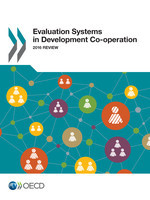
Evaluation Systems in Development Co-operation 2016 Review (eBook)
248 Seiten
OECD Publishing (Verlag)
978-92-64-26206-5 (ISBN)
Evaluation is widely recognised as an important component for learning and improving development effectiveness. Evaluation responds to public and taxpayer demands for credible information and independent assessment of development co-operation activities. The Development Assistance Committee’s Network on Development Evaluation supports members in their efforts to strengthen and continuously improve evaluation systems.
The 2016 review of evaluation systems in development co-operation looks at the changes and trends in evaluation systems over the last five years. The report describes the role and management of evaluation in development agencies, ministries and multilateral banks. It provides information about the specific institutional settings, resources, policies and practices of DAC Evaluation Network members, and includes specific profiles on each member’s evaluation system. The study identifies major trends and current challenges in development evaluation. It covers issues such as human and financial resources, institutional setups and policies, independence of the evaluation function, reporting and use of evaluation findings, joint evaluation, and the involvement of partner countries in evaluation work.
This report is part of the DAC Network on Development Evaluation’s ongoing efforts to increase the effectiveness of development co-operation policies and programmes by promoting high-quality, independent evaluation.
Evaluation is widely recognised as an important component for learning and improving development effectiveness. Evaluation responds to public and taxpayer demands for credible information and independent assessment of development co-operation activities. The Development Assistance Committee's Network on Development Evaluation supports members in their efforts to strengthen and continuously improve evaluation systems. The 2016 review of evaluation systems in development co-operation looks at the changes and trends in evaluation systems over the last five years. The report describes the role and management of evaluation in development agencies, ministries and multilateral banks. It provides information about the specific institutional settings, resources, policies and practices of DAC Evaluation Network members, and includes specific profiles on each member's evaluation system. The study identifies major trends and current challenges in development evaluation. It covers issues such as human and financial resources, institutional setups and policies, independence of the evaluation function, reporting and use of evaluation findings, joint evaluation, and the involvement of partner countries in evaluation work. This report is part of the DAC Network on Development Evaluation's ongoing efforts to increase the effectiveness of development co-operation policies and programmes by promoting high-quality, independent evaluation.
Foreword 4
Acknowledgements 5
Table of contents 6
Acronyms and abbreviations 10
Executive summary 12
PART I: Evaluation systemsin development co-operation 16
Chapter 1: Overview of the 2016 Reviewof Evaluation Systems in Development Co-operation 18
Introduction 19
Background 19
Research methods 20
Scope of the study 21
Overall trends 22
Conclusions 25
Notes 28
References 28
Chapter 2: Evaluation systems and governance 30
Institutional setup of evaluation units 31
Recent organisational changes in evaluation systems 32
Financial and human resources related to the evaluation system 36
Evaluation policies 41
Accountability and learning 44
Independence of evaluation system 45
Notes 49
References 50
Chapter 3: Evaluation processes 52
Programming 53
Ensuring quality 56
Supplementary evaluation tools 60
Addressing capacity constraints 63
Participation and donor co-ordination 66
Dissemination 68
Evaluation use and demand 70
Notes 75
References 75
PART II: Profiles of members of the DAC Networkon Development Evaluation 76
Introduction and key for the member profiles 77
African Development Bank Group (AfDB) 78
Asian Development Bank (ADB) 82
Australia 86
Austria 90
Belgium 94
Canada 98
Czech Republic 102
Denmark 106
European Bank for Reconstruction and Development (EBRD) 110
European Commission (EC) 114
European Investment Bank (EIB) 119
Finland 122
France 126
Germany 132
Iceland 137
Inter-American Development Bank (IADB) 138
International Monetary Fund (IMF) 142
Ireland 145
Italy 149
Japan 152
Korea 157
Luxembourg 164
Netherlands 168
New Zealand 172
Norway 177
Poland 181
Portugal 184
Slovakia 188
Slovenia 192
Spain 196
Sweden 201
Switzerland 205
United Kingdom 212
United Nations Development Programme (UNDP) 217
United States 221
World Bank Group (WBG) 226
Annex A: Budget and staffing - centralised units 231
Annex B: Further reading 232
Annex C: Evaluation resources by member 234
Annex D: Interviews conducted as a part of the review exercise 244
Figures 8
Figure 2.1. Typical types of evaluations that are centralised and decentralised 35
Figure 2.2. Types of evaluation 37
Figure 2.3. Volume of evaluation 37
Figure 2.4. Gender disaggregation of employees working in centralised evaluation units 39
Figure 2.5. Content of evaluation policies 42
Figure 3.1. Important components of the evaluation process 53
Figure 3.2. Work plan duration and organisational synchronisation 54
Figure 3.3. Percentage of organisations that include management, policy makers, and operational units in the formulation of the evaluation work plan 54
Figure 3.4. Alignment of evaluation work plan to demand from governing authorities 55
Figure 3.5. Respondents’ perception of external expert competence 59
Figure 3.6. Adequacy of knowledge and skills for evaluating crosscutting issues - gender, environment, and human rights 64
Figure 3.7. Extent of participation of partners and stakeholders in evaluation activities 66
Figure 3.8. Number of joint evaluations conducted over the last five years 67
Figure 3.9. Dissemination of evaluation reports 68
Figure 3.10. Findings and recommendations publicly available on organisation websites 69
Figure 3.11. Frequency of responses of ways in which evaluation use could be improved 72
Tables 8
Table 2.1. Summary of changes over the past five years in budget and staff in multilateral organisations and bilateral agencies 38
Table 2.2. Summary of evaluation resources10 40
Table 3.1. Demand for evaluation to inform decision making 72
Table 3.2. Effectiveness of knowledge management systems in being actively used by evaluation/operations and decision-making staff 74
Table A.1: Budget and staffing for centralised units (Source: verified member profiles)* 231
| Erscheint lt. Verlag | 30.9.2016 |
|---|---|
| Sprache | englisch |
| Themenwelt | Wirtschaft ► Volkswirtschaftslehre ► Makroökonomie |
| ISBN-10 | 92-64-26206-7 / 9264262067 |
| ISBN-13 | 978-92-64-26206-5 / 9789264262065 |
| Informationen gemäß Produktsicherheitsverordnung (GPSR) | |
| Haben Sie eine Frage zum Produkt? |
 PDF (Adobe DRM)
Kopierschutz: Adobe-DRM
Adobe-DRM ist ein Kopierschutz, der das eBook vor Mißbrauch schützen soll. Dabei wird das eBook bereits beim Download auf Ihre persönliche Adobe-ID autorisiert. Lesen können Sie das eBook dann nur auf den Geräten, welche ebenfalls auf Ihre Adobe-ID registriert sind.
Details zum Adobe-DRM
Dateiformat: PDF (Portable Document Format)
Mit einem festen Seitenlayout eignet sich die PDF besonders für Fachbücher mit Spalten, Tabellen und Abbildungen. Eine PDF kann auf fast allen Geräten angezeigt werden, ist aber für kleine Displays (Smartphone, eReader) nur eingeschränkt geeignet.
Systemvoraussetzungen:
PC/Mac: Mit einem PC oder Mac können Sie dieses eBook lesen. Sie benötigen eine
eReader: Dieses eBook kann mit (fast) allen eBook-Readern gelesen werden. Mit dem amazon-Kindle ist es aber nicht kompatibel.
Smartphone/Tablet: Egal ob Apple oder Android, dieses eBook können Sie lesen. Sie benötigen eine
Geräteliste und zusätzliche Hinweise
Buying eBooks from abroad
For tax law reasons we can sell eBooks just within Germany and Switzerland. Regrettably we cannot fulfill eBook-orders from other countries.
aus dem Bereich