


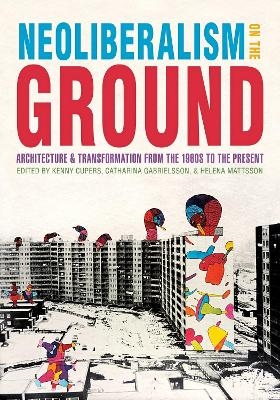
Neoliberalism on the Ground
Architecture and Transformation from the 1960s to the Present
Seiten
2021
University of Pittsburgh Press (Verlag)
978-0-8229-4601-4 (ISBN)
University of Pittsburgh Press (Verlag)
978-0-8229-4601-4 (ISBN)
- Lieferbar (Termin unbekannt)
- Versandkostenfrei
- Auch auf Rechnung
- Artikel merken
Reframes Accepted Narratives of Neoliberalism and Postmodernism through an Architectural Lens
Architecture and urbanism have contributed to one of the most sweeping transformations of our times. Over the past four decades, neoliberalism has been not only a dominant paradigm in politics but a process of bricks and mortar in everyday life. Rather than to ask what a neoliberal architecture looks like, or how architecture represents neoliberalism, this volume examines the multivalent role of architecture and urbanism in geographically variable yet interconnected processes of neoliberal transformation across scales—from China, Turkey, South Africa, Argentina, Mexico, the United States, Britain, Sweden, and Czechoslovakia. Analyzing how buildings and urban projects in different regions since the 1960s have served in the implementation of concrete policies such as privatization, fiscal reform, deregulation, state restructuring, and the expansion of free trade, contributors reveal neoliberalism as a process marked by historical contingency. Neoliberalism on the Ground fundamentally reframes accepted narratives of both neoliberalism and postmodernism by demonstrating how architecture has articulated changing relationships between state, society, and economy since the 1960s.
Architecture and urbanism have contributed to one of the most sweeping transformations of our times. Over the past four decades, neoliberalism has been not only a dominant paradigm in politics but a process of bricks and mortar in everyday life. Rather than to ask what a neoliberal architecture looks like, or how architecture represents neoliberalism, this volume examines the multivalent role of architecture and urbanism in geographically variable yet interconnected processes of neoliberal transformation across scales—from China, Turkey, South Africa, Argentina, Mexico, the United States, Britain, Sweden, and Czechoslovakia. Analyzing how buildings and urban projects in different regions since the 1960s have served in the implementation of concrete policies such as privatization, fiscal reform, deregulation, state restructuring, and the expansion of free trade, contributors reveal neoliberalism as a process marked by historical contingency. Neoliberalism on the Ground fundamentally reframes accepted narratives of both neoliberalism and postmodernism by demonstrating how architecture has articulated changing relationships between state, society, and economy since the 1960s.
Kenny Cupers is associate professor of history and theory of architecture and urbanism at the University of Basel, where he cofounded and leads its new division of urban studies. Catharina Gabrielsson is associate professor in urban theory and docent in architecture at the KTH School of Architecture. Helena Mattsson is professor in theory and history at KTH School of Architecture
| Erscheinungsdatum | 03.02.2020 |
|---|---|
| Reihe/Serie | Culture Politics & the Built Environment |
| Zusatzinfo | 90 b&w |
| Verlagsort | Pittsburgh PA |
| Sprache | englisch |
| Maße | 178 x 254 mm |
| Themenwelt | Technik ► Architektur |
| ISBN-10 | 0-8229-4601-7 / 0822946017 |
| ISBN-13 | 978-0-8229-4601-4 / 9780822946014 |
| Zustand | Neuware |
| Informationen gemäß Produktsicherheitsverordnung (GPSR) | |
| Haben Sie eine Frage zum Produkt? |
Mehr entdecken
aus dem Bereich



aus dem Bereich
Grundlagen, Normen, Vorschriften
Buch | Hardcover (2024)
Springer Vieweg (Verlag)
CHF 219,95
Tragkonstruktion und Schichtaufbau
Buch | Hardcover (2024)
Birkhäuser (Verlag)
CHF 119,95
Arbeitsschritte - Fallbeispiele - Detailzeichnungen - Dokumente - …
Buch | Hardcover (2024)
DIN Media (Verlag)
CHF 92,40


