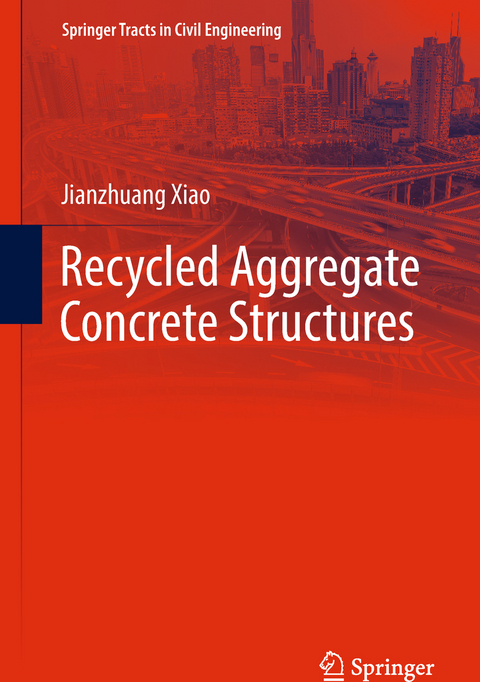
Recycled Aggregate Concrete Structures (eBook)
632 Seiten
Springer Berlin Heidelberg (Verlag)
978-3-662-53987-3 (ISBN)
This book describes how, given the global challenge of a shortage of natural resources in the 21st century, the recycling of waste concrete is one of the most important means of implementing sustainable construction development strategies.
Firstly, the book presents key findings on the micro- and meso-structure of recycled aggregate concrete (RAC), while the second part focuses on the mechanical properties of RAC: the strength, elastic modulus, Poisson's ratio, stress-strain curve, etc. The third part of the book explores research on the durability of RAC: carbonization, chloride penetration, shrinkage and creep. It then presents key information on the mechanical behavior and seismic performance of RAC elements and structures: beams, columns, slabs, beam-column joints, and frames. Lastly, the book puts forward design guidelines for recycled aggregate concrete structures.
Taken as a whole, the research results - based on a series of investigations the author has condu
cted on the mechanical properties, durability and structural performance of recycled aggregate concrete (RAC) over the past 10 years - demonstrate that, with proper design and construction, it is safe and feasible to utilize RAC structures in civil engineering applications. The book will greatly benefit researchers, postgraduates, and engineers in civil engineering with an interest in this field.Preface 6
Acknowledgements 9
Contents 11
About the Author 21
List of Figures 22
List of Tables 38
1 Introduction 46
Abstract 46
1.1 Sustainable Development of Building Industry 46
1.1.1 The Consumption of Energy and Resources in Building Industry 46
1.1.2 New Strategies for Sustainable Development in Building Industry 47
1.1.3 The Significant Role of Concrete Industry in Implementing “Sustainable Development” Strategies 49
1.2 Concrete Recycling and Reusing 50
1.2.1 The Life Cycle and Extension of Concrete Structures 50
1.2.2 Waste Concrete 51
1.2.3 Recycled Aggregate Concrete 52
1.3 An Overview on the Worldwide and China’s Waste Concrete Recycling Techniques 53
1.3.1 Worldwide Waste Concrete Recycling Techniques 53
1.3.2 The Development of RAC Technology in China 55
1.4 Problems to Research RAC and Forecast of Developing Trend 56
1.4.1 Primary Problems 56
1.4.2 Forecast of Developing Trend 56
1.5 Scientific Subject Chain in Civil Engineering 57
1.6 Book’s Outline 57
References 58
2 Reclaim of Waste Concrete 60
Abstract 60
2.1 Introduction 60
2.2 Source of Waste Concrete 60
2.2.1 General Sources—Pavement, Buildings, Bridges and Other Types of Constructions 60
2.2.2 Disasters 62
2.3 Quantity of Waste Concrete 64
2.3.1 Quantity in China 64
2.3.1.1 Damage of Buildings for Different Types of Structures in Disaster Area 64
2.3.1.2 Characteristics of Building Waste for Different Types of Structures 65
2.3.1.3 Statistics of Building Waste Generated by Different Types of Structures 66
2.3.2 Future Tendency Forecast 68
2.3.2.1 Estimation Formula 68
2.3.2.2 Relationship Between Building Waste and Seismic Intensity 68
2.4 Classification of Waste Concrete 70
2.4.1 Standard 70
2.4.2 Classification 71
2.4.2.1 Building Waste Classification by Chronological Order/Damage Status of Buildings 71
2.4.2.2 Building Waste Classified by Materials 71
2.4.2.3 Building Waste Classified by Structure Types 72
2.5 Reduce Principle and Methods 73
2.5.1 Reasonable Plan 73
2.5.2 Elaborate Design 74
2.5.3 Ecological Materials 75
2.5.4 Green Construction 75
2.6 Reuse Materials and Elements 76
2.6.1 Recycled Blocks 77
2.6.2 Reuse Elements 77
2.7 Recycling 78
2.7.1 Low-Grade Recycling 79
2.7.2 High-Grade Recycling 80
2.8 Concluding Remarks 80
References 81
3 Recycled Aggregates 83
Abstract 83
3.1 Crushing and Sieving Techniques 83
3.1.1 Worldwide Waste Concrete Crushing Techniques 83
3.1.2 China’s Waste Concrete Crushing Techniques 85
3.1.3 Crushing Equipment 88
3.2 Recycled Fine Aggregates 90
3.2.1 Properties 90
3.2.2 Classification 90
3.2.3 Testing Method 92
3.3 Recycled Coarse Aggregates 92
3.3.1 Single Source of RCA 92
3.3.1.1 Test Summary 92
3.3.1.2 Gradation 93
3.3.1.3 The Particle Shape and Surface Structure 93
3.3.1.4 Density 94
3.3.1.5 Water Absorption 94
3.3.1.6 Content of Attached Mortar 94
3.3.1.7 Porosity 95
3.3.1.8 Crush Value 95
3.3.1.9 Soundness 95
3.3.1.10 Content of Elongated and Flaky Particles 96
3.3.1.11 Content of Clay 96
3.3.2 Multi Source of RCA 97
3.3.2.1 Test Summary 97
3.3.2.2 Apparent Density 97
3.3.2.3 Water Absorption 97
3.3.2.4 Content of Mortar 98
3.3.2.5 Analysis and Discussion 98
3.4 Method of Classifying and Testing for RCA 99
3.4.1 Study on RCA Classification 99
3.4.2 Testing Methods 102
3.5 Pre-treating and Enhancement 103
3.5.1 Adjusting Mix Proportion 103
3.5.2 Chemical Method 104
3.5.3 Physical Method 104
3.6 Concluding Remarks 105
References 105
4 Recycled Aggregate Concrete 108
Abstract 108
4.1 Requirement for Mix Proportion Design 108
4.1.1 General Points 108
4.1.2 Cementitious Material 109
4.1.3 Aggregates 110
4.1.4 Admixtures 110
4.1.5 Chemical Admixtures 110
4.2 Compressive Strength-Based Mix Proportion Design Method 111
4.2.1 Review Points 111
4.2.2 Calculation Steps 111
4.3 Durability-Based Mix Proportion Design Method 116
4.3.1 Review 116
4.3.2 Design Program 117
4.4 Other Mix Proportion Design Methods 119
4.4.1 Volumetric Design Method 119
4.4.2 Application of Computers in the Design of the Mix Proportion 120
4.4.3 Application of Artificial Neural Network 120
4.4.4 Application of Artificial Neural Network Expert System 120
4.5 Microstructure of RAC 121
4.5.1 Micro-Composition of RAC 121
4.5.2 SEM Testing 122
4.5.3 Pore Structure Testing 123
4.6 ITZ Nanoindention 125
4.6.1 Testing Preparation 125
4.6.1.1 Materials 125
4.6.1.2 Sample Preparation 126
4.6.1.3 Nanoindentation Details 128
4.6.2 Grid Nanoindentation Results 130
4.6.3 Grid Nanoindentation on Paste Matrix 133
4.6.4 Imaging Nanoindentation Result 134
4.7 Damage of RAC 135
4.7.1 Initial Damage of RAC 136
4.7.2 Damage Evolution of RAC 136
4.8 Improvements of RAC 138
4.8.1 ITZ Improvements—Physical and Chemical 138
4.8.2 Two-Stage Mixing Approach 139
4.9 Concluding Remarks 140
References 140
5 Modeled Recycled Aggregate Concrete 142
Abstract 142
5.1 Concept and Realization 142
5.1.1 Philosophy 142
5.1.2 Method 143
5.2 Cracking Propagation of MRAC 146
5.2.1 Digital Image Correlation Technique 146
5.2.2 Loading System 146
5.2.3 Crack Pattern and Failure Mode 147
5.3 Stress Distribution in MRAC 150
5.3.1 Analytical Procedures 150
5.3.1.1 Finite Element Model (FEM) Analysis 150
5.3.1.2 Mechanical Parameters 151
5.3.2 Simulation and Test Verification 152
5.3.2.1 Stress Distribution 153
5.3.3 Effects of Relative Properties of ITZs 155
5.4 Modification of Modeled Recycled Aggregate Concrete by Carbonation 158
5.4.1 Experimental Program 158
5.4.1.1 Specimen Design 158
5.4.1.2 Materials and Mix Proportions 158
5.4.1.3 Testing Procedure 159
5.4.2 Experimental Results and Discussions 161
5.4.2.1 Failure Patterns 161
5.4.2.2 The Effect of Carbonation Modification 163
5.4.2.3 The Effect of NHM’s w/c Ratio 164
5.4.2.4 The Effect of OHM’s w/c Ratio 166
5.4.3 Summary 167
5.5 Chloride Diffusion in Modeled Recycled Aggregate Concrete 168
5.5.1 Specimen Design 168
5.5.2 Simulation Procedure 169
5.5.3 Parametric Study 170
5.5.4 Results and Discussions 172
5.5.4.1 Position Effect 172
5.5.4.2 RA Volume Fraction Effect 174
5.5.4.3 RA Shape Effect on Diffusivity 176
5.5.4.4 Boundary Effect 180
5.5.4.5 Adhesive Rate of Old Adhered Mortar Effect 181
5.5.4.6 ITZ Effect 183
5.6 Concluding Remarks 184
References 185
6 Strength of Recycled Aggregate Concrete 186
Abstract 186
6.1 Compressive Strength 186
6.1.1 The Characteristics of Cube Compressive Strength 187
6.1.2 Factors Influencing the Cube Compressive Strength 188
6.2 Distribution of the Compressive Strength 189
6.2.1 The Histogram of the Compressive Strength 189
6.2.2 Examining the Distribution Characteristics of the Compressive Strength 191
6.2.3 Simulation of the Compressive Strength Distribution 191
6.2.4 Strength Index Value 193
6.3 Tensile Strength and Flexural Strength 194
6.3.1 Tensile Strength 194
6.3.2 Flexural Properties 195
6.4 The Relationship of Mechanical Indexes 196
6.4.1 Cube Compressive Strength and Prism Compressive Strength 196
6.4.2 Splitting Tensile Strength and Cube Compressive Strength 197
6.4.3 Flexural Strength and Cube Compressive Strength 198
6.5 Effects of Elevated Temperatures on Strength 199
6.5.1 Residual Compressive Strength 199
6.5.2 Residual Flexure Strength 203
6.5.3 Comparisons Between Residual Compressive and Flexural Strength of RAC 205
6.6 Concluding Remarks 206
References 207
7 Constitutive Relationship of Recycled Aggregate Concrete 209
Abstract 209
7.1 Stress–Strain Relationship Under Axial Compressive Loading 209
7.1.1 Test 209
7.1.1.1 Materials 209
7.1.1.2 Mix Proportions 210
7.1.1.3 Preparation of Specimens 210
7.1.1.4 Test Setup and Test Method 211
7.1.2 Curves of the Stress–Strain Relationship of RAC 211
7.1.2.1 Characteristics of the Overall Curves of the Stress–Strain Relationship of RAC 211
7.1.2.2 The Pattern and Equations of the Stress–Strain Curve 212
7.1.3 Peak Stress 214
7.1.4 Peak Strain 214
7.1.5 Ultimate Strain 215
7.1.6 Elastic Modulus 215
7.1.7 Poisson’s Ratio 216
7.2 Variation Evaluation of Stress–Strain Relationship for RAC 216
7.2.1 Experimental Programs 216
7.2.2 Experimental Results 219
7.2.3 Summary 220
7.3 Stress–Strain Relationship Under Axial Tensile Loading 223
7.3.1 Experimental Descriptions 223
7.3.1.1 Design of Experiments 223
7.3.1.2 Materials 224
7.3.1.3 Specimens Casting and Curing 225
7.3.1.4 Test Loading 225
7.3.2 Results and Discussion 226
7.3.2.1 Quantity and Distribution of Each Phase 226
7.3.2.2 Physical Properties 227
7.3.2.3 Mechanical Properties of Parent Concrete and Old Mortar 229
7.3.2.4 Mechanical Properties of Recycled Concrete and New Mortar 230
7.3.2.5 Tensile Strength of ITZ 232
7.3.3 Simulation with Lattice Model 233
7.3.3.1 Conventional Lattice Model Method 233
7.3.3.2 A Modified Lattice Model 233
7.3.3.3 A Modified Random Aggregate Model for Recycled Aggregate Concrete 234
7.3.3.4 Simulation Results and Analysis 236
7.4 Stress–Strain Relationship Under Confinements 238
7.4.1 Test 238
7.4.1.1 Materials 238
7.4.1.2 Mixing and Specimen Details 239
7.4.1.3 Test Setup and Test Method 243
7.4.1.4 Loading Program 244
7.4.1.5 Test Phenomenon 244
7.4.2 Analysis 245
7.4.2.1 The Effect of the RCA Replacement Percentage on the Peak Load 245
7.4.2.2 The Effect of the RCA Replacement Percentage on the Axial Deformation 247
7.4.2.3 The Effect of the RCA Replacement Percentage on the Lateral Deformation Coefficient 250
7.4.3 Theoretical Analysis 250
7.4.4 Stress–Strain Relation of RCFS 252
7.4.5 Stress–Strain Relation of RCFF 255
7.5 Shear Stress–Slip Relationship Under Shear Loading 257
7.5.1 Test 257
7.5.1.1 Material 257
7.5.1.2 Specimen Design 258
7.5.1.3 Fabrication and Curing of Specimens 258
7.5.1.4 Testing Facility 260
7.5.1.5 Instrumentation 260
7.5.1.6 Loading Scheme 262
7.5.1.7 Failure Modes 263
7.5.1.8 Main Test Results 263
7.5.1.9 Shear Stress–Shear Displacement Curves 265
7.5.1.10 Shear Slip–Crack Separation Curves 266
7.5.2 Analysis of Test Results 266
7.5.2.1 Effects of the Lateral Constraint Stiffness 266
7.5.2.2 Effects of Concrete Strength 266
7.5.2.3 Effects of RCA Replacement Percentage with Different w/c Ratio 269
7.5.2.4 Effects of RCA Replacement Percentage with Same w/c Ratio 270
7.5.2.5 Prediction of the Shear Transfer Strength 271
7.6 Compressive Behavior Under Impact Loading 274
7.6.1 Experimental Program 274
7.6.1.1 Materials 274
7.6.1.2 Specimens 276
7.6.1.3 Quasi-Static Tests 276
7.6.1.4 Split Hopkinson Pressure Bar (SHPB) Tests 276
7.6.2 Test Results 278
7.6.2.1 Quasi-Static Test Results 278
7.6.2.2 SHPB Test Results 279
7.6.3 Test Analysis and Discussion 281
7.6.3.1 Compressive Strength and Dynamic Increase Factor 281
7.6.3.2 Initial Elastic Modulus 286
7.6.3.3 Peak Strain 287
7.6.3.4 Moisture Effect 287
7.7 Concluding Remarks 288
References 290
8 Long-Term Property of Recycled Aggregate Concrete 292
Abstract 292
8.1 Shrinkage and Creep Characteristics 292
8.1.1 Experimental Programme 292
8.1.1.1 Materials 292
8.1.1.2 Mix Proportions 293
8.1.1.3 Preparation of Specimens 294
8.1.1.4 Testing Equipment 294
8.1.2 Experimental Results 295
8.1.2.1 Mechanical Properties 295
8.1.2.2 Shrinkage 296
8.1.2.3 Creep 298
8.2 Carbonation Resistance Performance 299
8.2.1 Existing Prediction Models of Carbonation Depth 299
8.2.1.1 Fib Carbonation Model 299
8.2.1.2 Chinese Code’s Model 301
8.2.1.3 Zhang and Jiang’s Model 301
8.2.2 Carbonation Test of RAC 302
8.2.2.1 Test Design 302
8.2.2.2 Test Procedure 303
8.2.2.3 Test Results 304
8.2.2.4 Results Analysis 304
8.2.2.5 Xiao and Lei’s Model 310
8.3 Chloride Diffusion Resistance Performance 311
8.3.1 Rapid Chloride Test (RCT) 311
8.3.1.1 RCT Testing Procedure 311
8.3.1.2 Results of the Chloride Concentration 312
8.3.1.3 Verification and Prediction of the Chloride Diffusion in RAC 320
8.3.2 Rapid Chloride Migration (RCM) Test 321
8.3.2.1 Experimental Program 321
8.3.2.2 Test Results and Discussions 324
8.4 Fatigue Behavior 327
8.4.1 Fatigue Testing 327
8.4.2 Compressive Fatigue Test Results and Analysis 328
8.4.2.1 Testing Phenomena 328
8.4.2.2 S–N Curves 329
8.4.2.3 Residual Strain Variation 329
8.4.2.4 Fatigue Strain Variation 330
8.4.2.5 Fatigue Modulus Degradation 330
8.4.2.6 Stress–Strain Curves 331
8.4.3 Bending Fatigue Test Results and Analysis 333
8.4.3.1 Testing Phenomena 333
8.4.3.2 S–N Curves 334
8.4.3.3 Strain Variation 334
8.5 Concluding Remarks 335
References 336
9 Bond–Slip Between Recycled Aggregate Concrete and Rebars 339
Abstract 339
9.1 Bond Between RAC and Normal Rebars 339
9.1.1 Test 339
9.1.1.1 Materials 339
9.1.1.2 Mix Proportion 340
9.1.1.3 Preparation of Specimens 340
9.1.1.4 Test Setup 341
9.1.2 Analysis 342
9.1.2.1 Load Versus Slip Curves 342
9.1.2.2 Bond Strength 343
9.1.2.3 Relative Bond Strength 345
9.1.2.4 Approximation of the Normalized Bond–Slip Relationship 345
9.1.2.5 Discussion on Anchorage Length 347
9.2 Bond Between RAC and Eroded Rebars 348
9.2.1 Test 348
9.2.1.1 Materials 348
9.2.1.2 Preparation of Specimens 349
9.2.1.3 Corrosion Setup 349
9.2.1.4 Determination of Steel Corrosion Rate 350
9.2.2 Analysis 351
9.2.2.1 Failure Mode 351
9.2.2.2 Bond–Slip Curves 352
9.2.2.3 Bond Strength 352
9.2.2.4 Bond Constitution Relationship 354
9.3 Concluding Remarks 356
References 358
10 Structural Behavior of Recycled Aggregate Concrete Elements 360
Abstract 360
10.1 RAC Beams 360
10.1.1 Flexural Behavior of RAC Beams 361
10.1.1.1 Test Design of RAC Beams 361
10.1.1.2 Analysis of RAC Beams 362
10.1.1.3 Bearing Capacity of RAC Beams 365
10.1.1.4 Reliability of RAC Beams 368
10.1.2 Shear Behavior of RAC Beams 370
10.1.2.1 Design of RAC Beams 370
10.1.2.2 Shear Failure of RAC Beams 370
10.1.2.3 The Shear Capacity of RAC Beams 372
10.2 RAC Semi-precast Beams 376
10.2.1 Design of RAC Semi-precast Beams 377
10.2.2 Flexural Behavior of RAC Semi-precast Beams 381
10.2.3 Shear Behavior of RAC Semi-precast Beams 385
10.3 RAC Slabs 391
10.3.1 Flexural Behavior of RAC Gradient Slabs 391
10.3.1.1 Design of RAC Gradient Slabs 393
10.3.1.2 Analysis of RAC Gradient Slabs 394
10.3.1.3 FEM Analysis of Flexural Performance of RAC Gradient Slab 400
10.3.1.4 Summary 403
10.3.2 Punching Shear Behavior of RAC Slabs 404
10.3.2.1 Design of Punching Shear RAC Slabs 404
10.3.2.2 Analysis of Punching Shear RAC Slabs 409
10.3.2.3 Summary of Punching Shear RAC Slabs 419
10.4 RAC Columns 420
10.4.1 Design of RAC Columns 420
10.4.2 Analysis of RAC Columns 420
10.4.3 Reliability Analysis of RAC Columns 424
10.5 Concluding Remarks 430
References 431
11 Seismic Performance of Recycled Aggregate Concrete Columns 433
Abstract 433
11.1 Introduction 433
11.2 Low-Frequency Reversed Loading of Semi-Precast Columns 435
11.2.1 Experimental Program 435
11.2.1.1 Test Materials 435
11.2.1.2 Design and Construction of the Specimens 436
11.2.1.3 Loading Device 436
11.2.1.4 Measurement and Data Acquisition Device 437
11.2.1.5 Loading Program 438
11.2.2 Test Analysis 441
11.2.2.1 General Experimental Observations 441
11.2.2.2 Failure Pattern of the Specimen 442
11.2.2.3 Lateral Displacement 443
11.2.2.4 Characteristic Loads 443
11.2.2.5 Hysteresis Loop 445
11.2.2.6 Skeleton Curve 447
11.2.2.7 Characteristic Displacement and Ductility 448
11.2.2.8 Deterioration of Stiffness 449
11.2.2.9 Energy Dissipation Capacity 450
11.2.2.10 Analysis of Shear Capacity by Present Codes 452
11.3 Low-Frequency Reversed Loading on Tube-Confined Columns 452
11.3.1 Experimental Program 452
11.3.1.1 Test Materials 452
11.3.1.2 Mix Proportions 453
11.3.1.3 Specimen and Testing Arrangement 453
11.3.1.4 Loading Program 456
11.3.2 Test Analysis 456
11.3.2.1 Crack Configuration and Hysteresis Loops 456
11.3.2.2 Yield Load and Peak Load 459
11.3.2.3 Skeleton Curve 462
11.3.2.4 Stiffness Deterioration 463
11.3.2.5 Ductility 464
11.3.2.6 Energy Dissipation 465
11.3.2.7 Strain Variation 465
11.4 Concluding Remarks 466
References 469
12 Seismic Performance of Recycled Aggregate Concrete Structures 470
Abstract 470
12.1 Introduction 470
12.2 Low-Frequency Reversed Loading on Frame Joints 470
12.2.1 Experimental Program 470
12.2.2 Test Result 473
12.2.3 Test Analysis 474
12.2.4 Nonlinear Analysis 477
12.3 Low-Frequency Reversed Loading on Plane Frame 481
12.3.1 Experimental Program 481
12.3.2 Test Analysis 484
12.4 Shaking Table Test on Cast-in-Situ Space Frame 490
12.4.1 Experimental Program 490
12.4.2 Test Analysis 494
12.4.3 Nonlinear Analysis 502
12.5 Shaking Table Test on Precast Space Frame 521
12.5.1 Experimental Program 521
12.5.1.1 Precast RAC frame model 521
12.5.1.2 Fabrication and construction of the model 523
12.5.1.3 Instruments 525
12.5.1.4 Seismic wave and loading program 526
12.5.2 Test Results and Analysis 527
12.5.2.1 Cracking and failure pattern 527
12.5.2.2 Dynamic characteristics 529
12.5.2.3 Acceleration amplification 532
12.5.2.4 Earthquake action 533
12.5.2.5 Deformation 536
12.5.2.6 Hysteretic and capacity curves 537
12.5.2.7 Displacement ductility 540
12.5.3 Simulation Modeling 541
12.5.4 Simulated Results and Validation 544
12.5.5 Parametric Study 555
12.6 Concluding Remarks 559
References 560
13 Seismic Performance of Recycled Aggregate Concrete Block Structures 562
Abstract 562
13.1 Design of the RAC Hollow Block Walls 562
13.1.1 Test Specimens 562
13.1.2 Test Set-up, Instruments, and Procedure 564
13.2 Test Results of the RAC Hollow Block Walls 565
13.2.1 Failure Patterns 565
13.2.2 The Role of Tie Column 567
13.2.3 Main Results 567
13.3 Seismic Performance Analysis 567
13.3.1 Hysteresis Curve 567
13.3.2 Skeleton Curve 568
13.3.3 Ductility Analysis 569
13.3.3.1 Displacement Ductility Coefficients 569
13.3.3.2 Comparison with the Ductility of the NAC Block Wall 570
13.3.4 Energy Dissipation Capacity 571
13.3.5 Stiffness Degradation 572
13.3.6 Overall Deformation 573
13.3.7 Steel Strain 574
13.4 Verification of Shear Bearing Capacity Formula for Hollow Block Walls 574
13.5 Design of the RAC Block Masonry Building 579
13.5.1 Materials 579
13.5.1.1 RAC Blocks 579
13.5.1.2 The RAC Mix Proportion 580
13.5.2 Construction 580
13.6 Shake Table Tests 580
13.6.1 Description of Shake Table 580
13.6.2 Seismic Wave Selection and Arrangement of Instruments 581
13.6.3 Loading Program 585
13.6.4 Cracking and Failure Pattern 587
13.7 Earthquake Response Analysis of the RAC Block Masonry Building 589
13.7.1 Dynamic Characteristics of the Structure 589
13.7.2 Acceleration Response 593
13.7.3 Earthquake Action 595
13.7.4 Displacement Response 596
13.7.5 Inter-storey Shear Response 597
13.7.6 Fragility Curves for RAC Block Masonry Building 601
13.8 Concluding Remarks 603
References 604
14 Products and Constructions with Recycled Aggregate Concrete 606
Abstract 606
14.1 Premix 606
14.1.1 Premix Recycled Concrete 607
14.1.2 RA Mortar 609
14.1.3 Cement Stabilizing RA 609
14.2 Precast 610
14.2.1 Brick and Block 610
14.2.2 Recycled Concrete Hollow Block Masonry 614
14.2.3 RAC Panel 617
14.3 Quality Control by Nondestructive Inspection 619
14.3.1 Rebound Hammer Test 619
14.3.2 Ultrasonic Pulse Velocity Test (UPV) 620
14.4 Case Study 620
14.4.1 Pavements—In China 620
14.4.2 Cast-in-situ RAC Frame Structure 626
14.4.3 Precast RAC Frame Structure 627
14.4.4 RAC Masonry and Other Structures 628
14.4.5 RAC Frame-Shear Wall Structure 628
14.4.6 Steel Frame Filled with RA Bricks 631
14.5 Efficiency Analysis 633
14.5.1 Introduction 633
14.5.2 Economic Benefits 633
14.5.3 Overall Environmental Benefits 635
14.6 Management Strategies 638
14.6.1 The Recycled Concrete Industry Chain 639
14.6.2 Management Strategies of RAC 641
14.6.3 The Application of Computer Technology in RAC Production Management 644
14.7 Concluding Remarks 646
References 647
15 Guidelines for Recycled Aggregate Concrete Materials and Structures 648
Abstract 648
15.1 Waste Concrete 648
15.2 Crush and Sieving 649
15.2.1 Processing and Grading of Recycled Aggregates 649
15.2.2 Quality Standard for Recycled Aggregates 650
15.2.3 Testing Methods for Recycled Aggregates 650
15.2.4 Regulations for Inspection of Recycled Aggregates 651
15.2.5 Production and Management of Recycled Coarse Aggregates 652
15.2.6 Application of Recycled Fine Aggregates 653
15.3 Mix Proportion 653
15.3.1 Methods for the Design of the Mix Proportion 653
15.3.2 Preparation and Transportation 653
15.4 Materials 656
15.4.1 General Regulations 656
15.4.2 Mechanical Properties 657
15.4.3 Suggestions on the Design of Recycled Concrete Blocks 660
15.4.3.1 Basic Requirements for Recycled Concrete Blocks 660
15.4.3.2 Basic Assumptions for the Design of Recycled Concrete Blocks 662
15.5 Infrastructure 663
15.5.1 Design Suggestions for Recycled Concrete Pavements 663
15.5.1.1 Basic Regulations for Pavement Design 663
15.5.1.2 The Basic Construction Requirements for Pavement Surface 663
15.5.1.3 Pavement Construction and Quality Inspection 663
15.5.1.4 Pot-Hole Filling Layer and Basic Layer 664
15.5.2 Suggestions on the Design of Recycled Concrete Structural Components 664
15.5.2.1 Basic Requirements for Structural Components 664
15.5.2.2 Limit State of Safety 665
15.5.2.3 Limit State of Serviceability 666
15.6 Construction 667
15.6.1 Casting and Molding 667
15.6.2 Concrete Curing 667
15.6.3 Quality Inspection 668
References 669
16 Erratum to: Recycled Aggregate Concrete Structures 670
Erratum to: Recycled Aggregate Concrete Structures, Springer Tracts in Civil Engineering, https://doi.org/10.1007/978-3-662-53987-3 670
| Erscheint lt. Verlag | 13.11.2017 |
|---|---|
| Reihe/Serie | Springer Tracts in Civil Engineering | Springer Tracts in Civil Engineering |
| Zusatzinfo | XLVI, 632 p. 502 illus. |
| Verlagsort | Berlin |
| Sprache | englisch |
| Themenwelt | Technik ► Bauwesen |
| Technik ► Maschinenbau | |
| Schlagworte | Application Guideline • Construction Management • Material Property • Mechanical Hebavior • Modeled Recycled Aggregate Concrete • Recycled Aggregate Concrete • Recycled Aggregates • structural performance |
| ISBN-10 | 3-662-53987-X / 366253987X |
| ISBN-13 | 978-3-662-53987-3 / 9783662539873 |
| Informationen gemäß Produktsicherheitsverordnung (GPSR) | |
| Haben Sie eine Frage zum Produkt? |
 PDF (Wasserzeichen)
DRM: Digitales Wasserzeichen
Dieses eBook enthält ein digitales Wasserzeichen und ist damit für Sie personalisiert. Bei einer missbräuchlichen Weitergabe des eBooks an Dritte ist eine Rückverfolgung an die Quelle möglich.
Dateiformat: PDF (Portable Document Format)
Mit einem festen Seitenlayout eignet sich die PDF besonders für Fachbücher mit Spalten, Tabellen und Abbildungen. Eine PDF kann auf fast allen Geräten angezeigt werden, ist aber für kleine Displays (Smartphone, eReader) nur eingeschränkt geeignet.
Systemvoraussetzungen:
PC/Mac: Mit einem PC oder Mac können Sie dieses eBook lesen. Sie benötigen dafür einen PDF-Viewer - z.B. den Adobe Reader oder Adobe Digital Editions.
eReader: Dieses eBook kann mit (fast) allen eBook-Readern gelesen werden. Mit dem amazon-Kindle ist es aber nicht kompatibel.
Smartphone/Tablet: Egal ob Apple oder Android, dieses eBook können Sie lesen. Sie benötigen dafür einen PDF-Viewer - z.B. die kostenlose Adobe Digital Editions-App.
Buying eBooks from abroad
For tax law reasons we can sell eBooks just within Germany and Switzerland. Regrettably we cannot fulfill eBook-orders from other countries.
aus dem Bereich