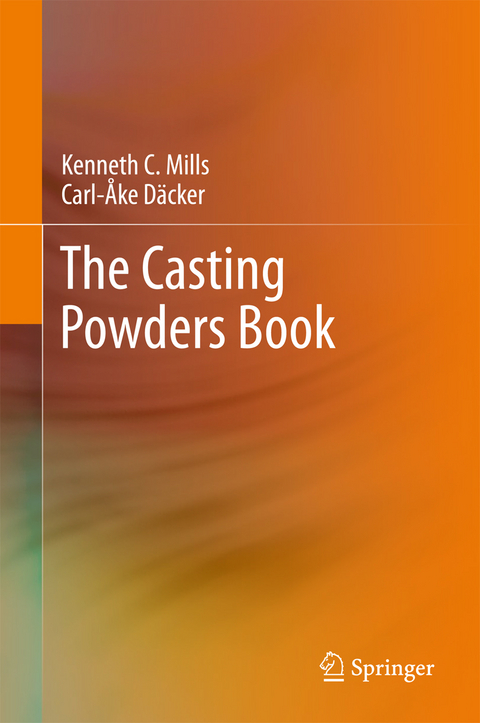
The Casting Powders Book (eBook)
XIX, 535 Seiten
Springer International Publishing (Verlag)
978-3-319-53616-3 (ISBN)
This book deals with casting powders and explains how they work and how they are best used to minimise defects in the ninety per cent of world steel production that is continuously cast. It also includes a chapter on mould powders for ingot-casting. The factors affecting various aspects of powder performance are described and different defects, their causes, and means of avoiding them are considered.
Providing the first comprehensive coverage of mould powder properties and uses, the text treats theoretical and practical matters and gives direct advice on problem-solving. Drawing on a wealth of scientific and technological research, represented by its extensive references, The Casting Powders Book shows readers how they can design and create mould powders optimised to fulfil the necessary functions of:
- lubrication of steel shells and reduction of shell-mould friction;
- absorption of inclusions floating up from the steel;
- chemical insulation of steel from carbon-rich mould powder; and
- protection of the steel meniscus from oxidation and thermal insulation to prevent surface-freezing.
Thermophysical properties and heat-transfer processes are also given detailed attention and case studies illustrate the methods and materials described.
The Casting Powders Book is designed to be a periodic reference that can be dipped into as the need arises. Readers from different backgrounds are well-served by the depth and variety of content:
- engineers trouble-shooting a continuous-casting process interested in how mould fluxes can minimise defects and process problems and how their performance is in turn affected by casting parameters;
- academic scientists interested in the theoretical aspects and properties of mould fluxes and slag films;
- engineers working with ingot-casting processes;and many others will find this book an invaluable resource.
Ken Mills worked at the National Physical Laboratory, Teddington from 1963-1999 and has been in the Department of Materials, Imperial College from 1995-present. His primary interest at NPL was in the measurement of the physical properties of materials involved in high temperature processes (metals, slags and refractories). He has been working on mould powders for continuous casting for more than 35 years and formed the UK Working Group on Casting Powders and was a member of the Europ. Coal & Steel Committee on Theoretical Steelmaking for more than 10years. During his time at NPL he became interested in the factors affecting the continuous casting process and the mechanisms responsible for process problems and defects. His interest in this area has led to the awards of the Bessemer Gold Medal (2013) and Honorary Membership of the Iron and Steel Institute of Japan (2003). At Imperial College he lectured in Process Metallurgy and in Heat and Fluid flow. His research at Imperial College has been largely focused on continuous casting with research on i. the properties and performance of continuous casting slags ii. mathematical modelling of the process. However, other steelmaking -related projects were also carried out. In recent years he has revived his interest in the estimation of physical models of slags and metals (for use in the macro model) from their chemical composition. He has published three books, more than 200 journal papers and has contributed in chapters to several books. He is the most cited author in this field of mould powders.
Carl-Åke Däcker, now working as Senior Scientific Advisor previously being Manager of the Materials& Process Development Department at Swerea KIMAB. In his work at the Institute he has dedicated most of his own research on mould powder development in close co-operation with the Swedish steelmakers and published around 10 conference papers in this field. In 2012 he was awarded Professor Hasse Fredriksson award for 'many years' research of mould powder properties and its effect on continuous cast blanks surface quality'. Before joining the Institute he worked 24 years with research, in the Swedish industry. 12 years at the Metallurgical Department at SSAB in Oxelösund where casting was an important issue, 7 years at Rockwool AB where he worked with raw-materials and melting of Rockwool glass.
Ken Mills worked at the National Physical Laboratory, Teddington from 1963-1999 and has been in the Department of Materials, Imperial College from 1995-present. His primary interest at NPL was in the measurement of the physical properties of materials involved in high temperature processes (metals, slags and refractories). He has been working on mould powders for continuous casting for more than 35 years and formed the UK Working Group on Casting Powders and was a member of the Europ. Coal & Steel Committee on Theoretical Steelmaking for more than 10years. During his time at NPL he became interested in the factors affecting the continuous casting process and the mechanisms responsible for process problems and defects. His interest in this area has led to the awards of the Bessemer Gold Medal (2013) and Honorary Membership of the Iron and Steel Institute of Japan (2003). At Imperial College he lectured in Process Metallurgy and in Heat and Fluid flow. His research at Imperial College has been largely focused on continuous casting with research on i. the properties and performance of continuous casting slags ii. mathematical modelling of the process. However, other steelmaking –related projects were also carried out. In recent years he has revived his interest in the estimation of physical models of slags and metals (for use in the macro model) from their chemical composition. He has published three books, more than 200 journal papers and has contributed in chapters to several books. He is the most cited author in this field of mould powders. Carl-Åke Däcker, now working as Senior Scientific Advisor previously being Manager of the Materials& Process Development Department at Swerea KIMAB. In his work at the Institute he has dedicated most of his own research on mould powder development in close co-operation with the Swedish steelmakers and published around 10 conference papers in this field. In 2012 he was awarded Professor Hasse Fredriksson award for “many years’ research of mould powder properties and its effect on continuous cast blanks surface quality”. Before joining the Institute he worked 24 years with research, in the Swedish industry. 12 years at the Metallurgical Department at SSAB in Oxelösund where casting was an important issue, 7 years at Rockwool AB where he worked with raw-materials and melting of Rockwool glass.
Foreword 5
Acknowledgements 7
Contents 9
1 Introduction and Overview 18
Abstract 18
1.1 Introduction 19
1.2 The Continuous Casting Process for Steel 19
1.3 The Introduction of Casting Powders 21
1.4 Mould Powder Behaviour in the Mould 23
1.5 Slag Film and Slag Rim Characteristics 24
1.5.1 Slag Film 24
1.5.2 Slag Rim 26
1.6 Casting Conditions 27
1.6.1 Casting Speed (Vc) 27
1.6.2 Metal Flow 28
1.6.3 Mould Dimensions 29
1.6.4 Oscillation Characteristics 29
1.6.5 Steel Grade 29
1.6.6 Ar Flow Rate 30
1.7 Physical Properties of Mould Slags 30
1.8 Fluctuations in the Process 31
1.9 Definitions 31
1.9.1 Powders, Slags, Fluxes 31
1.9.2 Powder Consumption Terms 31
1.9.3 Temperature 32
1.9.4 Viscosity 33
References 33
2 Slag Infiltration, Lubrication and Frictional Forces 35
Abstract 35
2.1 Introduction 36
2.2 Powder Consumption (Q) 37
2.2.1 Various Powder Consumption Terms 38
2.2.2 Measurement of Powder Consumption 39
2.2.3 Methods Used to Understand Slag Infiltration Mechanisms 39
2.2.3.1 Analysis of Plant Data 40
2.2.3.2 Physical Modelling Studies 41
2.2.3.3 Mathematical Modelling Studies 42
2.2.3.4 Empirical Rules 43
2.2.4 Problems Arising from Poor Powder Consumption 46
2.2.5 Optimum Casting Conditions 46
2.2.6 Factors Affecting Powder Consumption 48
2.2.6.1 Mould Dimensions 48
2.2.6.2 Effect of Casting Speed 50
2.2.6.3 Slag Viscosity 51
2.2.6.4 Oscillation Parameters 51
2.2.6.5 Non-sinusoidal Oscillation 52
2.2.6.6 Solidification (or Break) Temperature (Tbr) 52
2.2.6.7 Melting Rate 54
2.2.6.8 Superheat (?T) 54
2.2.6.9 Argon Flow 54
2.2.6.10 Continuous Casting of Steels Containing Ti 55
2.2.6.11 High-Viscosity Powders 55
2.2.6.12 Electromagnetic Braking (EMBr) and Casting (EMC) 56
2.2.6.13 Liquid Slag Feeding to the Mould 57
2.3 Slag Infiltration During the Oscillation Cycle 57
2.4 Empirical Equations for Calculating Powder Consumption 60
2.4.1 Frictional Forces 61
2.4.1.1 Measurement of Frictional Forces 62
2.4.1.2 Mathematical Modelling of Friction in Mould 64
2.4.2 Factors Affecting Frictional Forces in the Mould 64
2.4.2.1 Casting Speed (Vc) 64
2.4.2.2 Viscosity (?) 66
2.4.2.3 Mould Dimensions and Surface Area (A) 67
2.4.2.4 Break (or Solidification) Temperature (Tbr) 67
2.4.2.5 Frequency (f) 67
2.4.2.6 Stroke Length (S) 68
2.4.2.7 Negative and Positive Strip Time (Tn and Tp) 68
2.4.2.8 Steel Temperature 69
2.4.2.9 Non-sinusoidal Oscillation 69
2.5 Summary 70
References 71
3 Heat Transfer in the Mould and Shell Solidification 75
Abstract 75
3.1 Introduction 76
3.1.1 Heat Flux 78
3.2 Horizontal Heat Flux 78
3.2.1 Heat Transfer Mechanisms Involved in Horizontal Heat Transfer 79
3.2.2 Interfacial Thermal Resistance (RCu/Sl) 81
3.2.3 Factors Affecting the Horizontal Heat Flux 87
3.2.3.1 Mould Position 87
3.2.3.2 Shell Conditions 88
3.2.3.3 Casting Conditions 88
3.2.3.4 Slag Characteristics 90
3.2.3.5 Slag Viscosity 92
3.2.3.6 Shell Condition 93
3.2.3.7 Mould Conditions 93
3.2.4 Measurement and Calculation of Heat Fluxes 96
3.2.4.1 Plant Trials 96
3.2.4.2 Simulation Experiments 97
3.2.4.3 Physical Property Measurements 100
3.2.4.4 Mathematical Modelling of Heat Transfer in the Mould 100
3.3 Shell Solidification and Growth 101
3.4 Variability in Heat Flux 103
3.4.1 Variations in Heat Flux (qHor) During the Oscillation Cycle 104
3.4.2 Thermal Gradient Variations Arising from Metal Flow and Other Causes 104
3.4.3 Mould Level Variations 107
3.4.4 Carbon Content of Steel 108
3.4.5 Thermal Gradients in the Mould 110
3.4.6 Fracture of Slag Films 111
3.5 Vertical Heat Flux 112
3.5.1 Heat Transfer Mechanisms Involved in Vertical Heat Transfer 112
3.5.2 Factors Affecting Vertical Heat Transfer 113
3.5.2.1 Steel Flow Rate and Superheat 113
3.5.2.2 Efficiency of Heat Transfer 114
3.5.2.3 Thermal Insulation of Beds 114
3.5.2.4 Depth of Bed 117
3.5.2.5 Powder/ Granule Size and Packing Density 117
3.5.2.6 Powders Containing Exothermic Agents 117
3.5.2.7 Argon Blowing 118
3.6 Summary 118
References 119
4 How to Manipulate Slag Behaviour in the Mould 125
Abstract 125
4.1 Introduction 126
4.2 Vertical Heat Flux and Thermal Insulation of Bed 127
4.2.1 Vertical Heat Flux 127
4.2.1.1 Importance of Vertical Heat Flux 128
4.2.1.2 Control of Vertical Heat Flux 129
4.2.1.3 Ways of Controlling the Vertical Heat Flux 130
4.2.2 Thermal Insulation of the Bed 130
4.2.2.1 Importance of Thermal Insulation 131
4.2.2.2 The Effects of Powder Characteristics on Thermal Insulation 131
4.2.3 Measurements of Thermal Insulation of Powders 132
4.2.4 Ways of Improving the Thermal Insulation of the Bed 132
4.3 Melting Rate of the Powder (QMR) 132
4.3.1 The Effect of Mould Powder Properties on Melting Rate 134
4.3.2 The Effect of Casting Conditions on Melting Rate 135
4.3.3 Ways of Increasing Melting Rate 135
4.4 Depth of Molten Slag Pool 136
4.4.1 Molten Slag Pool 136
4.4.1.1 Dip Tests 137
4.4.1.2 Plate-Dip Tests 138
4.4.1.3 Nakamori Test 138
4.4.2 Importance of Depth of Molten Slag Pool 138
4.4.3 Factors Affecting Slag Pool Depth 138
4.4.4 The Effect of Casting Speed and Oscillation Characteristics 140
4.4.5 The Effect of Thermal Insulation of Bed on Pool Depth 141
4.4.6 Ways of Increasing the Melting Rate 141
4.5 Powder Consumption (Q) and Liquid Film Thickness (dl) 141
4.5.1 Reasons for Controlling Powder Consumption 142
4.5.2 Factors Affecting Powder Consumption 143
4.5.2.1 Mould Dimensions 143
4.5.2.2 Casting Speed (Vc) and Viscosity (?) 144
4.5.2.3 Solidification (or Break) Temperature (Tbr) 144
4.5.2.4 Oscillation Characteristics 145
4.5.2.5 Slag Pool Depth and Vertical Heat Flux 145
4.5.2.6 Argon Flow Rates 146
4.5.2.7 Electromagnetic Casting (EMC) 146
4.5.2.8 Blockage to Slag Infiltration 146
4.5.3 Ways of Controlling the Powder Consumption 147
4.6 Solid Slag Film and Horizontal Heat Flux 147
4.6.1 Reasons for Control of Slag Film Thickness and Horizontal Heat Flux 148
4.6.2 Factors Affecting of Slag Film Thickness and Horizontal Heat Flux 148
4.6.2.1 Thickness of the Solid Slag Film (ds) 148
4.6.2.2 The Fraction of Crystalline Phase (fcrys) 149
4.6.2.3 Porosity of the Slag Film 149
4.6.2.4 Viscosity of the Mould Slag 149
4.6.2.5 Casting Speed and Superheat (?T) 150
4.6.2.6 Non-sinusoidal Oscillation 150
4.6.2.7 Taper and Uniformity of Mould Temperature 150
4.6.2.8 The Mould Water-flow Rate 151
4.6.2.9 Coating Moulds, Grooved Moulds 151
4.6.3 Measurement of Horizontal Heat Flux 151
4.7 Crystallinity in Slag Film 151
4.7.1 Importance of Crystallinity to the Casting Process 152
4.7.2 Factors Affecting fcrys 153
4.7.2.1 Conventional (F-Containing) Mould Slags 153
4.7.2.2 F-Free (FF) Mould Slags 153
4.7.2.3 Calcium Aluminate (CA) Mould Slags 154
4.7.3 Ways of Increasing Crystallinity in Slag Film 155
4.8 Delaying Solidification and Shortening the Length of Shell 155
4.8.1 Factors Affecting Shell Length 156
4.8.1.1 Reducing the Vertical Heat Transfer 156
4.8.1.2 Reducing the Horizontal Heat Transfer 156
4.8.1.3 Superheat 156
4.8.2 Ways of Controlling the Length of Meniscus/ Shell 156
4.9 Summary 158
References 158
5 Effect of Casting Variables on Mould Flux Performance 163
Abstract 163
5.1 Introduction 164
5.2 Mould Characteristics 164
5.2.1 Mould Dimensions 164
5.2.2 Mould Length (Lmould) 166
5.2.3 Mould Taper (Lmould) 166
5.2.4 Mould Coatings 166
5.3 Casting Speed (Vc) 166
5.3.1 Effect of Casting Speed on Powder Consumption 167
5.3.2 Effect of Casting Speed on Heat Transfer 167
5.3.3 Effect of Casting Speed on Metal Flow Turbulence 168
5.3.4 Effect of Casting Speed on Negative Strip Time 168
5.4 Oscillation Characteristics 169
5.4.1 Effect of Oscillation Characteristics on Powder Consumption 170
5.4.2 Effect of Oscillation Characteristics on Heat Flux 171
5.4.3 Effect of Oscillation Characteristics on Oscillation Mark Depth (DOM) 172
5.5 Mould-Level Control 172
5.6 Metal Flow 174
5.7 Fluctuations in Processes 176
5.8 Application of Electromagnetic Devices 178
5.8.1 Electromagnetic Stirring (EMS) 178
5.8.2 Level Magnetic Field (LMF) 179
5.8.3 Electromagnetic Casting (EMC) 180
5.8.4 Electromagnetic Braking (EMBr) 181
5.9 Steel Grade 182
5.9.1 Peritectic Steels 182
5.9.2 High-Al Steels 186
5.10 Water Flow Rate 187
5.11 Argon Flow Rate 188
References 188
6 Different Types of Mould Powders 192
Abstract 192
6.1 Introduction 193
6.1.1 Functions Carried Out by Mould Powder 194
6.1.2 Criteria Affecting Selection of Mould Powders 195
6.1.2.1 Thermal Insulation Provided by the Powder Bed 195
6.1.2.2 Formation of Molten Slag Pool 196
6.1.2.3 Slag Infiltration and Powder Consumption 197
6.1.2.4 Control of the Horizontal Heat Flux 198
6.1.2.5 Absorption of Inclusions and Minimising Slag Entrapment 198
6.1.2.6 Carbon Pick-up by the Shell 200
6.1.2.7 Erosion of SEN 200
6.1.2.8 Effect on Scale Formation 201
6.2 Selection of Mould Fluxes 201
6.2.1 Conventional Mould Powders 202
6.2.1.1 Mineralogical Constituents 205
6.2.1.2 Crystalline Phases Formed in Slag Film 206
6.2.1.3 Pick-up of Oxides by Mould Slag 207
6.2.1.4 Nature of the Powder 209
6.2.2 Pre-melted Fluxes 209
6.2.3 Starter Powders 210
6.2.4 Exothermic Fluxes 211
6.2.5 Fluoride-Free Powders 213
6.2.5.1 Replacement Fluxes Giving Similar Property Values 214
6.2.5.2 Replacement of Cuspidine with Other Crystalline Phase 216
6.2.5.3 NC2S3 (Na2O·2CaO·3SiO2) 218
6.2.5.4 Gehlenite (C2AS) and Wollastonite (CS) 219
6.2.5.5 Melilite 219
6.2.6 Reduced F-Powders 220
6.2.7 C-Free Powders 220
6.2.8 Powders for High-Speed Casting and Thin Slab Casting 221
6.2.9 Powders for Casting Round Billets 223
6.2.10 Powders for Casting Beam Blanks 223
6.2.11 Non-Newtonian Powders 224
6.2.12 Powders for Casting TRIP and TWIP Steels 225
6.2.12.1 Problems with Casting TRIP and TWIP Steels 226
6.2.12.2 Strategies to Minimise Al2O3 Pick-up 227
6.2.12.3 Different Approaches to Developing Powders for TRIP Steels 228
6.2.13 Powders for Casting Stainless Steels 232
6.2.14 Powders for Casting Steels with Rare Earths 233
6.3 Summary 233
References 234
7 Fluxes for Ingot Casting 238
Abstract 238
7.1 The Ingot Casting Process 239
7.1.1 Classification of Ingot Cast Steels 240
7.1.2 Ingot Casting of Killed Steels 243
7.2 Aspects of Importance for Ingot Casting Quality 246
7.2.1 Surface Quality 246
7.2.1.1 Ripple Mark Formation Due to Folding 249
7.2.1.2 Ripple Mark Formation Due to Overflow 250
7.2.1.3 Uphill Teeming with Mould Slag 253
7.2.2 Inner Quality 255
7.2.2.1 Exogenous 255
7.2.2.2 Endogenous 255
7.2.3 Macro Segregation (Hot Top Insulation) 257
7.3 History of the Development of Mould Powders for Ingot Casting (and CC) 260
7.3.1 Development of Mould Powders for Continuous Casting 265
7.3.2 Development of Synthetic Mould Powders 266
7.3.3 Development of Granulated Powders 267
7.3.4 Today’s Situation Regarding Mould Powders for Ingot Casting 268
7.4 Selection of Mould Powders for Ingot Casting 268
7.4.1 Important Properties of the Mould Powder 268
7.4.1.1 Melting Behaviour 269
7.4.1.2 Flowability 269
7.4.1.3 Thermal Insulation Properties 269
7.4.2 Important Properties of the Mould Powder Slag 270
7.4.2.1 Viscosity 270
7.4.2.2 Ability to Absorb Inclusions 271
7.4.2.3 Irradiative Absorption Properties 272
7.4.2.4 Interfacial Tension 272
7.4.3 Selection of Mould Powders in Regard to Steel Grade 273
7.4.3.1 Low to Medium Carbon, Low Alloyed Steels 275
7.4.3.2 High Carbon (HC) Steels 275
7.4.3.3 Tool Steels 275
7.4.3.4 Ultralow Carbon Steels 276
7.4.3.5 Stainless and High-Alloy Steel 276
7.5 Application Techniques for Mould Powders 277
7.6 Use of Mould Powders to Minimise Defects and Process Problems 281
7.6.1 Laps and Ripple Marks 281
7.6.2 Entrapped Oxides 281
7.6.3 Slag Patches 282
7.6.4 Porosity 282
7.6.5 Cracks 283
7.6.6 Bottom-End Defects 283
References 283
8 Manufacture of Mould Fluxes 286
Abstract 286
8.1 Introduction 286
8.2 Raw Materials 287
8.2.1 Selection of Carbon Additions to Mould Powders 289
8.2.2 Reactions During Melting and Cooling of Mould Powders 290
8.3 Manufacturing 291
8.4 Quality Control at the Manufacturer 295
8.5 Information Provided by the Manufacturer 295
8.6 Delivery Control by the Steel Makers 297
References 298
9 Properties of Mould Fluxes and Slag Films 299
Abstract 299
9.1 Introduction 301
9.2 Structure of Slags 301
9.2.1 Effect of Individual Slag Components on Structure 301
9.2.2 Parameters to Represent the Structure of Slags 306
9.2.2.1 Basicity 306
9.2.2.2 NBO/T and Q 306
9.2.2.3 Optical Basicity (?) 307
9.2.2.4 Concentrations of O° O? and O2?
9.2.3 Effect of Cations 309
9.2.3.1 The Field Strength of the Ionic M+–O? Bond 309
9.2.3.2 The Fraction of Ionic Bonding in the M–O Bond 310
9.2.3.3 The Size of the Cations 310
9.2.3.4 The Bridging of Cations 311
9.2.3.5 The Number of Cations 311
9.2.3.6 The Mixed Alkali Effect 311
9.2.4 Effect of Temperature on Properties 311
9.2.4.1 Solid Slags 312
9.2.4.2 Liquid Slags 313
9.3 Crystallisation in Mould Fluxes 313
9.3.1 Importance of Crystallisation to the Process 313
9.3.2 Crystalline Phases Formed in Slag Films 314
9.3.2.1 Conventional (F-Containing) Powders 315
9.3.2.2 Fluoride-Free Fluxes 316
9.3.2.3 Calcium Aluminate Slags 317
9.3.3 Crystallisation Process 317
9.3.4 Crystallisation Kinetics 319
9.3.4.1 Conventional Fluxes 319
9.3.4.2 F-Free Fluxes 321
9.3.4.3 Calcium Aluminate Slags 322
9.3.5 Effects of Crystallisation 322
9.3.5.1 Density 322
9.3.5.2 Transport of Heat 322
9.3.5.3 Hydrogen in Slag Film 323
9.3.5.4 Heat Capacity 323
9.3.5.5 Friction Forces and Lubrication of the Shell 323
9.3.6 Methods of Determining Fraction of Crystalline Phase in Slag Films 324
9.3.6.1 Metallographic Method 325
9.3.6.2 X-Ray Diffraction Methods 325
9.3.6.3 Measurements of Intensities 325
9.3.6.4 Measurements of Areas 326
9.3.6.5 Measurement of Physical Properties 326
9.3.7 Tests to Simulate fcrys Formed in Slag Film 327
9.3.8 Empirical Rules to Calculate the Crystal Fraction in Slag Films 327
9.3.9 Data for fcrys 328
9.4 Physical Properties of Mould Slags 329
9.4.1 Thermodynamic Properties and Liquidus Temperatures (Tliq) 329
9.4.1.1 Importance to the Process 329
9.4.1.2 Measurement Methods 329
9.4.1.3 Liquidus Temperature Data 330
9.4.1.4 Methods to Calculate Tliq 331
9.4.2 Break Temperature (Tbr) 332
9.4.2.1 Importance to the Process 332
9.4.2.2 Measurement Methods 332
9.4.2.3 Data for Tbr, Tsol 333
9.4.2.4 Methods to Calculate Tbr 334
9.4.3 Glass Transition Temperatures (Tg) 334
9.4.4 Viscosities (?) 335
9.4.4.1 Importance to the Process 335
9.4.4.2 Factors Affecting Viscosities of Mould Slags 335
9.4.4.3 Measurement Methods 335
9.4.4.4 Viscosity Data for Mould Slags 338
9.4.4.5 Methods to Calculate Viscosity 341
9.4.5 Thermal Conductivities 341
9.4.5.1 Importance to the Process 341
9.4.5.2 Factors Affecting Thermal Conductivities of Slag Films 343
9.4.5.3 Measurement Problems 343
9.4.5.4 Measurement Methods 344
9.4.5.5 Thermal Conductivity Data for Mould Slags 346
9.4.5.6 Glassy Slags 349
9.4.5.7 Slag Films and Partially Crystalline Samples 351
9.4.5.8 Powder Bed 353
9.4.5.9 Liquid Slags 355
9.4.5.10 Calculation of Thermal Conductivity 355
9.4.6 Interfacial Tension (?msl) and Surface Tension (?s) 355
9.4.6.1 Importance of Interfacial Tension to the Process 355
9.4.6.2 Factors Affecting Surface and Interfacial Tensions of Mould Slags 356
9.4.6.3 Measurement Methods 358
9.4.6.4 Methods to Measure Interfacial Tension (?msl) 362
9.4.6.5 Surface and Interfacial Tension Data 363
9.4.6.6 Methods to Calculate Surface (?sl) and Interfacial Tension (?ms) 363
9.4.7 Density (?) and Thermal Expansion Coefficient (?) 364
9.4.7.1 Importance of Density to the Process 364
9.4.7.2 Factors Affecting Density and Thermal Expansion 364
9.4.7.3 Measurement Methods 365
9.4.7.4 Density Data for Mould Slags 366
9.4.7.5 Calculation of Densities and Thermal Expansion Coefficients of Mould Slags 368
9.4.8 Heat Capacity (Cp) and Enthalpy (HT–H298) 368
9.4.8.1 Importance of Cp and Enthalpy to the Process 368
9.4.8.2 Factors Affecting Cp and Thermal Enthalpy 369
9.4.8.3 Measurement Methods 370
9.4.8.4 Cp and Enthalpy Data for Mould Slags 371
9.4.8.5 Calculation of Cp and Enthalpy 372
9.5 Optical Properties of Mould Slags 374
9.5.1 Refractive Indices (n) [53, 55, 206, 278, 279] 375
9.5.2 Absorption Coefficients (?*) [53, 55, 56, 59, 110, 206, 211, 212, 280, 281] 375
9.5.3 Reflectivity, Transmissivity and Emissivity 376
9.6 Thermomechanical Properties of Mould Slags 377
9.6.1 Thermomechanical Tests 377
9.6.2 Stress Relaxation 378
9.7 Dissolution of Oxides, Nitrides and Carbides in Mould Slags 378
9.7.1 Origin of Inclusions 379
9.7.2 Mechanism of Inclusion Removal 380
9.7.3 Transport of Inclusions to the Slag/Metal Interface 380
9.7.3.1 Argon Bubbling 381
9.7.3.2 Electromagnetic Devices 382
9.7.4 Transport Through Slag/Metal Interface 383
9.7.5 Dissolution of Inclusions 384
9.7.5.1 Factors Affecting Dissolution 384
9.7.5.2 Inclusion Blockages 384
9.7.5.3 Chemical Composition of the Mould Slag 384
9.7.5.4 Kinetics of Inclusion Dissolution 385
9.8 Other Tests Used on Mould Powders 386
9.8.1 Bulk Density 386
9.8.2 Flowability 387
9.8.3 Permeability Index 388
9.8.4 Thermal Insulation 388
9.8.5 Measurement of Moisture and Hydrogen 390
9.9 Comparison of Properties of Powders Used in Ingot- (IC) and Continuous Casting (CC) 390
9.9.1 Differences in Properties of Mould Powders Used in CC and IC 391
9.9.1.1 Thermal Insulation and Vertical Heat Flux (qvert) 391
9.9.1.2 Slag/Pool Composition 392
9.9.1.3 Steel Movement 392
9.9.1.4 Lubrication 392
9.9.1.5 Mould Geometry 392
9.9.1.6 Heat Extraction 392
9.9.1.7 Formation of Slag Film 392
9.9.1.8 Sticking of Shell to Mould 393
9.9.2 Tasks Carried Out by Powders Used in Continuous- and Ingot Casting 393
9.9.3 Properties and Characteristics of Powders Used in Continuous and Ingot Casting 393
9.9.4 Conclusions from Comparison of CC and IC Mould Powders 393
9.10 Summary 396
References 397
10 Selection of Mould Fluxes and Special Mould Fluxes for Continuous Casting 407
Abstract 407
10.1 Introduction 408
10.2 Selection of Mineral Compositions of Mould Powder for Given Casting Conditions 409
10.2.1 Effect of Mould Geometry on Mould Powder Selection 410
10.2.2 Effect of Casting Conditions on Mould Powder Selection 412
10.2.3 Effect of Steel Grade on Mould Powder Selection 413
10.2.4 Routines to Differentiate Between Steel Grades 414
10.2.5 Plots of Tbr as a Function of Slag Viscosity 417
10.2.6 Other Casting Conditions Affecting Powder Consumption 418
10.3 Selection of Carbon Components of Mould Powders 419
10.4 Mould Powder Selection for Special Conditions 420
10.4.1 Thin-Slab Casting 422
10.4.2 Round Billets 423
10.4.3 Mould Powder Selection for Moulds with Large “Corner” Regions 423
10.4.4 Casting High-Al (Trip, Twip) Steel Grades 424
10.4.5 Fluoride-Free Powders 425
10.4.6 Reducing SEN Erosion Rates 426
10.4.7 Minimising Carbon Pick-up 426
10.4.8 Minimising Scale Formation 427
10.5 Summary 427
References 428
11 Using Mould Fluxes to Minimise Defects and Process Problems 431
Abstract 431
11.1 Introduction 432
11.2 Longitudinal Cracking 432
11.2.1 Type of Steel 433
11.2.2 Heat Flux 435
11.2.2.1 Horizontal Heat Flux 435
11.2.2.2 Local Variations in Heat Flux 438
11.2.3 Lubrication and Powder Consumption 439
11.2.4 Metal Flow, Use of EMBr, EMC and EMS 439
11.2.5 Causes and Mechanisms 440
11.2.6 Ways of Dealing with Longitudinal Cracking 442
11.2.6.1 By Decreasing the Horizontal Heat Flux in the Meniscus Region (“Mild Cooling”) 442
11.2.6.2 By Reducing the Variations in Shell Thickness 442
11.2.6.3 Monitoring to Avoid Longitudinal Cracking 443
11.2.6.4 Improving Powder Consumption 444
11.3 Longitudinal Corner Cracking 444
11.3.1 Published Information 444
11.3.2 Causes, Mechanisms 444
11.3.2.1 Longitudinal Corner Cracking Arising from Overcooled Corners 445
11.3.2.2 Longitudinal Corner Cracking Resulting from Thinning of Shell by the Metal Flow 446
11.3.3 Ways of Dealing with Longitudinal Corner Cracking 447
11.3.3.1 Longitudinal Corner Cracking Due to Overcooled Corners 448
11.3.3.2 Longitudinal Corner Cracking Due to Shell Thinning 448
11.4 Sticker Breakouts 448
11.4.1 Factors Affecting Sticker Breakouts 449
11.4.1.1 Steel Grades 450
11.4.1.2 Mould Dimensions and in Mould Conditions 450
11.4.1.3 Steelmaking Conditions Creating Large Amounts of Al2O3 or TiN or ZrO2 450
11.4.1.4 Loss of Lubrication and Frictional Forces 451
11.4.1.5 Carbon Pick-up by Liquid Steel Near the Sticking Point 451
11.4.1.6 Low Heat Transfer Across the Slag Film 452
Crystallisation in Slag Film 453
ZrO2 Pick-up in Slag Film 453
Hydrogen in Slag Film 453
Cyclical Changes in Casting Speed 455
11.4.2 Causes, Mechanisms 456
11.4.2.1 Formation of a Pseudo-Meniscus 456
11.4.3 Ways of Dealing with Sticker Breakout 457
11.4.3.1 Use Sticker Detection Systems 457
11.4.3.2 Use Casting Powders Which Help Form a Thicker, Stronger Shell 459
11.4.3.3 Minimise the Numbers of TiN and ZrO2 Particles in the Steel 460
11.5 Oscillation Marks (OM’s) 460
11.5.1 Characteristics of Oscillation Marks 460
11.5.2 Mould Oscillation 462
11.5.3 Factors Affecting Depth of OM’s (DOM) 463
11.5.3.1 Oscillation and Casting Variables 463
11.5.3.2 Reducing the Length of the Solidified Meniscus 466
11.5.3.3 Delaying Solidification Further Down the Mould 467
Increasing the Superheat or the Steel Meniscus Temperature 467
Reducing Horizontal Heat Flux (qhor) 467
11.5.3.4 Changing Mould Slag Properties 468
Viscosity (?) 468
Interfacial Tension (?m/Sl) 468
Break Temperature (Tbr) 468
11.5.3.5 Powder Consumption 469
11.5.3.6 Increasing the Strength of the Solidified Shell 469
11.5.3.7 Effect of Metal Flow on dOM 470
11.5.4 Causes, Mechanisms 470
11.5.4.1 Hook or Overflow OM Mechanism 470
11.5.4.2 Depression or Folded OM Mechanism 471
11.5.4.3 Slag Flow Mechanism for OMs 472
11.5.5 Ways of Dealing with Deep OMs 473
11.5.5.1 Reduce Negative Strip Time (tn) 473
11.5.5.2 Increase the Distance Between Base of the Slag Rim and Steel Tip (drim/tip) 474
11.5.5.3 Reduce the Length of the Shell Tip 475
11.5.5.4 Adjusting Mould Slag Properties 475
11.5.5.5 Use of Mathematical Models Covering OM Formation 475
11.6 Transverse and Corner Cracking 475
11.6.1 Factors Affecting Transverse Cracking 477
11.6.2 Ways of Dealing with Transverse and Corner Cracking 481
11.6.2.1 Bending at the Low-Ductility Trough for Crack Sensitive Steel Grades 481
11.6.2.2 Improper Taper in the Mould 481
11.6.2.3 Optimisation of Process Parameters and Use of a Suitable Mould Powder 482
11.6.2.4 Use of Electromagnetic Braking 483
11.7 Star Cracking 483
11.7.1 Factors Affecting Star Cracking 483
11.7.2 Ways of Dealing with Star Cracking 485
11.8 Depressions 485
11.8.1 Longitudinal Depressions 485
11.8.1.1 Factors Affecting the Formation of Longitudinal Depressions 485
11.8.1.2 Causes, Mechanisms 487
11.8.1.3 Ways of Dealing with Longitudinal Depressions 489
11.8.2 Transverse Depressions 490
11.8.2.1 Published Information 490
11.8.2.2 Causes, Mechanisms 490
11.8.2.3 Ways of Dealing with Transverse Depressions 491
11.8.3 Off-Corner Depressions 491
11.8.3.1 Published Information 491
11.8.3.2 Causes, Mechanisms 492
11.8.3.3 Ways of Dealing with Off-Corner Depressions 492
11.9 Overflows 493
11.9.1 Factors Affecting Overflows 493
11.9.2 Causes, Mechanisms 494
11.9.3 Ways of Dealing with C-Type Effects 494
11.9.3.1 Increase the Depth of the Slag Pool 494
11.9.3.2 Reduce Carbon Content of the Mould Powder 494
11.10 Slag, Gas Entrapment and Sliver Formation 494
11.10.1 Metal Flow Conditions Leading to Entrapment 495
11.10.1.1 Mould Level Fluctuations 496
11.10.1.2 Meniscus Freezing and Hook Formation 498
11.10.1.3 Argon Bubble Interactions 499
11.10.1.4 Slag Crawling 500
11.10.1.5 von Karman Vortex Formation 500
11.10.1.6 Meniscus Standing Wave Instability 502
11.10.1.7 Shear Layer (Kelvin–Helmholtz) Instability 503
11.10.1.8 Upward Flow Impinging on Meniscus 503
11.10.1.9 Meniscus “Balding” 504
11.10.1.10 Summary of the Factors Affecting Entrapment 504
11.10.2 Slag Entrapment 507
11.10.2.1 Mould Level Fluctuations 508
11.10.2.2 Hook Formation and Meniscus Freezing 508
11.10.2.3 Argon Bubble Interactions 509
11.10.2.4 Slag Crawling 509
11.10.2.5 von Karman Vortices 509
11.10.2.6 Standing Wave Instability 510
11.10.2.7 Shear Layer (Kelvin–Hemholtz) Instability 511
11.10.2.8 Upward Flow on Meniscus 512
11.10.2.9 Meniscus Balding 513
11.10.2.10 Summary of Slag Entrapment Mechanisms 514
11.10.3 Gas Entrapment 514
11.10.3.1 Pinholes 516
Argon Bubbling 516
Reducing the Length of the Meniscus and Delayed Solidification 516
Use of Electromagnetic Devices 516
Metal Flow Velocity and Bubble Size 518
Surface and Interface Tension 518
Summary of Ways to Reduce Pinholes 519
11.10.3.2 Pencil Pipe 519
11.10.4 Inclusion Capture, Sliver Formation 520
11.10.4.1 Reducing Inclusion Levels in Steel 521
11.10.4.2 Flotation of Inclusions 522
11.10.4.3 Flotation by Attachment to Gas Bubbles 522
11.10.4.4 Electromagnetic Devices Used to Reduce Inclusion Levels 524
11.11 Formation of Scales 525
11.11.1 Factors Affecting Scale Formation 526
11.11.2 Causes, Mechanisms 527
11.11.3 Ways of Dealing with Scaling 529
11.12 Carbon Pick-up 529
11.12.1 Factors Affecting Carbon Pick-up 529
11.12.2 Causes, Mechanisms 530
11.12.3 Ways of Dealing with Carbon Pick-up 531
11.12.3.1 Reducing the Carbon Concentration in the Lower Bed and the Slag Pool 531
11.12.3.2 Increase the Depth of the Slag Pool 532
Increase the Melting Rate of the Powder 532
Increase the Thermal Insulation of the Powder Bed 532
11.12.3.3 Reduce the Stroke Length and Improve Mould Level Control 532
11.12.3.4 Reduce Metal Flow Rate to Decrease the Height of the Standing Wave 532
11.12.3.5 Replace Carbon in Powders with Carbides or Nitrides 532
11.13 SEN Erosion 533
11.13.1 Factors Affecting SEN Erosion Rates 534
11.13.2 Causes, Mechanisms 536
11.13.3 Ways of Dealing with SEN Erosion 538
11.13.3.1 Reduce the Metal Flow Viscosity and the Concomitant Flow in the Slag Pool 538
11.13.3.2 Reduce the Driving Force for Dissolution of Refractory Oxide 538
11.13.3.3 Reduce the Fluoride Content of the Mould Flux 538
11.13.3.4 Increasing the Oxide Content of the SEN Refractory 538
11.14 Fluorine Emissions 539
11.14.1 Factors Affecting Fluoride Emissions 539
11.14.2 Ways of Dealing with Fluoride Emissions 540
11.15 Summary 540
References 542
| Erscheint lt. Verlag | 6.6.2017 |
|---|---|
| Zusatzinfo | XIX, 535 p. 322 illus., 151 illus. in color. |
| Verlagsort | Cham |
| Sprache | englisch |
| Themenwelt | Technik ► Maschinenbau |
| Schlagworte | Continuous Casting • Heat Transfer in Casting • Ingot Casting • Mould Powder • Mould Slag Infiltration and Lubrication |
| ISBN-10 | 3-319-53616-8 / 3319536168 |
| ISBN-13 | 978-3-319-53616-3 / 9783319536163 |
| Informationen gemäß Produktsicherheitsverordnung (GPSR) | |
| Haben Sie eine Frage zum Produkt? |
 PDF (Wasserzeichen)
DRM: Digitales Wasserzeichen
Dieses eBook enthält ein digitales Wasserzeichen und ist damit für Sie personalisiert. Bei einer missbräuchlichen Weitergabe des eBooks an Dritte ist eine Rückverfolgung an die Quelle möglich.
Dateiformat: PDF (Portable Document Format)
Mit einem festen Seitenlayout eignet sich die PDF besonders für Fachbücher mit Spalten, Tabellen und Abbildungen. Eine PDF kann auf fast allen Geräten angezeigt werden, ist aber für kleine Displays (Smartphone, eReader) nur eingeschränkt geeignet.
Systemvoraussetzungen:
PC/Mac: Mit einem PC oder Mac können Sie dieses eBook lesen. Sie benötigen dafür einen PDF-Viewer - z.B. den Adobe Reader oder Adobe Digital Editions.
eReader: Dieses eBook kann mit (fast) allen eBook-Readern gelesen werden. Mit dem amazon-Kindle ist es aber nicht kompatibel.
Smartphone/Tablet: Egal ob Apple oder Android, dieses eBook können Sie lesen. Sie benötigen dafür einen PDF-Viewer - z.B. die kostenlose Adobe Digital Editions-App.
Buying eBooks from abroad
For tax law reasons we can sell eBooks just within Germany and Switzerland. Regrettably we cannot fulfill eBook-orders from other countries.
aus dem Bereich