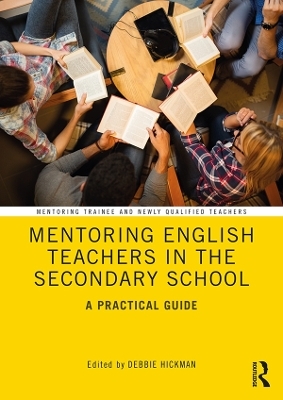
Mentoring English Teachers in the Secondary School
Routledge (Verlag)
978-1-138-59135-6 (ISBN)
This practical guide will help school-based mentors of trainee or newly qualified English teachers in developing their own mentoring skills, whilst providing the essential guidance their trainees need as they navigate their new role in the secondary classroom. With analytical tools for self-evaluation, this is a key resource that will support and inspire mentors and help them identify both strengths and skill gaps to develop confidence and knowledge in their mentoring position.
By providing practical tools such as tasks, feedback guides, further readings and examples of dialogue with trainees, this volume covers the knowledge, skills and understanding every mentor needs. Key topics explored include:
Roles and responsibilities of mentors;
How to develop a mentor–mentee relationship;
Developing beginning English teachers’ subject knowledge and expertise, including planning for pupils’ learning;
Managing workload and student teacher well-being;
Developing collaborative practice;
Developing the wider, professional role of the teacher.
Filled with tried-and-tested strategies based on the latest research, Mentoring English Teachers in the Secondary School is a vital guide for mentors of English teachers, both trainee and newly qualified, with ready-to-use strategies that support and inspire both mentors and beginning teachers alike.
Debbie Hickman is a senior lecturer and subject co-ordinator for Secondary English and Professional Studies for the PGCE at the Institute of Education, University of Chichester. Debbie taught in secondary schools for sixteen years prior to moving into Higher Education and she is currently a doctoral student at the University of Reading researching secondary pupils’ perceptions of reading.
List of illustrations
List of tasks
List of contributors
An introduction to the series: Mentoring Trainee and Newly Qualified Teachers
Introduction: A Practical Guide to Mentoring in English 1 SECTION 1 WHAT IS MENTORING?
1 Models of mentoring Gill Golder, Alison Keyworth and Clare Shaw
Definitions of mentoring; The context in which you are working, which underpins your mentoring practice; Effective mentoring models; Effective mentoring models
SECTION 2 YOU AS A MENTOR
2 Understanding yourself and how your experiences influence your approaches to mentoring Andy Goodwyn
Purpose or purposes; Becoming an English teacher; Starting with literature; Not a conclusion but a beginning
3 What subject and pedagogical knowledge, understanding and skills does a mentor of beginning English teachers need? Sally Catchpole and Theresa Gooda
Understanding knowledge; Reflecting on the nature of knowledge in English; Reflecting on your own knowledge and how you might address ‘gaps’; Developing knowledge of mentoring
4 Developing a mentor-mentee relationship Rachel Roberts
The role of the mentor; Becoming an English mentor; Approaches to mentoring; Supporting your student teacher; Setting boundaries and expectations; Developing a professional identity; Navigating tricky relationships; Underpinning values
SECTION 3 WHAT A MENTOR DOES
5 Managing workload and student teacher well-being Yvonne Williams
Understanding and managing workload, including the recommendations of independent working groups; Managing marking and assessment; Managing planning; Managing data; Understanding and supporting well-being.
6 Developing collaborative practice Trevor Wright
Lesson observations; Processing inputs; Collaborative work; the transfer of experience; Lesson planning; Wider collaboration
SECTION 4 SUPPORTING THE DEVELOPMENT OF BEGINNING ENGLISH TEACHERS’ KNOWLEDGE, SKILLS AND UNDERSTANDING
7 What knowledge, skills and understanding do beginning English teachers need?
Debbie Hickman and Theresa Gooda
Outlining subject knowledge; Developing knowledge about speaking and listening; Developing knowledge about reading; Developing knowledge about writing
8 Supporting beginning English teachers to become reflective practitioners Julia O’Kelly
Definitions of reflective practice; Reflexivity; Making sense of practice
9 Supporting beginning English teachers to support pupils’ Louise Beattie
Supporting the planning process; The planning process – the bigger picture; The planning process – individual lessons; Teaching and evaluating lessons; Using data and assessment to inform planning and teaching; Moving from planning individual lessons to planning sequences of lessons
10 Observing beginning teachers’ lessons Rachel Roberts
Student teachers observing teaching; Being observed; Observing beginning English teachers; Effective feedback; Verbal feedback; Responding to feedback;
11 Holding weekly debriefs Rachel Roberts
The reflective conversation; Knowing how to help; Barriers to progress; Topics for mentoring conversations; Evaluative language and praise; The role of emotions in mentoring conversations; Having difficult conversations; Values and the problems with progress
12 Developing the wider, professional role of the teacher Debbie Hickman
What does it mean to be a professional and how does this relate to the role of the teacher?; Professional Studies and the wider role of the teacher; Stages of development as a teacher; Pastoral care and the role of the tutor; Working with others; Making a positive contribution to the wider life of the school
13 Continuing mentoring beginning English teachers beyond their initial teacher training Yvonne Williams
The practicalities; What will be the demands on the mentor’s time?; Documentation; Establishing expectations; Considering the expertise in your school; Conducting meetings; Planning; Marking and Assessment; Lesson observation feedback; The wider professional role; Cross-curricular involvement; Supporting a weaker NQT; Mentoring an NQT to adapt beyond the induction year; Becoming a member of the professional
References
Author index
General index
| Erscheinungsdatum | 09.12.2019 |
|---|---|
| Reihe/Serie | Mentoring Trainee and Early Career Teachers |
| Zusatzinfo | 14 Tables, black and white; 6 Line drawings, black and white; 6 Illustrations, black and white |
| Verlagsort | London |
| Sprache | englisch |
| Maße | 174 x 246 mm |
| Gewicht | 520 g |
| Themenwelt | Sozialwissenschaften ► Pädagogik ► Schulpädagogik / Sekundarstufe I+II |
| ISBN-10 | 1-138-59135-1 / 1138591351 |
| ISBN-13 | 978-1-138-59135-6 / 9781138591356 |
| Zustand | Neuware |
| Informationen gemäß Produktsicherheitsverordnung (GPSR) | |
| Haben Sie eine Frage zum Produkt? |
aus dem Bereich