


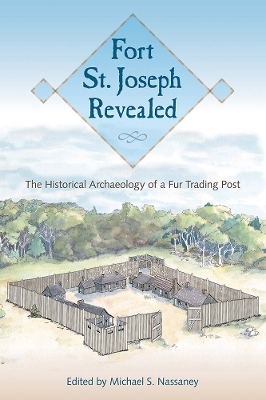
Fort St. Joseph Revealed
The Historical Archaeology of a Fur Trading Post
Seiten
2019
University Press of Florida (Verlag)
978-0-8130-5642-5 (ISBN)
University Press of Florida (Verlag)
978-0-8130-5642-5 (ISBN)
The first synthesis of archaeological and documentary data on one of the most important French colonial outposts in the western Great Lakes region.
Fort St. Joseph Revealed is the first synthesis of archaeological and documentary data on one of the most important French colonial outposts in the western Great Lakes region. Located in what is now Michigan, Fort St. Joseph was home to a flourishing fur trade society from the 1680s to 1781. Material evidence of the site―lost for centuries―was discovered in 1998 by volume editor Michael Nassaney and his colleagues, who summarize their extensive excavations at the fort and surrounding areas in these essays.
Contributors analyze material remains including animal bones, lead seals, smudge pits, and various other detritus from daily life to reconstruct the foodways, architectural traditions, crafts, trade, and hide-processing methods of the fur trade. They discuss the complex relationship between the French traders and local Native populations, who relied on each other for survival and forged links across their communities through intermarriage and exchange, even as they maintained their own cultural identities. Faunal remains excavated at the site indicate the French quickly adopted Native cuisine, as they were unable to transport perishable goods across long distances. Copper kettles and other imported objects from Europe were transformed by Native Americans into decorative ornaments such as tinkling cones, and French textiles served as a medium of stylistic expression in the multi-ethnic community that developed at Fort St. Joseph. Featuring a thought-provoking look at the award-winning public archaeology program at the site, this volume will inspire researchers with the potential of community-based service-learning initiatives to tap into the analytical power at the interface of history and archaeology.
Fort St. Joseph Revealed is the first synthesis of archaeological and documentary data on one of the most important French colonial outposts in the western Great Lakes region. Located in what is now Michigan, Fort St. Joseph was home to a flourishing fur trade society from the 1680s to 1781. Material evidence of the site―lost for centuries―was discovered in 1998 by volume editor Michael Nassaney and his colleagues, who summarize their extensive excavations at the fort and surrounding areas in these essays.
Contributors analyze material remains including animal bones, lead seals, smudge pits, and various other detritus from daily life to reconstruct the foodways, architectural traditions, crafts, trade, and hide-processing methods of the fur trade. They discuss the complex relationship between the French traders and local Native populations, who relied on each other for survival and forged links across their communities through intermarriage and exchange, even as they maintained their own cultural identities. Faunal remains excavated at the site indicate the French quickly adopted Native cuisine, as they were unable to transport perishable goods across long distances. Copper kettles and other imported objects from Europe were transformed by Native Americans into decorative ornaments such as tinkling cones, and French textiles served as a medium of stylistic expression in the multi-ethnic community that developed at Fort St. Joseph. Featuring a thought-provoking look at the award-winning public archaeology program at the site, this volume will inspire researchers with the potential of community-based service-learning initiatives to tap into the analytical power at the interface of history and archaeology.
Michael S. Nassaney is professor of anthropology at Western Michigan University and principal investigator of the Fort St. Joseph Archaeological Project. He is the author of The Archaeology of the North American Fur Trade and coeditor of Interpretations of Native North American Life: Material Contributions to Ethnohistory.
| Erscheinungsdatum | 01.07.2019 |
|---|---|
| Verlagsort | Florida |
| Sprache | englisch |
| Maße | 151 x 229 mm |
| Gewicht | 572 g |
| Themenwelt | Geisteswissenschaften ► Archäologie |
| Geisteswissenschaften ► Geschichte ► Regional- / Ländergeschichte | |
| Sozialwissenschaften ► Ethnologie | |
| Sozialwissenschaften ► Soziologie | |
| ISBN-10 | 0-8130-5642-X / 081305642X |
| ISBN-13 | 978-0-8130-5642-5 / 9780813056425 |
| Zustand | Neuware |
| Informationen gemäß Produktsicherheitsverordnung (GPSR) | |
| Haben Sie eine Frage zum Produkt? |
Mehr entdecken
aus dem Bereich


aus dem Bereich
die Geschichte meiner Urgroßmutter
Buch | Hardcover (2025)
C.H.Beck (Verlag)
CHF 32,15
Träume und Macht : eine Biografie
Buch | Hardcover (2025)
C.H.Beck (Verlag)
CHF 61,60


