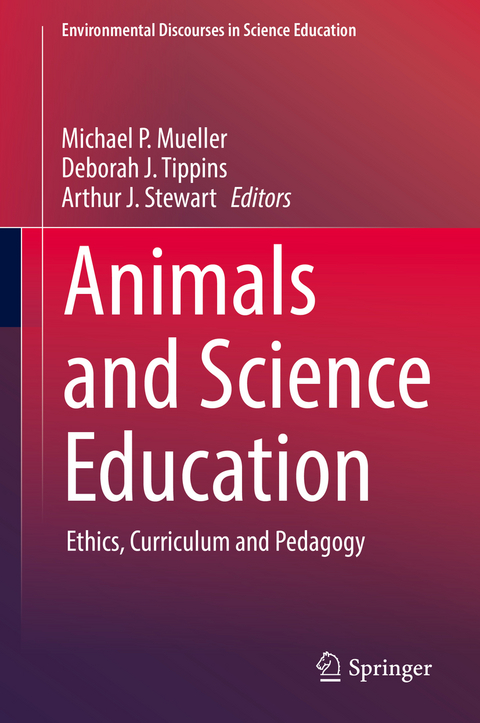
Animals and Science Education (eBook)
XVIII, 265 Seiten
Springer International Publishing (Verlag)
978-3-319-56375-6 (ISBN)
This book discusses how we can inspire today's youth to engage in challenging and productive discussions around the past, present and future role of animals in science education. Animals play a large role in the sciences and science education and yet they remain one of the least visible topics in the educational literature. This book is intended to cultivate research topics, conversations, and dispositions for the ethical use of animals in science and education. This book explores the vital role of animals with/in science education, specimens, protected species, and other associated issues with regards to the role of animals in science. Topics explored include ethical, curriculum and pedagogical dimensions, involving invertebrates, engineering solutions that contribute to ecosystems, the experiences of animals under our care, aesthetic and contemplative practices alongside science, school-based ethical dialogue, nature study for promoting inquiry and sustainability, the challenge of whether animals need to be used for science whatsoever, reconceptualizing museum specimens, cultivating socioscientific issues and epistemic practice, cultural integrity and citizen science, the care and nurturance of gender-balanced curriculum choices for science education, and theoretical conversations around cultivating critical thinking skills and ethical dispositions. The diverse authors in this book take on the logic of domination and symbolic violence embodied within the scientific enterprise that has systematically subjugated animals and nature, and emboldened the anthropocentric and exploitative expressions for the future role of animals.
At a time when animals are getting excluded from classrooms (too dangerous! too many allergies! too dirty!), this book is an important counterpoint. Interacting with animals helps students develop empathy, learn to care for living things, engage with content. We need more animals in the science curriculum, not less.
David Sobel, Senior Faculty, Education Department, Antioch University New England
Wild Awakedness and Animalistic Inquiry: Introducing a Book on the Role of Animalswith/in Science Education 6
Animals and the Ancient Greeks 6
Animals and Indigenous Epistemology: Lost Dialogues 8
Neoliberalism and the Economic Rationalization of Animals 8
Toward Wild Awakedness and Animalistic Inquiry 9
Wildly Awaked Vision of Animalistic Inquiry 9
The Nuances of This Book 11
References 13
Animals and Science Education 14
Contents 16
About the Editors 18
Chapter 1: Worm Spit: Integrating Curriculum Through a Study of Silk and the Amazing Silk Worm 20
1.1 Silk and the Silkworm in an Integrated Curriculum 22
1.2 Back in Time in a Faraway Land 22
1.3 Bombyx mori in the Classroom 24
1.4 Silk Is Big, Even Today 27
Appendix 28
Books and Resources for Children 28
Biological Supply Companies: Sources for Silkworm Eggs 28
Photos 29
References 30
Additional Resources for Further Study 31
Chapter 2: You Can Give a Bee Some Water, But You Can’t Make Her Drink: A Socioscientific Approach to Honey Bees in Science Education 33
2.1 What Is a Socioscientific Issues Approach to Science Education? 34
2.2 What Are Honey Bees? 34
2.3 How Did Humans Start Keeping Bees? 35
2.4 What Can Honey Bees Teach Us About Our Agricultural System? 36
2.5 Are Honey Bees Domesticated? 39
2.6 How Do Humans Control the Reproduction of Honey Bees? 40
2.7 How Do Humans Control Honey Bee Diet? 41
2.8 Are Honey Bees Invasive Species? 42
2.9 What Might an SSI Approach to Studying Bees Entail? 43
2.10 Conclusion 44
References 44
Chapter 3: Engineering a Solution for Managing Fish Waste 47
3.1 Fish Waste Issues 48
3.2 Fish Waste Management 49
3.2.1 Ocean Disposal 49
3.2.2 Landfill 49
3.2.3 Composting and Fertilizer 50
3.2.4 In-River Disposal 50
3.3 Hydro-powered Fish Carcass Disposal System 52
3.3.1 Design 53
3.3.2 Location 53
3.3.3 Size 54
3.3.4 Grinder 55
3.3.5 Environmental Concerns 55
3.3.6 Health and Safety 56
3.4 A Solution to Fish Waste Management 56
References 56
Chapter 4: Learning Science in Aquariums and on Whalewatching Boats: The Hidden Curriculum of the Deployment of Other Animals 58
4.1 Interpretation in Zoos, Aquariums, and Parks 59
4.2 The Political Deployment of Other Animals 60
4.3 The Hidden Curriculum 62
4.4 Re-thinking Animal-Focused Informal Science Education 64
References 65
Chapter 5: Tracing the Anthrozoological Landscape of Central Iowa: Place and Pedagogical Possibilities 68
5.1 Why Educators Should Attend to Human-Animal Relations 69
5.2 Human-Animal Relations in the Making of Place 71
5.3 Human-Animal Relations in the Construction of Place-Based Identity 74
5.4 Inconsistencies in (Dominant) Human-Animal Relations as Potential Sites of Change 77
5.5 Human-Animal Relations, Situated Classrooms, and New Directions for Academic Inquiry 79
References 82
Chapter 6: Life After the Fact(ory): Pedagogy of Care at an Animal Sanctuary 86
6.1 Where Species Meet 86
6.2 Storied Lives: ‘Learning-with’ Individual Animals 88
6.3 Chapter Roadmap 89
6.4 Initial Encounters: Preparing for Multispecies Science Education 90
6.5 Entangling Species: Sanctuary Stories as Pedagogy 93
6.6 Becoming More: Attending to Evolving Relationships 94
6.7 Life After the Fact(ory): Locating Science Education at an Animal Sanctuary 97
References 99
Chapter 7: Ethical-Ecological Holism in Science Pedagogy: In Honor of Sea Urchins 102
7.1 The Sea Urchin: A Model Organism 103
7.2 Killing the Wonder: Three Biology Lab Narratives 105
7.3 Goethean Science: Delicate Empiricism 110
References 113
Chapter 8: A Story of Chicks, Science Fairs and the Ethics of Students’ Biomedical Research 115
8.1 Learning Opportunities Through Science Fairs 115
8.2 The Historical Context of Science Fairs 116
8.3 Use of Animals in STS and ISEF: Early Years 117
8.4 Rules and Guidelines: STS, ISEF, and Federal 118
8.5 An Impactful Encounter with a Student at a Science Fair 120
8.6 Animal Rights, Education, Present and Future of Science 124
8.7 Understanding a Continuum of Positions 126
8.8 Assumptions Related to the Case Narrative 128
8.9 Reflections and Implications for Science Educators 133
References 134
Chapter 9: Spiders, Rats, and Education 138
9.1 Sustaining Spiders and Teaching Rats 139
9.1.1 TheBiosphere Challenge 139
9.1.2 Teach a Rat 141
9.2 Moral Objections Welcomed 142
9.3 Learning Goals 145
9.3.1 Biosphere Challenge 145
9.3.2 Teach a Rat 147
9.4 5-Gallons of Powerful Learning 148
References 149
Chapter 10: How Technology Can Replace Animals in Lab Practices 150
10.1 Animal Testing 151
10.2 Ethics in Animal-Study Research 152
10.3 Social Awareness Against Animal Abuse 154
10.4 Animal-Free Teaching Alternatives 155
References 157
Chapter 11: Using Object-Based Learning to Understand Animal Evolution 160
11.1 What Are Natural History Collections? 161
11.2 Learning About Natural History Through Objects 164
11.3 Using OBL at the Grant Museum of Zoology 166
11.4 The Power of Animal Specimens in Learning Biology 170
References 171
Chapter 12: Death in a Jar: The Study of Life 173
12.1 Biology: The Study of Life 173
12.2 Biology: The Study of the Dead 174
12.3 Biology: The Study of the Living Dead 177
12.4 A New Covenant with Animals: Combatting Biophobia 180
References 181
Chapter 13: Socio-scientific Issues for Scientific Literacy – The Evolution of an Environmental Education Program with a Focus on Birds 183
13.1 Introduction 183
13.2 Research Experiences for Students Through Citizen Science 184
13.3 Andrew’s Evolution with Citizen Science and Bird Banding 185
13.4 Best Practices for Citizen Science 187
13.4.1 Epistemic Involvement 188
13.4.2 Reflection 188
13.5 Why Socio-scientific Issues? 189
13.5.1 SSI & Science Content Knowledge
13.5.2 SSI and the Nature of Science 190
13.5.3 Citizen Science Through SSI to Improve Vision II Science Literacy 190
13.6 Citizen Science SSI (CS-SSI) 191
13.7 The Power of a Bird in Hand 193
Photos 195
References 197
Chapter 14: Hawaiian Citizen Science: Journeys of Self-Discovery and Understanding of Scientific Concepts Through Culture and Nature Study in School Science Classes 200
14.1 Mount Ka‘ala 201
14.1.1 Happy Face Spider 202
14.1.2 Cultural Significance of Ka‘ala 203
14.1.3 O‘ahu Tree Snails 204
14.2 Connecting Students to Nature 204
14.2.1 Disconnected 205
14.3 Hawai‘i’s Advantage 206
14.4 Hawaiian Science 207
14.4.1 Citizen Science Projects 209
14.5 Making Connections 210
References 211
Chapter 15: Care-Based Citizen Science: Nurturing an Ethic of Care to Support the Preservation of Biodiversity 213
15.1 Conservation and Ecojustice 213
15.2 Citizen Science 214
15.3 Conceptualizing Care 216
15.4 Nodding’s Ethic of Care 217
15.5 Taking Relation: Situating Karrow and Fazio’s Work in an Ethic of Care 219
15.6 Recommendations for Nurturing an Ethical Care 219
15.7 Designing Care-Based Citizen Science 221
15.7.1 Modeling 222
15.7.2 Dialogue 223
15.7.3 Practice 224
15.7.4 Confirmation 225
15.8 Virtual Care-Based Citizen Science Projects 226
15.8.1 Citizen Science Project CondorWatch 227
15.9 Conclusion 228
References 229
Chapter 16: Mapping Conceptions of Wolf Hunting onto an Ecological Worldview Conceptual Framework—Hunting for a Worldview Theory 235
16.1 Taxonomies of Socio-environmental Thought 237
16.2 An Adapted Ecological Worldview Conceptual Framework 238
16.2.1 Ontological Axis 239
16.2.2 Epistemological Axis 241
16.2.3 Axiological Continuum 243
16.3 Dimensions of Ecological Worldviews 243
16.3.1 Egocentric Dimension 244
16.3.2 Technocentric Dimension 246
16.3.3 Ecocentric Dimension 247
16.3.4 Resiliocentric Dimension 248
16.4 Next Steps 250
16.5 A Promising Conceptual Framework for Ecological Worldviews 251
References 251
Chapter 17: A Framework Within Which to Determine How We Should Use Animals in Science Education 254
17.1 The Purposes of Science Education 255
17.1.1 What Constitutes a Flourishing Life? 255
17.1.2 Equipping Every Student to Help Others to Lead Personally Fulfilling Lives 256
17.1.3 The Possible Aims of School Science Education 257
17.2 How Should Humans Use Animals? 259
17.2.1 The Way Ethics Is Done 259
17.2.2 Is It Enough to Look at Consequences? 261
17.2.3 Intrinsic Rights and Wrongs 262
17.2.4 Virtue Ethics 264
17.2.5 Widening the Moral Community 264
17.3 The Use of Animals in Science Education: Some Examples 265
17.3.1 Dissection in Schools 266
17.3.2 Animals in Schools 267
17.3.3 What Might Student Gain by Considering How Humans Should Use Animals? 268
References 269
Index 271
| Erscheint lt. Verlag | 15.6.2017 |
|---|---|
| Reihe/Serie | Environmental Discourses in Science Education | Environmental Discourses in Science Education |
| Zusatzinfo | XVIII, 265 p. 78 illus. |
| Verlagsort | Cham |
| Sprache | englisch |
| Themenwelt | Sozialwissenschaften ► Pädagogik ► Erwachsenenbildung |
| Schlagworte | Animal ethics • animal research • aquariums • citizen science • engineering and STEM • Environmental education • lab animals • Learning and Instruction • Natural history museums • Pets • Scientific Literacy • socio-scientific issues • specimen collections • Zoos |
| ISBN-10 | 3-319-56375-0 / 3319563750 |
| ISBN-13 | 978-3-319-56375-6 / 9783319563756 |
| Informationen gemäß Produktsicherheitsverordnung (GPSR) | |
| Haben Sie eine Frage zum Produkt? |
 PDF (Wasserzeichen)
DRM: Digitales Wasserzeichen
Dieses eBook enthält ein digitales Wasserzeichen und ist damit für Sie personalisiert. Bei einer missbräuchlichen Weitergabe des eBooks an Dritte ist eine Rückverfolgung an die Quelle möglich.
Dateiformat: PDF (Portable Document Format)
Mit einem festen Seitenlayout eignet sich die PDF besonders für Fachbücher mit Spalten, Tabellen und Abbildungen. Eine PDF kann auf fast allen Geräten angezeigt werden, ist aber für kleine Displays (Smartphone, eReader) nur eingeschränkt geeignet.
Systemvoraussetzungen:
PC/Mac: Mit einem PC oder Mac können Sie dieses eBook lesen. Sie benötigen dafür einen PDF-Viewer - z.B. den Adobe Reader oder Adobe Digital Editions.
eReader: Dieses eBook kann mit (fast) allen eBook-Readern gelesen werden. Mit dem amazon-Kindle ist es aber nicht kompatibel.
Smartphone/Tablet: Egal ob Apple oder Android, dieses eBook können Sie lesen. Sie benötigen dafür einen PDF-Viewer - z.B. die kostenlose Adobe Digital Editions-App.
Buying eBooks from abroad
For tax law reasons we can sell eBooks just within Germany and Switzerland. Regrettably we cannot fulfill eBook-orders from other countries.
aus dem Bereich