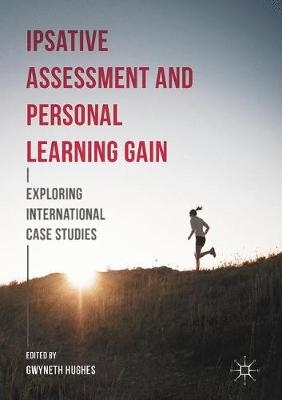
Ipsative Assessment and Personal Learning Gain (eBook)
265 Seiten
Palgrave Macmillan UK (Verlag)
978-1-137-56502-0 (ISBN)
Gwyneth Hughes is a Reader in Higher Education at the Institute of Education, University College London, UK. After starting her career teaching in secondary education, she now has 20 years of experience of teaching, leadership, research and development work in higher education and is still learning. She is author of Ipsative Assessment: Motivation through Marking Progress and a co-author of Learning Transitions in Higher Education.
This innovative book offers a new approach to assessment in which learners can follow their own learning journey using cumulative feedback or measurements of distance travelled from different starting points. Education currently mirrors the values and practices of a highly competitive world with testing, grading and monitoring of standards becoming its driving forces. Competition may stimulate high achievers, but may also demotivate or even damage the rest. Ipsative feedback (on progress) and personal learning gain measurements are often hidden. A range of global case studies from school and higher education illustrate four themes: the benefits of ipsative feedback, making good use of learning gain measurement, the challenges of implementing these novel practices and how to combine new approaches with traditional assessment methods. Exploring the difficulties of turning the tables on hierarchies based on achievement and whether it is fair to elevateprogress, this book will be the start of conversations about a future that is not obsessed with testing and grades.
Gwyneth Hughes is a Reader in Higher Education at the Institute of Education, University College London, UK. After starting her career teaching in secondary education, she now has 20 years of experience of teaching, leadership, research and development work in higher education and is still learning. She is author of Ipsative Assessment: Motivation through Marking Progress and a co-author of Learning Transitions in Higher Education.
Chapter 1. Introduction: Ipsative Assessment and Personal Learning Gain; Gwyneth Hughes.- Chapter 2. Introducing Voices From Practitioners and The Themes of The Collection; Gwyneth Hughes.- Chapter 3. Using Ipsative Assessment to Enhance First-Year Undergraduate Self-Regulation in Chinese College English Classrooms; Jiming Zhou And Zie Zang.- Chapter 4. Supporting Student Learning With Cumulative Coversheets; Carrie Winstanley.- Chapter 5. Raising Self-Efficacy Through Ipsative Assessment And Feuerstein’s Instrumental Enrichment Programme; Kit Mcintyre.- Chapter 6. Use of Digital Technology to Capture and Support Student Progress Across a Taught Postgraduate Programme; Gwyneth Hughes, Denise Hawkes & Tim Neumann.- Chapter 7. Ipsative Learning: A Personal Approach to a Student's PBL Experience Within an Integrated Engineering Design Cornerstone Module; Emanuela Tilley And Kate Roach.- Chapter 8. Assessing Liminality: The Use of Ipsative Formative Assessment During a Postgraduate Taught Induction Programme to Support the Development of Criticality; Julie Rattray.- Chapter 9. Use of Learning Gain Measurements to Compare Teacher-Centric and Student-Centric Feedback in Higher Education; Hui-Teng Hoo And Gwyneth Hughes.- Chapter 10. The Effect of Video Feedback on the Self-Assessment of a Music Performance By Pre-University Level Classical Guitar Students; Mathieu Boucher, Francis Dubé, And Andrea Creech.- Chapter 11. Compete With Yourself (CWY): Maximizing Learning Gain in Schools; Sunita Gandhi.- Chapter 12. New Directions for Ipsative Assessment and Personal Learning Gain; Gwyneth Hughes.
| Erscheint lt. Verlag | 28.2.2017 |
|---|---|
| Zusatzinfo | XI, 265 p. 11 illus. |
| Verlagsort | London |
| Sprache | englisch |
| Themenwelt | Geisteswissenschaften ► Psychologie ► Pädagogische Psychologie |
| Sozialwissenschaften ► Pädagogik ► Bildungstheorie | |
| Sozialwissenschaften ► Pädagogik ► Schulpädagogik / Grundschule | |
| Schlagworte | Competition • Equality • Feedback • individual development • Learning and Instruction • Learning gain • Marking • Motivation • Personal learning • Progress • Self-Regulated Learning • student assessment • value-added |
| ISBN-10 | 1-137-56502-0 / 1137565020 |
| ISBN-13 | 978-1-137-56502-0 / 9781137565020 |
| Informationen gemäß Produktsicherheitsverordnung (GPSR) | |
| Haben Sie eine Frage zum Produkt? |
 PDF (Wasserzeichen)
DRM: Digitales Wasserzeichen
Dieses eBook enthält ein digitales Wasserzeichen und ist damit für Sie personalisiert. Bei einer missbräuchlichen Weitergabe des eBooks an Dritte ist eine Rückverfolgung an die Quelle möglich.
Dateiformat: PDF (Portable Document Format)
Mit einem festen Seitenlayout eignet sich die PDF besonders für Fachbücher mit Spalten, Tabellen und Abbildungen. Eine PDF kann auf fast allen Geräten angezeigt werden, ist aber für kleine Displays (Smartphone, eReader) nur eingeschränkt geeignet.
Systemvoraussetzungen:
PC/Mac: Mit einem PC oder Mac können Sie dieses eBook lesen. Sie benötigen dafür einen PDF-Viewer - z.B. den Adobe Reader oder Adobe Digital Editions.
eReader: Dieses eBook kann mit (fast) allen eBook-Readern gelesen werden. Mit dem amazon-Kindle ist es aber nicht kompatibel.
Smartphone/Tablet: Egal ob Apple oder Android, dieses eBook können Sie lesen. Sie benötigen dafür einen PDF-Viewer - z.B. die kostenlose Adobe Digital Editions-App.
Buying eBooks from abroad
For tax law reasons we can sell eBooks just within Germany and Switzerland. Regrettably we cannot fulfill eBook-orders from other countries.
aus dem Bereich