


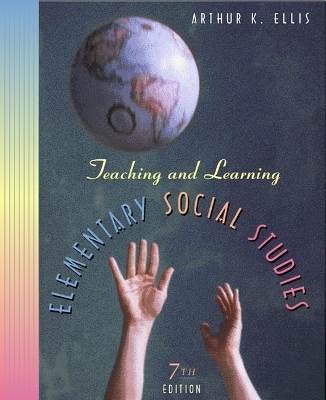
Teaching and Learning Elementary Social Studies
Pearson (Verlag)
978-0-205-33752-1 (ISBN)
- Titel erscheint in neuer Auflage
- Artikel merken
With clear reference to the NCSS standards, this text provides students with strategies for involving children in social studies content that emphasize inquiry, concepts and moral development.
The seventh edition of this extremely popular text maintains its focus on the child. Attention is focused on the knowledge base, or “what children should know.” The text, in general, has been updated with coverage of current theories, self-esteem, emotional intelligence and assessment and has incorporated material on the NCSS standards.
1. Ideas, Definitions, and Trends.
Social Studies Defined.
The Social Studies Curriculum.
Classroom Environments.
The Constructivist Environment for Learning.
Higher-Level Thinking.
A Good Social Studies Teacher.
2. Building the Foundations for Social Studies.
Research Findings that You Ought to Know About.
Children's Natural Tendencies.
Characteristics of Higher Achieving Students.
Encouraging Thoughtfulness.
3. The Knowledge Base for Elementary Social Studies.
The Nature of Knowledge.
The National Council for the Social Studies Standards as a Guide to the Knowledge Base.
The Social Science Disciplines.
4. Theory: Developmental and Psychological Dimensions.
Jerome Bruner.
Lev Vygotsky.
Carl Rogers.
5. Experience, Constructivism, and Reflective Thinking.
Contrasting Perspectives for Social Studies.
The Emotional/Intellectual Landscape.
6. Planning for Learning.
The Teacher as a Decision Maker.
Teaching Concepts.
Teaching Skills.
Teaching Values.
How to Develop a Unit: The Design.
Instructional Design and Development: Steps and Elements.
A Sample Unit: Archeology.
7. Teaching and Learning Strategies.
Student Perceptions of Social Studies.
Direct Instruction.
Indirect Instruction.
8. Assessing Student Progress.
Assessment: An Overview.
Assessing Assessment.
Tests.
Assessing Your Own Effectiveness.
9. Inquiry and Discovery: Children as Researchers.
Inquiry and Discovery Learning.
Historical Research.
Descriptive Research.
Survey Research.
Experimental Research.
10. Teaching and Learning Responsible Citizenship.
What are the Roles of the Citizen in American Democracy?
The Role of Social Knowledge.
Decision Making: Classroom Civics Lessons.
The Research Base.
The Meaning of Citizenship.
11. Teaching Values, Character Education, and Moral Development.
A Values Perspective.
The Moral Life of Schools.
Teaching Values.
Character Education.
Values Realization.
Moral Development.
Children's Values.
12. Making and Interpreting Maps.
Strategies for Making and Interpreting Maps.
13. Social Studies and Curriculum Integration.
Projects and Themes for Learning.
The Nature of Interdisciplinary Projects.
Kinds of Projects.
A Sample Interdisciplinary Project. Constructing a Greenbelt.
Significant Themes for Integration.
14. Social Studies and Literacy.
Traveling Down Memory Lane.
Becoming a Reader.
Writing and Social Studies.
Social Studies and Language Development.
The Spoken Word.
Electronic Literacy.
15. Social Studies and Current Events.
A Current Events Discussion.
Criteria for Successful Current Events Sessions.
Focusing on Students' Interests.
Electronic Current Events.
Current Events Strategies.
A Current Events Mini Unit.
16. Cooperative Environments: The Hidden Curriculum.
Three Goal Structures for Social Studies.
Grouping.
Role-Play Example: Westward Expansion.
The Physical Environment.
Epilogue.
Index.
| Erscheint lt. Verlag | 1.3.2002 |
|---|---|
| Sprache | englisch |
| Maße | 201 x 241 mm |
| Gewicht | 782 g |
| Themenwelt | Schulbuch / Wörterbuch |
| Sozialwissenschaften ► Pädagogik | |
| ISBN-10 | 0-205-33752-X / 020533752X |
| ISBN-13 | 978-0-205-33752-1 / 9780205337521 |
| Zustand | Neuware |
| Informationen gemäß Produktsicherheitsverordnung (GPSR) | |
| Haben Sie eine Frage zum Produkt? |
aus dem Bereich


