


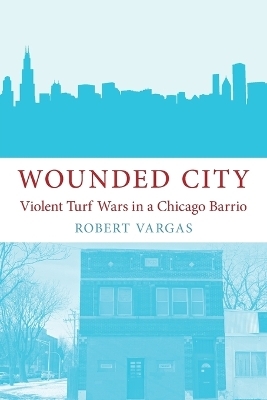
Wounded City
Violent Turf Wars in a Chicago Barrio
Seiten
2016
Oxford University Press Inc (Verlag)
978-0-19-024591-7 (ISBN)
Oxford University Press Inc (Verlag)
978-0-19-024591-7 (ISBN)
Through an ethnographic case study of Chicago's Little Village, Wounded City demonstrates how competition for political power and state resources undermined efforts to reduce gang violence. Robert Vargas argues that the state, through different patterns of governance, can contribute to distrust and division among community members.
In 2009, Chicago spent millions of dollars to create programs to prevent gang violence in some of its most disadvantaged neighborhoods. Yet in spite of the programs, violence has grown worse in some of the very neighborhoods that the violence prevention programs were intented to help. While public officials and social scientists often attribute the violence - and the failure of the programs - to a lack of community in poor neighborhoods, closer study reveals another source of community division: local politics. Through an ethnographic case study of Chicago's Little Village neighborhood, Wounded City dispells the popular belief that a lack of community is the primary source of violence, arguing that competition for political power and state resources often undermine efforts to reduce gang violence. Robert Vargas argues that the state, through the way it governs, can contribute to distrust and division among community members, thereby undermining social cohesion.
The strategic actions taken by police officers, politicians, nonprofit organizations, and gangs to collaborate or compete for power and resources can vary block by block, triggering violence on some blocks while successfully preventing it on others. A rich blend of urban politics, sociology, and criminology, Wounded City offers a cautionary tale for elected officials, state agencies, and community based organizations involved with poor neighborhoods.
In 2009, Chicago spent millions of dollars to create programs to prevent gang violence in some of its most disadvantaged neighborhoods. Yet in spite of the programs, violence has grown worse in some of the very neighborhoods that the violence prevention programs were intented to help. While public officials and social scientists often attribute the violence - and the failure of the programs - to a lack of community in poor neighborhoods, closer study reveals another source of community division: local politics. Through an ethnographic case study of Chicago's Little Village neighborhood, Wounded City dispells the popular belief that a lack of community is the primary source of violence, arguing that competition for political power and state resources often undermine efforts to reduce gang violence. Robert Vargas argues that the state, through the way it governs, can contribute to distrust and division among community members, thereby undermining social cohesion.
The strategic actions taken by police officers, politicians, nonprofit organizations, and gangs to collaborate or compete for power and resources can vary block by block, triggering violence on some blocks while successfully preventing it on others. A rich blend of urban politics, sociology, and criminology, Wounded City offers a cautionary tale for elected officials, state agencies, and community based organizations involved with poor neighborhoods.
Robert Vargas is Assistant Professor of Sociology at the University of Notre Dame.
1) Introduction
POLITICAL TURF
2) Battles for Political Turf in Little Village
3) Burbs and Violent Blocks
4) Transforming Violent Streets on the West Side
STREET TURF
5) Silence and the Art of Arson
6) Locking Up Social Order
CONCLUSION
7) Toward a Relational Understanding of Urban Violence
8) Appendix A: Navigating Turf Wars
9) Appendix B: Methods
| Erscheinungsdatum | 23.04.2016 |
|---|---|
| Verlagsort | New York |
| Sprache | englisch |
| Themenwelt | Recht / Steuern ► Strafrecht ► Kriminologie |
| Sozialwissenschaften ► Ethnologie | |
| Sozialwissenschaften ► Politik / Verwaltung ► Staat / Verwaltung | |
| Sozialwissenschaften ► Soziologie | |
| ISBN-10 | 0-19-024591-3 / 0190245913 |
| ISBN-13 | 978-0-19-024591-7 / 9780190245917 |
| Zustand | Neuware |
| Informationen gemäß Produktsicherheitsverordnung (GPSR) | |
| Haben Sie eine Frage zum Produkt? |
Mehr entdecken
aus dem Bereich



aus dem Bereich
Mein Leben zwischen Kokain und Waffen
Buch | Softcover (2025)
Piper (Verlag)
CHF 24,90
zwei Essays
Buch | Softcover (2025)
Reclam, Philipp (Verlag)
CHF 9,80
der berühmte FBI-Profiler über die Fahndung nach Serienmördern und …
Buch | Softcover (2023)
riva (Verlag)
CHF 20,95


