Weather and Society (eBook)
John Wiley & Sons (Verlag)
978-1-118-52593-7 (ISBN)
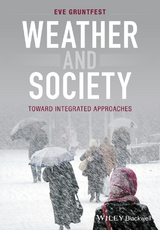
Weather and Society: Toward Integrated Approaches provides the first interdisciplinary approach to the subject of weather and society. This guide to the evolving set of problem-solving approaches to weather's societal issues successfully integrates social science's techniques, concepts and methodologies into meteorological research and practice. Drawing especially on the work of the WAS*IS workshops (Weather and Society * Integrated Studies), this important reference offers a framework for starting to understand how the consideration of societal impacts can enhance the scientific disciplines that address the scope and impacts of weather, particularly meteorology. Filled with tools, concepts, case studies and helpful exercises, this resource:
- Lays the groundwork for conducting interdisciplinary work by learning new strategies and addressing typical challenges
- Identifies leaders of the movement to integrate social science and meteorology and highlights their contributions
- Includes discussion of such tools as Geographic Information Systems, survey design, focus groups, participatory research and interviewing techniques and concepts
- Reveals effective integrated research and applications though real-world examples in a global context
- Helps to identify ways to pursue research, application, and educational opportunities for integrated weather-society work
Weather and Society is a hands-on guide for academics, students and professionals that offers a new approach to the successful integration of social science concepts and methodologies into the fabric of meteorological research and practice.
DR. EVE GRUNTFEST is a geographer who has devoted her career to breaking down the barriers that separate social science and atmospheric science. She is Professor Emerita from University of Colorado at Colorado Springs where she taught for 27 years. She has published widely and is an expert in the areas of warning systems and flash flood mitigation.
During her career, she served on five National Academy of Science committees. She directed Social Science Woven into Meteorology (SSWIM - www.sswim.org) and is co-founder of the Weather and Society * Integrated Studies (WAS*IS) movement. She was a program officer in the Atmospheric and Geospace Sciences Division at National Science Foundation and a member of the National Oceanic and Atmospheric Administration's Science Advisory Board.
Weather and Society: Toward Integrated Approaches provides the first interdisciplinary approach to the subject of weather and society. This guide to the evolving set of problem-solving approaches to weather s societal issues successfully integrates social science s techniques, concepts and methodologies into meteorological research and practice. Drawing especially on the work of the WAS*IS workshops (Weather and Society * Integrated Studies), this important reference offers a framework for starting to understand how the consideration of societal impacts can enhance the scientific disciplines that address the scope and impacts of weather, particularly meteorology. Filled with tools, concepts, case studies and helpful exercises, this resource: Lays the groundwork for conducting interdisciplinary work by learning new strategies and addressing typical challenges Identifies leaders of the movement to integrate social science and meteorology and highlights their contributions Includes discussion of such tools as Geographic Information Systems, survey design, focus groups, participatory research and interviewing techniques and concepts Reveals effective integrated research and applications though real-world examples in a global context Helps to identify ways to pursue research, application, and educational opportunities for integrated weather-society work Weather and Society is a hands-on guide for academics, students and professionals that offers a new approach to the successful integration of social science concepts and methodologies into the fabric of meteorological research and practice.
DR. EVE GRUNTFEST is a geographer who has devoted her career to breaking down the barriers that separate social science and atmospheric science. She is Professor Emerita from University of Colorado at Colorado Springs where she taught for 27 years. She has published widely and is an expert in the areas of warning systems and flash flood mitigation. During her career, she served on five National Academy of Science committees. She directed Social Science Woven into Meteorology (SSWIM - www.sswim.org) and is co-founder of the Weather and Society * Integrated Studies (WAS*IS) movement. She was a program officer in the Atmospheric and Geospace Sciences Division at National Science Foundation and a member of the National Oceanic and Atmospheric Administration's Science Advisory Board.
Title Page 5
Copyright Page 6
Contents 7
Acknowledgments 12
Preface 14
Chapter 1 The Need for Integrated Approaches to Weather and Society 17
1.1 Rationale for This Book 17
1.2 The Audience for This Book 24
1.3 Defining Weather and Society: Integrated Approaches 26
1.4 What Social Sciences Have in Common with Each Other and with Atmospheric Science? 31
1.5 Social Science Methodologies 34
1.5.1 Surveys 34
1.5.2 Direct Observations 35
1.5.3 Participatory Action Research 35
1.5.4 Focus Groups 36
1.6 What Is Not Social Science? 37
1.7 Doing Social Science Versus Incorporating Societal Impacts 38
1.8 Questions for Review and Discussion 39
1.9 Using What You’ve Learned: Homework Assignment From the Chapter 40
References 41
Chapter 2 History of the Movement to Integrate Social Science Into Atmospheric Science 45
2.1 Early Weather Forecasting for Impacts 45
2.2 Historians and Weather 46
2.3 Weather and Society Efforts Build on Natural Hazards Research and Practice 48
2.3.1 Efforts to Add Social Dimensions to Solving Weather Problems 51
2.3.2 Weather and Society * Integrated Studies—WAS*IS 52
2.3.3 Integrated Warning Team Meetings 55
2.3.4 American Meteorological Society Summer Policy Colloquium 55
2.3.5 Social Science Woven into Meteorology (SSWIM) 55
2.3.6 VORTEX-Southeast 58
2.4 Physical Science Myths Related to Climate and Applicable to Weather 61
2.5 Meteorological Aspects of Non?Meteorological Hazards 64
2.6 Research That Evaluates What People Did When They Heard a Warning: Hurricane Ike 2008 Case Study 66
2.7 Questions for Review and Discussion 69
2.8 Using What You’ve Learned: Homework Assignment From the Chapter 70
References 71
Chapter 3 Social Science Partners and the Weather/Society Work They Do 75
3.1 The Partners and How They Do Their Work 77
3.2 Anthropology 80
3.3 Communication 84
3.4 Economics 87
3.5 Geography 92
3.6 Psychology 99
3.7 Sociology 103
3.8 Questions for Review and Discussion 110
3.9 Using What You’ve Learned: Homework Assignment From the Chapter 112
References 113
Chapter 4 Thirteen Profiles of Leaders in Weather and Social Science 121
4.1 Angle’s Recommendations for Integrating Social Science and Atmospheric Science 124
4.2 Dr. Becker’s Recommendations for Integrating Social Science and Atmospheric Science 125
4.3 Dr. Demuth’s Recommendations for Integrating Social Science and Atmospheric Science 128
4.4 Dobson’s Recommendations for Integrating Social Science and Atmospheric Science 130
4.5 Fransen’s Recommendations for Integrating Social Science and Atmospheric Science 132
4.6 Holthaus’ Recommendations for Integrating Social Science and Atmospheric Science 134
4.7 Dr. Lazrus’ Recommendations for Integrating Social Science and Atmospheric Science 136
4.8 Dr. Morss’ Recommendations for Integrating Social Science and Atmospheric Science 138
4.9 Moulton’s Recommendations for Integrating Social Science and Atmospheric Science 140
4.10 Dr. Ruin’s Recommendations for Integrating Social Science and Atmospheric Science 142
4.11 Dr. Schumacher’s Recommendations for Integrating Social Science and Atmospheric Science 143
4.12 Spinney’s Recommendations for Integrating Social Science and Atmospheric Science 145
4.13 Vitols’ Recommendations for Integrating Social Science and Atmospheric Science 147
4.14 Questions for Review and Discussion 148
4.15 Using What You’ve Learned: Homework Assignment From the Chapter 148
References 149
Chapter 5 Moving Toward Integrated Weather and Society Research and Practice—A New Paradigm 150
5.1 How Social Scientists and Meteorologists Work Together to Create New Scientific Conceptual Models and Methods: Start with Adjacent Projects 150
Case Study: Schools and Tornado Saferooms 151
Case Study: Storm Surge Warnings From the NWS—Moving From Adjacent Social Scientific Collaboration to Integrative Collaborations 153
Case Study: Required Integrated Research: National Science Foundation Dynamics of Coupled Natural and Human Systems Program 155
5.2 Increased Popularity for How Important It Is for Meteorologists to Understand Some Social Science 156
5.3 Possible New Common Ground for Integrated Approaches to Weather and Society: Emergence of Convergence Science 156
5.4 Socio-Meteorological Testbeds 161
5.5 Wicked Problems and Momentum In the Movement Toward Integrated Weather-Society Science 162
5.6 Hard or Soft Science? Evening the Playground Between the Sciences 163
5.7 Human Machine Interface 164
5.8 Questions for Review and Discussion 167
5.9 Using What You’ve Learned: Homework Assignment From the Chapter 167
References 168
Chapter 6 Ways to Be Part of the Transformation to Integrated Weather Studies 172
6.1 Be Part of the Move From WAS to IS 172
6.2 Understand the Cycle of Change 173
6.3 Keep the Momentum Going Toward the Integration of Social and Atmospheric Science 176
6.4 Build Durable Partnerships—Recognize the Power of Networking 177
6.5 Support May Come From Surprising Sources 179
6.6 Five Key Research Priorities for New Hybrid Weather Society Researchers and Practitioners 179
6.7 How Science Changes 189
6.8 Socio-Hydrology Emerges 190
6.9 New Integrated Disciplines on the Horizon 191
6.10 Changing the Paradigm Takes Time and Will Require Patience 193
6.11 Hybrids By Design— Socio-Hydro-Meteorology 194
6.12 How to Become a Participant in the Movement to Integrate the Social Sciences and Atmospheric Science 196
6.13 The Challenges Are Not Overwhelming 197
6.13.1 Scientific Budgets Are Lean 197
6.13.2 Be Patient and Optimistic and Keep Pushing 197
6.14 Meteorologists Embracing Social Science Is a First Step 198
6.14.1 Be Part of the Integrated Studies Movement 199
6.14.2 Work Out Wide-Open Ways for Partners to Thrive 199
6.15 Work for the Longer Term 200
6.15.1 New Integrated Graduate Programs and New Integrated Training Models 200
6.15.2 Positive Outlook for Careers for People with a Background in Integrated Studies 201
6.15.3 Climate Change will Exacerbate the Need for Integrated Weather–Society Research and Practice 202
6.16 Questions for Review and Discussion 204
6.17 Using What You’ve Learned: Homework Assignment From the Chapter 204
References 206
Appendices 11
Appendix A: List of Acronyms 210
Appendix B: Blogs and Websites that Integrate Weather and Society 212
Appendix C: Other Relevant Web Resources 215
Addendum 216
Index 219
EULA 228
| Erscheint lt. Verlag | 15.12.2017 |
|---|---|
| Sprache | englisch |
| Themenwelt | Naturwissenschaften ► Geowissenschaften ► Geografie / Kartografie |
| Naturwissenschaften ► Geowissenschaften ► Meteorologie / Klimatologie | |
| Technik | |
| Schlagworte | Climatology & Palaeoclimatology • defining weather and society • doing social science reveals challenges to accepted assumptions • Doing social science vs. incorporating societal impacts • Early weather forecasting for impacts • earth sciences • Efforts to add social dimensions to solving weather problems • Eve Gruntfest • Geographical Methodology & Techniques • Geographie • Geographie / Methoden u. Techniken • Geography • Geowissenschaften • Historians and weather • Introduction to weather and society • Klimatologie u. Paläoklimatologie • Meteorological aspects of non-meteorological hazards • need for integrated approach to weather and society • Physical science myths related to climate and are applicable to weather • Research that evaluates what people did when they heard a warning • social sciences methodologies • weather and society • Weather and society efforts build on natural hazards research and practice • what is common to social sciences and atmospheric sciences |
| ISBN-10 | 1-118-52593-0 / 1118525930 |
| ISBN-13 | 978-1-118-52593-7 / 9781118525937 |
| Informationen gemäß Produktsicherheitsverordnung (GPSR) | |
| Haben Sie eine Frage zum Produkt? |
 PDF (Adobe DRM)
Kopierschutz: Adobe-DRM
Adobe-DRM ist ein Kopierschutz, der das eBook vor Mißbrauch schützen soll. Dabei wird das eBook bereits beim Download auf Ihre persönliche Adobe-ID autorisiert. Lesen können Sie das eBook dann nur auf den Geräten, welche ebenfalls auf Ihre Adobe-ID registriert sind.
Details zum Adobe-DRM
Dateiformat: PDF (Portable Document Format)
Mit einem festen Seitenlayout eignet sich die PDF besonders für Fachbücher mit Spalten, Tabellen und Abbildungen. Eine PDF kann auf fast allen Geräten angezeigt werden, ist aber für kleine Displays (Smartphone, eReader) nur eingeschränkt geeignet.
Systemvoraussetzungen:
PC/Mac: Mit einem PC oder Mac können Sie dieses eBook lesen. Sie benötigen eine
eReader: Dieses eBook kann mit (fast) allen eBook-Readern gelesen werden. Mit dem amazon-Kindle ist es aber nicht kompatibel.
Smartphone/Tablet: Egal ob Apple oder Android, dieses eBook können Sie lesen. Sie benötigen eine
Geräteliste und zusätzliche Hinweise
Buying eBooks from abroad
For tax law reasons we can sell eBooks just within Germany and Switzerland. Regrettably we cannot fulfill eBook-orders from other countries.
aus dem Bereich