The Periglacial Environment (eBook)
John Wiley & Sons (Verlag)
978-1-119-13279-0 (ISBN)
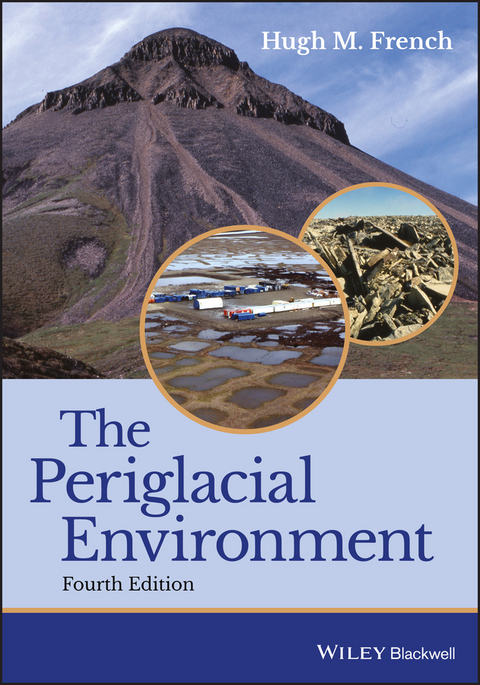
The Periglacial Environment, Fourth Edition, is an authoritative overview of the world's cold, non-glacial environments. First published in 1976 and subsequently revised in 1996 and 2007, the text has been the international standard for nearly 40 years.
The Fourth Edition continues to be a personal interpretation of the frost-induced conditions, geomorphic processes and landforms that characterize periglacial environments. Part One discusses the periglacial concept and describes the typical climates and ecosystems that are involved. Part Two describes the geocryology (permafrost science) associated with frozen ground. Part Three outlines the weathering and geomorphic processes associated with cold-climate conditions. Part Four provides insight into the periglacial environments of the Quaternary, especially the Late Pleistocene. Part Five describes some of the problems associated with human occupancy in regions that experience frozen ground and cold-climate conditions.
- Extensively revised and updated
- Written by an expert with over 50 years of field research
- Draws upon the author's personal experience from Northern Canada, Alaska, Siberia, Tibet, Antarctica, Svalbard, Scandinavia, southern South America, Western Europe and eastern North America
This book is an invaluable reference for advanced undergraduates in geography, geology, earth sciences and environmental sciences programs, and to resource managers and geotechnical engineers interested in cold regions.
HUGH M. FRENCH is now Professor Emeritus, University of Ottawa, and an Adjunct Professor, University of Victoria. He lives on southern Vancouver Island, British Columbia, Canada.
The Periglacial Environment, Fourth Edition, is an authoritative overview of the world s cold, non-glacial environments. First published in 1976 and subsequently revised in 1996 and 2007, the text has been the international standard for nearly 40 years. The Fourth Edition continues to be a personal interpretation of the frost-induced conditions, geomorphic processes and landforms that characterize periglacial environments. Part One discusses the periglacial concept and describes the typical climates and ecosystems that are involved. Part Two describes the geocryology (permafrost science) associated with frozen ground. Part Three outlines the weathering and geomorphic processes associated with cold-climate conditions. Part Four provides insight into the periglacial environments of the Quaternary, especially the Late Pleistocene. Part Five describes some of the problems associated with human occupancy in regions that experience frozen ground and cold-climate conditions. Extensively revised and updated Written by an expert with over 50 years of field research Draws upon the author s personal experience from Northern Canada, Alaska, Siberia, Tibet, Antarctica, Svalbard, Scandinavia, southern South America, Western Europe and eastern North America This book is an invaluable reference for advanced undergraduates in geography, geology, earth sciences and environmental sciences programs, and to resource managers and geotechnical engineers interested in cold regions.
HUGH M. FRENCH is now Professor Emeritus, University of Ottawa, and an Adjunct Professor, University of Victoria. He lives on southern Vancouver Island, British Columbia, Canada.
Cover 1
Title Page 5
Copyright 6
Contents 7
Preface to Fourth Edition 17
Preface to Third Edition 19
Preface to Second Edition 21
Preface to First Edition 23
Acknowledgments 25
Part I The Periglacial Domain 27
Chapter 1 Introduction 29
1.1 The Periglacial Concept 29
1.2 Diagnostic Criteria 30
1.3 Periglacial Environments 31
1.4 The Periglacial Domain 32
1.5 The Periglacial Domain and the Cryosphere 35
1.6 Disciplinary Considerations 36
1.6.1 The Growth of Geocryology 36
1.6.2 The Challenge of Quaternary Science 37
1.6.3 Periglacial Geomorphology or Cold?Region Geomorphology? 38
1.7 Societal Considerations 38
1.8 The Growth of Periglacial Knowledge 39
Chapter 2 Periglacial Climates 43
2.1 Boundary Conditions 43
2.2 Cold Deserts 43
2.3 Regional Climates 45
2.3.1 High Arctic Climates 47
2.3.2 Continental Climates 50
2.3.3 Alpine Climates 50
2.3.4 Montane Climates 50
2.3.5 Climates of Low Annual Temperature Range 51
2.3.6 Antarctica: A Special Case 52
2.4 Snow and Ice 52
2.5 Wind 54
2.6 Ground Climates 54
2.6.1 The ‘n’?Factor 55
2.6.2 The Thermal Offset 56
2.6.3 The Ground Temperature Regime 57
2.7 Periglacial Climates and Global Climate Change 61
2.7.1 Basic Facts 63
2.7.2 Why Climate–Cryosphere Interactions Accelerate Climate Warming 64
Chapter 3 Periglacial Ecosystems 67
3.1 General Statement 67
3.2 Biogeographic Zonation and Major Vegetation Types 67
3.3 Adaptations to Cold, Snow, Wind and Aridity 70
3.4 The Effect of Vegetation 70
3.5 The Polar Deserts 73
3.5.1 The High Arctic Polar Deserts 73
3.5.2 The High Arctic Polar Semi?Deserts 73
3.6 The Polar Desert–Tundra Transition 75
3.7 The Low?Arctic Tundra 75
3.8 The Forest–Tundra Bioclimatic Boundary (The Tree Line) 79
3.9 The Boreal Forest 82
3.10 The Alpine and Montane Ecosystems 84
3.11 Antarctica – A Special Case 86
3.12 Periglacial Ecosystems and Climate Change 87
Part II Frozen Ground and Permafrost 89
Chapter 4 Ground Freezing, Permafrost and the Active Layer 91
4.1 Introduction 91
4.2 Ground Freezing 91
4.2.1 Basic Concepts 91
4.2.2 Ice Segregation 93
4.2.3 ‘The Frozen Fringe’ 95
4.2.4 Frost Heave 95
4.3 Perennially?Frozen Ground (Permafrost) 96
4.4 Moisture and Ice Within Permafrost 98
4.5 Thermal and Physical Properties 99
4.5.1 The Geothermal Regime 99
4.5.2 The TTOP Model 102
4.5.3 Physical Properties 103
4.5.4 Thermal Properties 104
4.6 Permafrost Hydrology 104
4.6.1 Aquifers 105
4.6.2 Hydrochemistry 106
4.6.3 Groundwater Icings 107
4.7 The Active Layer 108
4.7.1 Terminology 108
4.7.2 The Active?Layer Thermal Regime 109
4.7.3 The Transient Layer 109
4.7.4 The Stefan Equation 110
Chapter 5 Permafrost Distribution and Stability 113
5.1 Introduction 113
5.2 Controls over Permafrost Distribution 113
5.2.1 Relief and Aspect 113
5.2.2 Rock Type 114
5.2.3 Vegetation 116
5.2.4 Snow Cover 116
5.2.5 Fire 118
5.2.6 Lakes and Surface Water Bodies 118
5.3 Spatial Extent of Permafrost and Frozen Ground 119
5.3.1 Latitudinal Permafrost 119
5.3.2 Alpine (Mountain) Permafrost 121
5.3.3 Montane Permafrost 124
5.3.4 Seasonally?Frozen Ground 126
5.4 Sub?Sea and Relict Permafrost 127
5.4.1 Sub?Sea Permafrost 127
5.4.2 Relict (Terrestrial) Permafrost 127
5.5 Permafrost and Ecosystems 128
5.6 Permafrost Monitoring and Mapping 130
5.6.1 CALM and GTN?P (TSP) 130
5.6.2 BTS and Mountain Permafrost Probability Mapping 132
5.7 Climate Warming and Permafrost 132
5.7.1 Evidence for Warming Permafrost 133
5.7.2 Evidence for Thawing Permafrost 135
Chapter 6 Ground Ice and Cryostratigraphy 137
6.1 Introduction 137
6.2 Quantitative Parameters 137
6.3 Epigenetic, Syngenetic and Polygenetic Permafrost 138
6.4 Classification 139
6.4.1 The Russian Approach 139
6.4.2 The North American Approach 140
6.5 Main Ground Ice Types 141
6.5.1 Pore Ice 141
6.5.2 Segregated Ice 142
6.5.3 Intrusive Ice 143
6.5.4 Vein Ice 144
6.5.5 Other Types of Ice 144
6.6 Ice Distribution 144
6.6.1 Amounts 144
6.6.2 Distribution with Depth 146
6.6.3 Ice in Bedrock 146
6.6.4 Ice in Poorly?Lithified Sediments 147
6.7 Cryostratigraphy and Cryolithology 150
6.7.1 Cryostructural Analysis 151
6.7.2 Cryostructures of Epigenetic and Syngenetic Permafrost 154
6.7.3 Thaw Unconformities 155
6.7.4 Aggradational Ice 157
6.7.5 Icy Bodies and Ice, Sand and Soil Pseudomorphs 157
6.8 Ice Crystallography 158
6.9 Ice Geochemistry 159
6.10 Massive Ice and Massive?Icy Bodies 159
6.10.1 Nature and Extent 160
6.10.2 Intra?Sedimental Ice 161
6.10.3 Buried Glacier Ice 162
6.11 Cryostratigraphy and Past Environments 162
Chapter 7 Aggradational Permafrost Landforms 165
7.1 Introduction 165
7.2 How Does Permafrost Aggrade? 165
7.2.1 The Illisarvik Drained?Lake Experiment 165
7.3 Thermal?Contraction?Crack Polygons 167
7.3.1 Coefficients of Thermal Expansion and Contraction 167
7.3.2 Ice, Sand and Soil (‘Ground’) Wedges 168
7.3.3 Development of the Polygon Net 170
7.3.4 Polygon Morphology 171
7.3.5 Controls over Cracking 175
7.3.6 Climatic Significance 175
7.4 Ice and Sand Wedges 177
7.4.1 Epigenetic Wedges 179
7.4.2 Syngenetic Wedges 180
7.4.3 Anti?Syngenetic Wedges 180
7.4.4 Growth and Deformation of Wedges 182
7.5 Organic Terrain 182
7.5.1 Palsas 184
7.5.2 Peat Plateaus 184
7.6 Frost Mounds 185
7.6.1 Perennial?Frost Mounds 185
7.6.2 Hydraulic (Open) System Pingos 185
7.6.3 Hydrostatic (Closed) System Pingos 187
7.6.4 Other Perennial?Frost Mounds 191
7.6.5 Seasonal?Frost Mounds 191
7.6.6 Hydrolaccoliths and Other Frost?Induced Mounds 191
Chapter 8 Thermokarst Processes and Landforms 195
8.1 Introduction 195
8.2 Thawing Ground 195
8.2.1 Thaw Strain and Thaw Settlement 195
8.2.2 Potential Depths of Soil Freezing and Thawing 196
8.2.3 The Development of Thermokarst 196
8.3 Causes of Thermokarst 197
8.3.1 General Comments 198
8.3.2 Specific Causes 200
8.4 Thaw?Related Processes 202
8.4.1 Thermokarst Subsidence (Thaw Settlement) 202
8.4.2 Thermal Erosion 202
8.4.3 Other Processes 202
8.5 Thermokarst Sediments and Structures 203
8.5.1 Involuted Structures 203
8.5.2 Retrogressive?Thaw?Slumps and Debris?Flow Deposits 204
8.5.3 Ice?Wedge Pseudomorphs and Composite?Wedge Casts 205
8.5.4 Ice, Silt, Sand and Gravel Pseudomorphs 206
8.6 Thermokarst Landscapes 207
8.6.1 The Alas?Thermokarst Relief of Central Yakutia 208
8.6.2 The Western North American Arctic 211
8.6.3 The Ice?Free Areas of Continental Antarctica 211
8.7 Ice?Wedge Thermokarst Relief 212
8.7.1 Low?Centred Polygons 212
8.7.2 High?Centred Polygons 212
8.7.3 Badland Thermokarst Relief 212
8.8 Thaw Lakes and Depressions 213
8.8.1 Lakes and Táliks 215
8.8.2 Morphology 215
8.8.3 Growth and Drainage 215
8.8.4 Oriented Thaw Lakes 217
Part III Periglacial Geomorphology 219
Chapter 9 Cold?Climate Weathering 221
9.1 Introduction 221
9.2 General Weathering Facts 221
9.3 Freezing and Thawing Indices 222
9.4 Rock (Frost?) Shattering 223
9.4.1 Frost Action and Ice Segregation 223
9.4.2 Insolation and Thermal Shock 226
9.4.3 Perspective 228
9.5 Chemical Weathering 230
9.5.1 Karkevagge 230
9.5.2 Solution and Karstification 231
9.5.3 Salt Weathering 234
9.6 Cryogenic Weathering 234
9.6.1 Cryogenic Disintegration 236
9.6.2 The Coefficient of Cryogenic Contrast 236
9.6.3 Physico?Chemical Changes 238
9.6.4 Problematic Phenomena 238
9.7 Cryobiological Weathering 239
9.8 Rates of Cold?Climate Bedrock Weathering 240
9.9 Cryosols and Cryopedology 241
9.9.1 Cryosols 241
9.9.2 Classification 242
9.9.3 Cryosolic Micromorphology 242
Chapter 10 Mass?Wasting Processes and Active?Layer Phenomena 245
10.1 Introduction 245
10.2 Slow Mass?Wasting Processes 245
10.2.1 Solifluction 245
10.2.2 Frost Creep 247
10.2.3 Gelifluction 249
10.2.4 Solifluction Deposits and Phenomena 249
10.3 Rapid Mass?Wasting Processes 252
10.3.1 Active?Layer?Detachment Slides 252
10.3.2 Debris Flows, Slush Flows and Avalanches 252
10.3.3 Rockfall 256
10.4 Snow Hydrology and Slopewash Processes 258
10.4.1 Snow Hydrology and Snowbanks 259
10.4.2 Surface and Subsurface Wash 259
10.5 Active?Layer Phenomena 261
10.5.1 Frost Heaving 261
10.5.2 Bedrock Heave 261
10.5.3 Upward Heaving of Stones and Objects 261
10.5.4 Stone Tilting 263
10.5.5 Needle Ice 265
10.5.6 Frost Sorting 265
10.5.7 Cryoturbation 266
10.6 Patterned Ground 266
10.6.1 Sorted and Non?Sorted Circles 266
10.6.2 Mud Boils 269
10.6.3 Nets and Stripes 272
Chapter 11 Azonal Processes and Landforms 273
11.1 Introduction 273
11.2 Fluvial Processes and Landforms 273
11.2.1 Major Rivers 274
11.2.2 Freeze?Up and Break?Up 277
11.2.3 Basin Hydrology 278
11.2.4 Sediment Flow, Surface Transport and Denudation 281
11.2.5 Channel Morphology 282
11.3 Lakes and Lake Ice 285
11.3.1 Lake Ice and Climate Change 285
11.3.2 Perennially?Frozen Lakes 286
11.4 Coastal Processes and Landforms 286
11.4.1 Sea Ice 286
11.4.2 Sea Ice, Wave Generation and Sediment Transport 287
11.4.3 Ice on the Beach and the Near?Shore 288
11.4.4 The Influence of Permafrost 290
11.4.5 Cold?Climate Deltas 292
11.5 Aeolian Processes, Sediments and Landforms 293
11.5.1 Wind Abrasion 294
11.5.2 Wind Deflation 297
11.5.3 Sand Dunes and Sand Sheets 297
11.5.4 Niveo?Aeolian Sediments 299
11.5.5 Loess?Like Silt 300
Chapter 12 Slope Development and Landscape Evolution 301
12.1 Introduction 301
12.2 Slope Morphology 301
12.2.1 The Free?Face Slope 301
12.2.2 Rectilinear Debris?Mantled Slopes 304
12.2.3 Convexo?Concavo Debris?Mantled Slopes 304
12.2.4 Pediment?Like Slopes and Inselberg?Like Hills 306
12.2.5 Stepped Profiles 307
12.3 Slope and Valley Development 310
12.3.1 Slope Asymmetry 310
12.4 Frozen and Thawing Slopes 313
12.4.1 Frozen Ground (Permafrost) Creep 313
12.4.2 Rock Glaciers 314
12.4.3 Thaw Consolidation and the Stability of Thawing Slopes 316
12.5 Periglacial Slope Evolution 319
12.5.1 The Davisian (Peltier) Model 319
12.5.2 Cryoplanation 321
12.5.3 Richter Denudation Slopes 321
12.6 Landscape Inheritance 322
Part IV Pleistocene Periglacial Environments 325
Chapter 13 The Pleistocene Periglacial Domain 327
13.1 Introduction 327
13.2 The Time Scale and Climatic Fluctuations 327
13.3 Global (Eustatic) Considerations 330
13.3.1 Sea?Level Changes 330
13.3.2 Uplift of Qinghai?Xizang (Tibet) Plateau 330
13.4 Past Glaciations, Permafrost and Frozen Ground 331
13.4.1 Extent of Past Glaciations 331
13.4.2 Relict Permafrost 332
13.5 Pleistocene Periglacial Environments 333
13.5.1 General Considerations 333
13.5.2 Problems of Paleo?Environmental Reconstruction 334
13.5.3 Ice Age Mammals and Ecosystems 335
13.6 The Pleistocene Periglacial Domain in the Northern Hemisphere 338
13.6.1 Extent of LPM Permafrost 339
13.6.2 Western, Central and Southern Europe 339
13.6.3 Eastern Europe and Kazakhstan 341
13.6.4 Southern, Central and Northern Siberia 343
13.6.5 Western and North?Eastern China 343
13.6.6 North America 345
13.7 The Pleistocene Periglacial Domain in the Southern Circumpolar Region 347
Chapter 14 Previously?Frozen Ground 349
14.1 Introduction 349
14.2 Past Permafrost Aggradation 349
14.2.1 The Paleo?Active Layer and Associated Weathering Characteristics 349
14.2.2 Fragipans and the Paleo?Permafrost Table 352
14.2.3 Secondary Precipitates and Clay Minerals 352
14.3 Frost?Fissure Pseudomorphs and Casts 353
14.3.1 Terminology Relevant to Pleistocene?Age Structures in Unfrozen Sediments 353
14.3.2 Ice?Wedge Pseudomorphs 355
14.3.3 Sand Veins, Sand?Wedge Casts and Composite?Wedge Casts 357
14.3.4 Frost Cracking: Seasonal or Perennial? 358
14.4 Frost?Mound Remnants 359
14.5 Past Permafrost Degradation 361
14.5.1 Thermokarst Depressions 361
14.5.2 Thermokarst Involutions and ‘Sediment?Filled Pots’ 362
14.5.3 Large?Scale Soft?Sediment Deformations 364
14.5.4 Non?Diastrophic Structures 365
14.6 Summary 367
Chapter 15 Pleistocene Periglaciation 369
15.1 Introduction 369
15.2 Intense Frost Action 369
15.2.1 Frost?Disturbed Bedrock 369
15.2.2 Mountain?Top Detritus (‘Blockfields’) 370
15.2.3 Tors 373
15.2.4 Stratified Slope Deposits 373
15.2.5 Frost?Disturbed Soils, Periglacial Involutions and Patterned Ground 373
15.3 Mass-Wasting and Aeolian?Linked Sediment Deposition 377
15.3.1 Geological ‘Time Travellers’ 377
15.3.2 Head or Solifluction Deposits 379
15.3.3 ‘Yedoma’ and ‘Muck’ deposits 379
15.3.4 Loess and Aeolian Silt 381
15.4 Wind Abrasion and Aeolian Sediment Transport 384
15.4.1 Wind?Abraded Rocks 385
15.4.2 Aeolian Sand Deposition 386
15.5 Drainage Modification 386
15.5.1 Ice?Marginal Drainage 387
15.5.2 River and Valley Incision in Ice?Free Areas 388
15.5.3 Enlargement of the Drainage Network 390
15.5.4 Asymmetrical Valley Development 390
15.6 Planation and Pedimentation 392
15.7 A Perspective on Periglaciation 392
Part V Human Occupance and The Periglacial Environment 397
Chapter 16 Urban and Social Infrastructure 399
16.1 Introduction 399
16.2 Human Occupance 399
16.3 Human?Induced Thermokarst 401
16.3.1 Early Siberian and North American Experience 401
16.3.2 The Rapidity of Change 402
16.4 Cold?Regions Engineering 404
16.4.1 General Principles 404
16.4.2 General Solutions 405
16.5 Provision of Municipal Infrastructure in Northern Canada 410
16.5.1 Inuvik, NWT 410
16.5.2 Dawson City, Yukon Territory 410
16.5.3 Yellowknife, NWT 413
16.5.4 Thompson, Northern Manitoba 416
16.6 The Alaskan Experience: The Example of Fairbanks 416
16.7 Water?Supply Problems 418
16.8 Urban Infrastructure and Climate Change 418
16.8.1 The Russian North 418
16.8.2 Other Areas 420
16.8.3 Related Socio?Economic Changes 422
Chapter 17 Transportation and Resource Development 425
17.1 Introduction 425
17.2 Rivers as Highways 425
17.3 Roads and Highways 427
17.3.1 Winter Roads 427
17.3.2 All?Season Roads 427
17.4 Railways 431
17.4.1 The Hudson Bay Railway, Canada 431
17.4.2 The Qinghai?Tibet Railway (QTR), China 432
17.5 Bridge Construction 432
17.6 Runways and Airstrips 436
17.7 Oil and Gas Development 437
17.7.1 Exploration Problems 437
17.7.2 Drilling and Waste?Drilling?Fluid Disposal Problems 440
17.7.3 Pipelines and Permafrost 441
17.8 Mining Activities 445
17.8.1 Placer Gold Mining 445
17.8.2 Opencast Mining 446
17.8.3 Containment and Waste Disposal 446
References 449
Index 529
Supplemental Images 542
EULA 560
| Erscheint lt. Verlag | 27.10.2017 |
|---|---|
| Sprache | englisch |
| Themenwelt | Naturwissenschaften ► Geowissenschaften ► Geologie |
| Schlagworte | Alpine climates • Antarctica: a special case • Climates of low annual temperature range • Continental climates • Diagnostic criteria • Disciplinary considerations of periglacial • earth sciences • geocryology • Geographie • Geography • Geologie u. Geophysik • Geology & Geophysics • Geomorphologie • geomorphology • Geowissenschaften • global climate change • Ground climates • High Arctic climates • Hugh M. French • Montane climates • northern high latitudes and periglacial • Periglacial and Cold deserts • Periglacial and Societal considerations • Periglacial Boundary conditions • Periglacial climates and climate change • periglacial concept • periglacial conditions • Periglacial environments • Periglacial geomorphology or cold-region geomorphology • physical geography • Physiogeographie • Quartärforschung, Glaziologie • quaternary science • Quaternary Science & Glaciology • snow and ice • The challenge of Quaternary science • The ground thermal regime • The growth of geocryology • The growth of periglacial knowledge • The periglacial domain • the periglacial domain and the cryosphere • The Periglacial Environment • The thermal offset • Why climate-cryosphere interactions accelerate climate warming • Wind |
| ISBN-10 | 1-119-13279-7 / 1119132797 |
| ISBN-13 | 978-1-119-13279-0 / 9781119132790 |
| Informationen gemäß Produktsicherheitsverordnung (GPSR) | |
| Haben Sie eine Frage zum Produkt? |
 PDF (Adobe DRM)
Kopierschutz: Adobe-DRM
Adobe-DRM ist ein Kopierschutz, der das eBook vor Mißbrauch schützen soll. Dabei wird das eBook bereits beim Download auf Ihre persönliche Adobe-ID autorisiert. Lesen können Sie das eBook dann nur auf den Geräten, welche ebenfalls auf Ihre Adobe-ID registriert sind.
Details zum Adobe-DRM
Dateiformat: PDF (Portable Document Format)
Mit einem festen Seitenlayout eignet sich die PDF besonders für Fachbücher mit Spalten, Tabellen und Abbildungen. Eine PDF kann auf fast allen Geräten angezeigt werden, ist aber für kleine Displays (Smartphone, eReader) nur eingeschränkt geeignet.
Systemvoraussetzungen:
PC/Mac: Mit einem PC oder Mac können Sie dieses eBook lesen. Sie benötigen eine
eReader: Dieses eBook kann mit (fast) allen eBook-Readern gelesen werden. Mit dem amazon-Kindle ist es aber nicht kompatibel.
Smartphone/Tablet: Egal ob Apple oder Android, dieses eBook können Sie lesen. Sie benötigen eine
Geräteliste und zusätzliche Hinweise
Buying eBooks from abroad
For tax law reasons we can sell eBooks just within Germany and Switzerland. Regrettably we cannot fulfill eBook-orders from other countries.
aus dem Bereich