


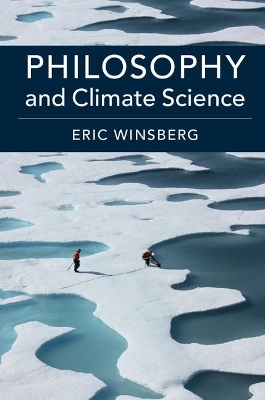
Philosophy and Climate Science
Seiten
2018
Cambridge University Press (Verlag)
978-1-316-64692-2 (ISBN)
Cambridge University Press (Verlag)
978-1-316-64692-2 (ISBN)
A book for students and researchers interested in what philosophy of science can contribute to our understanding of climate science and its role in shaping climate policy debates. It is suitable for anyone looking for a comprehensive introduction, as well as an original contribution, to the philosophy of climate science.
There continues to be a vigorous public debate in our society about the status of climate science. Much of the skepticism voiced in this debate suffers from a lack of understanding of how the science works - in particular the complex interdisciplinary scientific modeling activities such as those which are at the heart of climate science. In this book Eric Winsberg shows clearly and accessibly how philosophy of science can contribute to our understanding of climate science, and how it can also shape climate policy debates and provide a starting point for research. Covering a wide range of topics including the nature of scientific data, modeling, and simulation, his book provides a detailed guide for those willing to look beyond ideological proclamations, and enriches our understanding of how climate science relates to important concepts such as chaos, unpredictability, and the extent of what we know.
There continues to be a vigorous public debate in our society about the status of climate science. Much of the skepticism voiced in this debate suffers from a lack of understanding of how the science works - in particular the complex interdisciplinary scientific modeling activities such as those which are at the heart of climate science. In this book Eric Winsberg shows clearly and accessibly how philosophy of science can contribute to our understanding of climate science, and how it can also shape climate policy debates and provide a starting point for research. Covering a wide range of topics including the nature of scientific data, modeling, and simulation, his book provides a detailed guide for those willing to look beyond ideological proclamations, and enriches our understanding of how climate science relates to important concepts such as chaos, unpredictability, and the extent of what we know.
Eric Winsberg is Professor of Philosophy at the University of South Florida. He is the author of Science in the Age of Computer Simulation (2010) and has published in a number of philosophy journals including Philosophy of Science, the Journal of Philosophy, the British Journal for the Philosophy of Science, Studies in History and Philosophy of Modern Physics, and Synthese.
Preface; List of figures; List of tables; List of boxes; 1. Introduction; 2. Data; 3. Models; 4. Simulations; 5. Chaos; 6. Probability; 7. Confidence; 8. Decision; 9. Values; 10. Skill; 11. Robustness; 12. Diversity; 13. Social epistemology; 14. Epilogue; Appendix: structural stability and the 'Hawkmoth Effect'; References; Index.
| Erscheinungsdatum | 01.05.2018 |
|---|---|
| Zusatzinfo | Worked examples or Exercises |
| Verlagsort | Cambridge |
| Sprache | englisch |
| Maße | 153 x 229 mm |
| Gewicht | 470 g |
| Themenwelt | Geisteswissenschaften ► Philosophie ► Ethik |
| Naturwissenschaften ► Biologie ► Ökologie / Naturschutz | |
| ISBN-10 | 1-316-64692-0 / 1316646920 |
| ISBN-13 | 978-1-316-64692-2 / 9781316646922 |
| Zustand | Neuware |
| Informationen gemäß Produktsicherheitsverordnung (GPSR) | |
| Haben Sie eine Frage zum Produkt? |
Mehr entdecken
aus dem Bereich



aus dem Bereich
Buch | Hardcover (2025)
Suhrkamp (Verlag)
CHF 32,15


