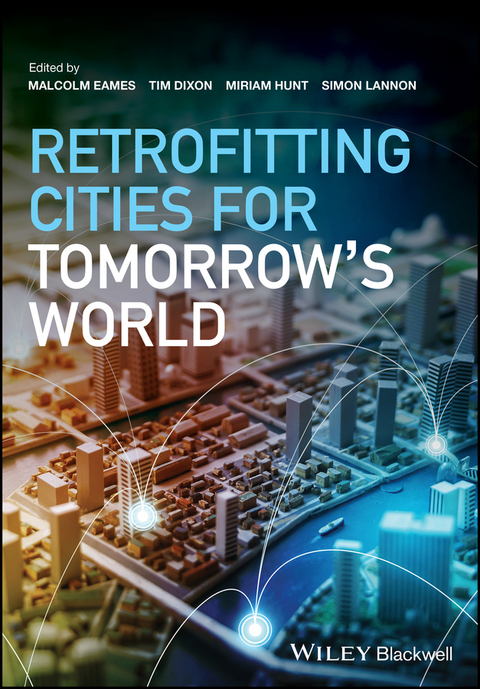
Retrofitting Cities for Tomorrow's World (eBook)
John Wiley & Sons (Verlag)
978-1-119-00722-7 (ISBN)
A groundbreaking exploration of the most promising new ideas for creating the sustainable cities of tomorrow
The culmination of a four-year collaborative research project undertaken by leading UK universities, in partnership with city authorities, prominent architecture firms, and major international consultants, Retrofitting Cities for Tomorrow's World explores the theoretical and practical aspects of the transition towards sustainability in the built environment that will occur in the years ahead. The emphasis throughout is on emerging systems innovations and bold new ways of imagining and re-imagining urban retrofitting, set within the context of 'futures-based' thinking.
The concept of urban retrofitting has gained prominence within both the research and policy arenas in recent years. While cities are often viewed as a source of environmental stress and resource depletion they are also hubs of learning and innovation offering enormous potential for scaling up technological responses. But city-level action will require a major shift in thinking and a scaling up of positive responses to climate change and the associated threats of environmental and social degradation. Clearly the time has come for a more coordinated, planned, and strategic approach that will allow cities to transition to a sustainable future. This book summarizes many of the best new ideas currently in play on how to achieve those goals.
- Reviews the most promising ideas for how to approach planning and coordinating a more sustainable urban future by 2050 through retrofitting existing structures
- Explores how cities need to govern for urban retrofit and how future urban transitions and pathways can be managed, modeled and navigated
- Offers inter-disciplinary insights from international contributors from both the academic and professional spheres
- Develops a rigorous conceptual framework for analyzing existing challenges and fostering innovative ways of addressing those challenges
Retrofitting Cities for Tomorrow's World is must-reading for academic researchers, including postgraduates insustainability, urban planning, environmental studies, economics, among other fields. It is also an important source of fresh ideas and inspiration for town planners, developers, policy advisors, and consultants working within the field of sustainability, energy, and the urban environment.
Malcolm Eames, PhD until recently held a professorial chair in Low Carbon Research with the Low Carbon Research Institute at the Welsh School of Architecture, Cardiff University, UK, and was the Principal Investigator for the EPSRC Retrofit 2050 project.
Tim Dixon, PhD holds a professorial chair in Sustainable Futures in the Built Environment in the School of the Built Environment at the University of Reading and leads the Sustainability in the Built Environment (SustBE) network.
Miriam Hunt is a PhD student at School of Social Sciences, Cardiff University, UK.
Simon Lannon, PhD is a research fellow at the Welsh School of Architecture, Cardiff University, UK.
A groundbreaking exploration of the most promising new ideas for creating the sustainable cities of tomorrow The culmination of a four-year collaborative research project undertaken by leading UK universities, in partnership with city authorities, prominent architecture firms, and major international consultants, Retrofitting Cities for Tomorrow's World explores the theoretical and practical aspects of the transition towards sustainability in the built environment that will occur in the years ahead. The emphasis throughout is on emerging systems innovations and bold new ways of imagining and re-imagining urban retrofitting, set within the context of futures-based thinking. The concept of urban retrofitting has gained prominence within both the research and policy arenas in recent years. While cities are often viewed as a source of environmental stress and resource depletion they are also hubs of learning and innovation offering enormous potential for scaling up technological responses. But city-level action will require a major shift in thinking and a scaling up of positive responses to climate change and the associated threats of environmental and social degradation. Clearly the time has come for a more coordinated, planned, and strategic approach that will allow cities to transition to a sustainable future. This book summarizes many of the best new ideas currently in play on how to achieve those goals. Reviews the most promising ideas for how to approach planning and coordinating a more sustainable urban future by 2050 through retrofitting existing structures Explores how cities need to govern for urban retrofit and how future urban transitions and pathways can be managed, modeled and navigated Offers inter-disciplinary insights from international contributors from both the academic and professional spheres Develops a rigorous conceptual framework for analyzing existing challenges and fostering innovative ways of addressing those challenges Retrofitting Cities for Tomorrow's World is must-reading for academic researchers, including postgraduates insustainability, urban planning, environmental studies, economics, among other fields. It is also an important source of fresh ideas and inspiration for town planners, developers, policy advisors, and consultants working within the field of sustainability, energy, and the urban environment.
Malcolm Eames, PhD until recently held a professorial chair in Low Carbon Research with the Low Carbon Research Institute at the Welsh School of Architecture, Cardiff University, UK, and was the Principal Investigator for the EPSRC Retrofit 2050 project. Tim Dixon, PhD holds a professorial chair in Sustainable Futures in the Built Environment in the School of the Built Environment at the University of Reading and leads the Sustainability in the Built Environment (SustBE) network. Miriam Hunt is a PhD student at School of Social Sciences, Cardiff University, UK. Simon Lannon, PhD is a research fellow at the Welsh School of Architecture, Cardiff University, UK.
Title Page 5
Copyright Page 6
Contents 7
List of Contributors 13
Biographies 17
Foreword 23
Preface 25
Reviews 27
Chapter 1 Introduction 29
Overview 29
1.1 The Future (or ‘Tomorrow’s World’) of Cities 32
1.2 The Structure of the Book 35
1.2.1 Part One: Governance and Dynamics of Urban Retrofit 35
1.2.2 Part Two: Modelling Urban Transitions and Pathways 38
1.2.3 Part Three: Steering and Navigating Sustainable Urban Transitions 39
1.2.4 Part Four: Overview of Key Themes from the Book 42
References 42
Part I Governance and Dynamics of Urban Retrofit 45
Chapter 2 Community Housing Retrofit in the UK and the Civics of Energy Consumption 47
Overview 47
2.1 Challenges to Systemic Housing Retrofit 48
2.2 Community and Low?Carbon Futures 49
2.3 Community Housing Retrofit 50
2.3.1 Community as Local Governance Strategy 51
2.3.2 Community as Identity 51
2.3.3 Community as Learning Network 52
2.3.4 Community as Ethical Commitment 53
2.4 Community Housing Retrofit and the Civics of Low?carbon Transitions 54
2.5 Conclusions 55
References 56
Chapter 3 ‘City-wide or City-blind’? An Analysis of Retrofit Practices in the UK Commercial Property Sector 61
Overview 61
3.1 Introduction 62
3.2 UK Commercial Property: Nature and Characteristics of Commercial Property 64
3.3 What Conceptual Frameworks Can We Use to Understand Commercial Property Retrofitting? 65
3.4 Research Findings 68
3.4.1 ‘Who’? – The Main Stakeholders in the Commercial Property Retrofit Regime and the Nature of the Regime 68
3.4.2 ‘What’? – Retrofit Defined and the Key Technologies Being Used 69
3.4.3 ‘Why’? – The Key Drivers and Barriers 70
3.4.4 ‘How’? – Institutional Frameworks, Legislation and Monitoring/Standards 73
3.5 Conclusions and Discussion 74
Acknowledgements 76
References 76
Chapter 4 Performance Gap in ‘Deep’ Retrofit of Housing: Issues at the Design and Construction Interface 81
Overview 81
4.1 Introduction 81
4.2 Defining the Performance Gap 83
4.3 Methodology – Expert Interviews 84
4.4 Findings 86
4.4.1 Theme 1 – Understanding and Skills 86
4.4.2 Theme 2 – Working Practices 88
4.4.3 Theme 3 – Hard to Treat 90
4.5 Conclusions 91
References 92
Chapter 5 Transforming the Commercial Property Market in Australians Cities: Contemporary Practices and the Future Potential in Green Roof Retrofit 97
Overview 97
5.1 Introduction 97
5.2 Green Roofs Defined 98
5.3 Retrofit Issues in Commercial Stock in Australian Cities 100
5.4 Drivers for Green Roofs 101
5.5 Transformation of the Commercial Property Stock 103
5.6 Valuation Issues 104
5.7 Retrofitting Investment to Date 106
5.8 Taxation Considerations 107
5.9 Contemporary Practices 108
5.9.1 Green Roof Retrofit in Commercial Stock – Case Studies from Melbourne and Sydney 108
5.10 Future Potential in Green Roof Retrofit 113
5.11 Conclusions 114
Acknowledgements 115
References 115
Part II Modelling Urban Transitions and Pathways 119
Chapter 6 Modelling Residential Retrofit: Insights on the Effect of Regional Characteristics for the Cardiff City Region 121
Overview 121
6.1 Introduction 121
6.2 Context 122
6.2.1 Role of Local Government 122
6.2.2 Cardiff Domestic Stock: History and Legacy 123
6.3 Methodology 124
6.4 Results 129
6.4.1 Wall Insulation 132
6.4.2 Loft Insulation 132
6.4.3 Glazing 133
6.5 Conclusions 134
Acknowledgements 134
References 134
Chapter 7 Weatherproofing Urban Social Housing for a Changing Climate Through Retrofitting: A Holistic Approach 137
Overview 137
7.1 Scope 137
7.2 The UK Housing Retrofit Challenge and Potential Unintended Consequences 138
7.3 Challenges and Opportunities for Social Housing Retrofit 138
7.4 The Building Envelope as a Climate Modifier 139
7.5 The Role of Seasonal Health Policy 140
7.6 South Islington: A Case Study 141
7.6.1 Climate Risk Awareness and Behaviour 141
7.6.2 Indoor Summer Thermal Comfort and Environmental Quality 142
7.7 Conclusions 148
Acknowledgements 148
References 149
Chapter 8 What is Hindering Adaptation to Climate Change in English Suburbs, and What Would Help Facilitate Action? 153
Overview 153
8.1 Introduction 153
8.2 What is the Suburban Retrofitting Problem? 154
8.3 Hot in the Suburbs? 155
8.4 How Does the Current Literature Explain Why Retrofitting Might Happen? 158
8.5 Conclusions 164
References 165
Chapter 9 The Value of Foresight and Scenarios in Engineering Liveable Future Cities 167
Overview 167
9.1 Introduction 167
9.2 Retrofitting the Underworld 169
9.3 The Foresight Future of Cities Project 170
9.4 Scenarios 174
9.5 Conclusions 177
Acknowledgements 177
References 178
Part III Steering and Navigating Sustainable Urban Transitions 181
Chapter 10 Urban Sustainability Transition: : Retrofitting the City 183
Overview 183
10.1 Introduction 184
10.2 Transitions as the Analytical Starting Point for Addressing Urban Transitions 185
10.3 Sustainability Transitions in Urban Areas 187
10.4 A Transition in the Urban Built Environment? 190
10.5 Transition Project ‘Energiesprong’ 191
10.6 Transition Management and the Built Environment 193
10.7 Outlook: Transitioning the City? 196
References 197
Chapter 11 Presenting Futures: London 2062 199
Overview 199
11.1 Introduction 199
11.2 UCL’s Grand Challenges 201
11.3 London 2062 201
11.3.1 Connections 203
11.3.2 Things 203
11.3.3 Power 204
11.3.4 Dreams 205
11.3.5 Imagining the Future City 205
11.4 Conclusions 206
References 207
Chapter 12 Framing New Retrofit Models for Regenerating Australia’s Fast Growing Cities 211
Overview 211
12.1 Introduction 211
12.2 Current State, Future Trajectories and Retrofitting Challenges for Australia’s Largest Cities 212
12.3 The Challenge of Regenerative Urban Transition 214
12.3.1 Scale of Built Environment Innovation 215
12.3.2 Urban Form and Fabric 215
12.3.3 Urban Development Arenas 215
12.4 Greyfield Infill Redevelopment 222
12.5 Towards a New Model for Residential Precinct Regeneration 224
12.5.1 Public Housing as a Catalyst for Neighbourhood Regeneration 225
12.5.2 Precinct Regeneration in Greyfields Private Property Market: Municipal Housing Strategies as a Catalyst for Neighbourhood Regeneration 226
12.6 Conclusion 229
Acknowledgements 230
References 231
Chapter 13 City-regional Futures in Context: Insights from the Retrofit 2050 Project 235
Overview 235
13.1 Introduction 235
13.2 City Futures as Guiding Visions 238
13.3 How Can We Use City Visions to Understand City Futures of Tomorrow? 240
13.4 Exploring Visions of Cities in Context: Cardiff 2050 245
13.5 Concluding Remarks 250
References 251
Chapter 14 National Policies for Local Urban Sustainability: A New Governance Approach? 255
Overview 255
14.1 Introduction 255
14.2 Four National Sustainable City Programmes in Profile 257
14.2.1 Eco Cities (India) 257
14.2.2 EcoQuartier (France) 259
14.2.3 Eco-Model City (Japan) 262
14.2.4 Future Cities (UK) 265
14.3 Comparative Observations 266
14.3.1 Shaping the Content of Local Agendas 267
14.3.2 Governance Innovation 268
14.3.3 Factors Co-determining Policy Implementation Success/Failure 269
14.4 Conclusions 270
References 271
Part IV Overview of Key Themes from the Book 275
Chapter 15 Conclusions and Reflections: Retrofitting Cities for Tomorrow’s World 277
Overview 277
15.1 Introduction 277
15.2 Critical Factors for Successful Urban Retrofit Transition 278
15.2.1 Emerging Themes from the Book 278
15.2.2 EPSRC Retrofit 2050: Main Findings 280
15.3 Summary: Foresight for a Tomorrow’s World of Cities 288
References 290
Index 295
EULA 308
| Erscheint lt. Verlag | 6.9.2017 |
|---|---|
| Sprache | englisch |
| Themenwelt | Naturwissenschaften ► Biologie ► Ökologie / Naturschutz |
| Technik ► Architektur | |
| Technik ► Bauwesen | |
| Wirtschaft ► Volkswirtschaftslehre | |
| Schlagworte | Architecture • Architektur • Bauingenieur- u. Bauwesen • Building Surveying • challenges to transitioning to sustainable cities • challenges to urban retrofitting • Civil Engineering & Construction • climate change and the built environment • Construction: Sustainability • designing for climate change • designing for global warming • designing green cities • dynamics of urban retrofit transitions • Gebäudevermessung • governing for urban retrofit • Governing Sustainability • green building construction • green buildings • Green Cities • green urban planning • Nachhaltiges Bauen • retrofitting commercial properties • retrofitting residential properties • retrofitting urban buildings • Stadtentwicklung • sustainability • Sustainable Architecture • sustainable built environments • sustainable cities • sustainable cities strategies • sustainable city planning • Sustainable futures • sustainable town planning • sustainable urban environments • sustainable urban planning • transitioning to urban retrofitting • Urban Development • Urban Economics • urban retrofit modeling • urban retrofit strategies • urban retrofitting • urban retrofitting for sustainability |
| ISBN-10 | 1-119-00722-4 / 1119007224 |
| ISBN-13 | 978-1-119-00722-7 / 9781119007227 |
| Informationen gemäß Produktsicherheitsverordnung (GPSR) | |
| Haben Sie eine Frage zum Produkt? |
 PDF (Adobe DRM)
Kopierschutz: Adobe-DRM
Adobe-DRM ist ein Kopierschutz, der das eBook vor Mißbrauch schützen soll. Dabei wird das eBook bereits beim Download auf Ihre persönliche Adobe-ID autorisiert. Lesen können Sie das eBook dann nur auf den Geräten, welche ebenfalls auf Ihre Adobe-ID registriert sind.
Details zum Adobe-DRM
Dateiformat: PDF (Portable Document Format)
Mit einem festen Seitenlayout eignet sich die PDF besonders für Fachbücher mit Spalten, Tabellen und Abbildungen. Eine PDF kann auf fast allen Geräten angezeigt werden, ist aber für kleine Displays (Smartphone, eReader) nur eingeschränkt geeignet.
Systemvoraussetzungen:
PC/Mac: Mit einem PC oder Mac können Sie dieses eBook lesen. Sie benötigen eine
eReader: Dieses eBook kann mit (fast) allen eBook-Readern gelesen werden. Mit dem amazon-Kindle ist es aber nicht kompatibel.
Smartphone/Tablet: Egal ob Apple oder Android, dieses eBook können Sie lesen. Sie benötigen eine
Geräteliste und zusätzliche Hinweise
Buying eBooks from abroad
For tax law reasons we can sell eBooks just within Germany and Switzerland. Regrettably we cannot fulfill eBook-orders from other countries.
aus dem Bereich