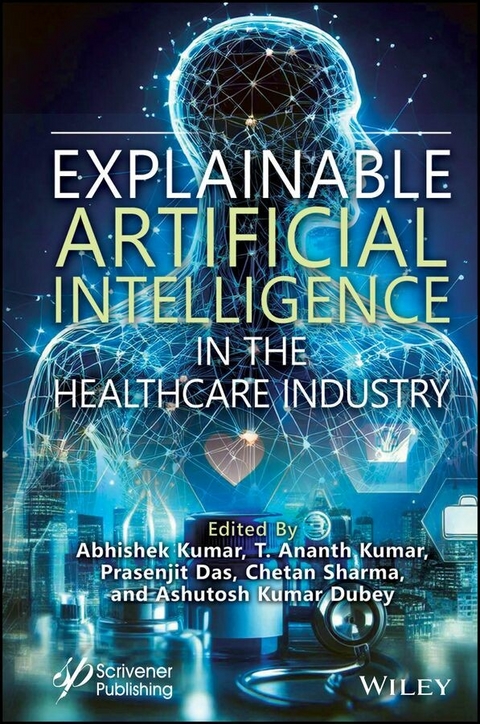
Explainable Artificial Intelligence in the Healthcare Industry (eBook)
962 Seiten
Wiley-Scrivener (Verlag)
978-1-394-24930-5 (ISBN)
Discover the essential insights and practical applications of explainable AI in healthcare that will empower professionals and enhance patient trust with Explainable AI in the Healthcare Industry, a must-have resource.
Explainable AI (XAI) has significant implications for the healthcare industry, where trust, accountability, and interpretability are crucial factors for the adoption of artificial intelligence. XAI techniques in healthcare aim to provide clear and understandable explanations for AI-driven decisions, helping healthcare professionals, patients, and regulatory bodies to better comprehend and trust the AI models' outputs.
Explainable AI in the Healthcare Industry presents a comprehensive exploration of the critical role of explainable AI in revolutionizing the healthcare industry. With the rapid integration of AI-driven solutions in medical practice, understanding how these models arrive at their decisions is of paramount importance. The book delves into the principles, methodologies, and practical applications of XAI techniques specifically tailored for healthcare settings.
Abhishek Kumar, PhD, is an Assistant Director and associate professor in the Computer Science and Engineering Department at Chandigarh University, India with over 11 years of teaching experience. He has over 100 publications in reputed, peer-reviewed national and international journals, books, and conferences, six internationally published book, and has edited over 27 books. Additionally, he has been a session chair and keynote speaker for many international conferences and webinars in India and abroad.
T. Ananth Kumar, PhD, is an associate professor at the Indo-French Educational Trust College of Engineering. He has presented papers in various national and international conferences and journals, as well as published many book chapters. His fields of interest include networks on chips, computer architecture, and application-specific integrated circuit design.
Prasenjit Das, PhD, is a professor in the Department of Computer Science and Engineering at Chandigarh University, Punja, India with over 19 years of experience in academics and the IT industry. He has more than 20 research papers and two books to his credit and has filed more than 25 patents, three of which have been granted. Apart from data mining, his other areas of research include machine learning, image processing, and natural language processing.
Chetan Sharma is a program manager at the upGrad Campus, upGradEducation Private Limited, India with more than 15 years of experience in academics, administration, and EdTech. He has published more than 42 research manuscripts in various national and international journals and conferences and presented papers at several national and international conferences. In addition to this, he serves as a reviewer for various journals and conferences and filed more than 30 patents, eight of which have been granted by the Indian Patent Office.
Ashutosh Kumar Dubey, PhD, is an associate professor in the Department of Computer Science, School of Engineering and Technology, Chitkara University, India with more than 14 years of teaching experience. He is also a postdoctoral fellow for the Ingenium Research Group Lab, Universidad de Castilla-La Mancha, Ciudad Real, Spain. He has authored and edited ten books and published over 50 articles in peer-reviewed international journals and conference proceedings. Additionally, he is a senior member of the Institute for Electronics and Electrical Engineers and Association for Computing Machinery, as well as an editor editorial board member, and reviewer for many peer-reviewed journals.
Discover the essential insights and practical applications of explainable AI in healthcare that will empower professionals and enhance patient trust with Explainable AI in the Healthcare Industry, a must-have resource. Explainable AI (XAI) has significant implications for the healthcare industry, where trust, accountability, and interpretability are crucial factors for the adoption of artificial intelligence. XAI techniques in healthcare aim to provide clear and understandable explanations for AI-driven decisions, helping healthcare professionals, patients, and regulatory bodies to better comprehend and trust the AI models outputs. Explainable AI in the Healthcare Industry presents a comprehensive exploration of the critical role of explainable AI in revolutionizing the healthcare industry. With the rapid integration of AI-driven solutions in medical practice, understanding how these models arrive at their decisions is of paramount importance. The book delves into the principles, methodologies, and practical applications of XAI techniques specifically tailored for healthcare settings.
Preface
Explainable AI (XAI) has significant implications for the healthcare industry, where trust, accountability, and interpretability are crucial factors for the adoption of artificial intelligence. XAI techniques in healthcare aim to provide clear and understandable explanations for AI-driven decisions helping healthcare professionals, patients, and regulatory bodies to better comprehend and trust the AI models’ outputs.
The book “Explainable Artificial Intelligence in the Healthcare Industry” presents a comprehensive exploration of the critical role of Explainable AI (XAI) in revolutionizing the healthcare industry. With the rapid integration of AI-driven solutions in medical practice, understanding how these models arrive at their decisions is of paramount importance. The book delves into the principles, methodologies, and practical applications of XAI techniques specifically tailored for healthcare settings.
Chapter 1 reviews the concept of Explainable Artificial Intelligence (XAI), its importance, and current approaches. It highlights the necessity for transparency in AI models to improve trust, accountability, and ethical standards in AI deployment.
Chapter 2 discusses the role of Explainable Artificial Intelligence (XAI) in healthcare emphasizing the importance of transparency and trust in AI models to enhance decision making, patient outcomes, and ethical standards in medical application.
Chapter 3 explores the application of Explainable AI in medical imaging emphasizing the need for transparency and interpretability in AI models to enhance trust and efficacy in clinical settings
Chapter 4 delves into the integration of Explainable AI in medical imaging stressing the importance of model transparency to enhance diagnostic accuracy, build clinician trust, and ensure better patient outcomes through interpretable AI systems.
Chapter 5 reviews advancements in EEG signal processing focusing on the application of machine learning techniques for improved diagnosis and prediction of neurological conditions. It emphasizes the integration of deep learning for enhanced accuracy and interpretability
Chapter 6 reviews the application of machine learning in healthcare highlighting its potential to enhance diagnostic accuracy, personalize treatment, and improve patient outcomes by leveraging large datasets and advanced algorithms for better decision making.
Chapter 7 emphasizes the importance of making NLP tools transparent, especially in healthcare settings. It outlines the various approaches and methods used to ensure that NLP outputs are understandable and reliable, highlighting the challenges of integrating explainability in complex systems. The chapter stresses the need for explainable models that healthcare professionals can trust to make informed decisions, thereby improving patient outcomes and system efficiency
Chapter 8 emphasizes the critical importance of building trust and transparency in healthcare AI applications. It discusses the implementation of explainable AI (XAI) strategies to make AI decisions more comprehensible to end-users. The focus is on aligning AI systems with ethical standards and ensuring that they are understandable leading to greater adoption and trust among healthcare providers and patients.
Chapter 9 discusses advanced methodologies in machine learning that aim to enhance the interpretability of complex models. It emphasizes the importance of transparency in AI systems, particularly in critical fields like healthcare and finance, where understanding AI decision-making processes is crucial. The chapter outlines various interpretative techniques and their applications, advocating for the integration of interpretability from the initial stages of model development to ensure trust and accountability in AI systems.
Chapter 10 explores methods to enhance the understandability of machine learning models ensuring they are transparent and accountable. It details techniques, like LIME and SHAP, and discusses their application in various sectors emphasizing the importance of making AI decisions clear and justifiable to users.
Chapter 11 provides a comprehensive analysis of innovative strategies in educational methodologies. It discusses the integration of modern teaching tools and approaches emphasizing their impact on enhancing student engagement and learning outcomes. The chapter reviews various pedagogical models and highlights the shift toward more interactive and technology-driven education systems advocating for continuous adaptation to improve academic environments.
Chapter 12 explores the vital aspects of making AI systems more understandable and transparent, particularly in the context of enhancing user trust and facilitating easier debugging and maintenance. It outlines various interpretability techniques, their applications in critical sectors, and discusses the balance between model complexity and interpretability.
Chapter 13 discusses health challenges and solutions focusing on innovative strategies to tackle prevalent issues in healthcare. It highlights the importance of integrating technology and healthcare to improve diagnoses and treatments emphasizing a systematic approach to addressing these challenges effectively. The narrative underscores the role of advanced tools and interdisciplinary collaboration in enhancing health outcomes.
Chapter 14 examines the essential role of explainable AI (XAI) in healthcare. It discusses how XAI contributes to transparency and trust in medical AI applications facilitating better patient outcomes and adherence to ethical standards. The text highlights various XAI techniques and their impact on enhancing the understandability of AI decisions by healthcare professionals.
Chapter 15 explores the ethical challenges in healthcare, particularly regarding privacy and bias in therapeutic settings. It emphasizes the need for clear boundaries and ethical guidelines to manage these issues effectively ensuring that patient care is both respectful and equitable.
Chapter 16 explores the attitudes and perceptions of healthcare professionals and patients toward explainable AI (XAI). It discusses the importance of transparency and interpretability in AI applications within healthcare settings to build trust and improve decision making. The chapter underscores the necessity for AI systems to be understandable to both users and providers enhancing overall patient care
Chapter 17 explores the transformative effects of artificial intelligence on various industries, with a focus on healthcare. It delves into AI’s potential to enhance diagnostic accuracy, personalize treatment plans, and streamline operations significantly improving efficiency and patient outcomes. The review also addresses the challenges and ethical considerations involved in integrating AI technologies.
Chapter 18 explores advanced applications of artificial intelligence, particularly in healthcare, focusing on how AI can improve diagnostics, treatment, and patient management. It discusses AI’s potential to significantly enhance efficiency and accuracy in medical settings, the integration of machine learning for better data analysis, and the challenges of ensuring privacy and ethical considerations in deploying AI technologies.
Chapter 19 delves into the integration of explainable artificial intelligence (XAI) within the healthcare sector. It emphasizes the importance of transparency and accountability in AI systems to enhance patient trust and facilitate clinician decision making. The chapter discusses various XAI frameworks and their potential to demystify AI processes, thereby ensuring that healthcare professionals can understand and effectively use AI-driven insights in clinical settings.
Chapter 20 provides an in-depth examination of various techniques for making machine learning models interpretable, highlighting the importance of transparency, accountability, and trust in AI systems, and discussing different methods to achieve interpretability.
Chapter 21 discusses the necessity of making AI systems transparent and interpretable. It covers various techniques and methodologies for enhancing the explainability of AI models, particularly in healthcare, to improve trust and accountability.
Chapter 22 explores the integration of AI into medical imaging emphasizing the need for transparency and accountability. It highlights various techniques and methodologies for achieving explainability in AI models, particularly in healthcare, to foster trust, acceptance, and effective clinical decision making.
Chapter 23 emphasizes the importance of explainable AI (XAI) in healthcare for transparency, trust, and regulatory compliance. It discusses the challenges and solutions related to data privacy, bias, patient safety, and interdisciplinary collaboration. Ethical AI implementation and adherence to regulatory standards are essential for enhancing healthcare outcomes and patient well-being.
Chapter 24 explores the transformative impact of Explainable AI (XAI) in healthcare emphasizing its role in enhancing transparency, trust, and decision making. It covers various applications, methodologies, and future directions for XAI highlighting its potential to improve patient outcomes and ethical AI integration in medical settings.
Chapter 25 explores the importance of transparency in AI systems highlighting applications in healthcare, finance, and autonomous systems. It emphasizes fairness, trust, and the need for ethical and regulatory...
| Erscheint lt. Verlag | 5.3.2025 |
|---|---|
| Sprache | englisch |
| Themenwelt | Mathematik / Informatik ► Informatik ► Theorie / Studium |
| ISBN-10 | 1-394-24930-6 / 1394249306 |
| ISBN-13 | 978-1-394-24930-5 / 9781394249305 |
| Informationen gemäß Produktsicherheitsverordnung (GPSR) | |
| Haben Sie eine Frage zum Produkt? |
 EPUB (Adobe DRM)
Kopierschutz: Adobe-DRM
Adobe-DRM ist ein Kopierschutz, der das eBook vor Mißbrauch schützen soll. Dabei wird das eBook bereits beim Download auf Ihre persönliche Adobe-ID autorisiert. Lesen können Sie das eBook dann nur auf den Geräten, welche ebenfalls auf Ihre Adobe-ID registriert sind.
Details zum Adobe-DRM
Dateiformat: EPUB (Electronic Publication)
EPUB ist ein offener Standard für eBooks und eignet sich besonders zur Darstellung von Belletristik und Sachbüchern. Der Fließtext wird dynamisch an die Display- und Schriftgröße angepasst. Auch für mobile Lesegeräte ist EPUB daher gut geeignet.
Systemvoraussetzungen:
PC/Mac: Mit einem PC oder Mac können Sie dieses eBook lesen. Sie benötigen eine
eReader: Dieses eBook kann mit (fast) allen eBook-Readern gelesen werden. Mit dem amazon-Kindle ist es aber nicht kompatibel.
Smartphone/Tablet: Egal ob Apple oder Android, dieses eBook können Sie lesen. Sie benötigen eine
Geräteliste und zusätzliche Hinweise
Buying eBooks from abroad
For tax law reasons we can sell eBooks just within Germany and Switzerland. Regrettably we cannot fulfill eBook-orders from other countries.
aus dem Bereich