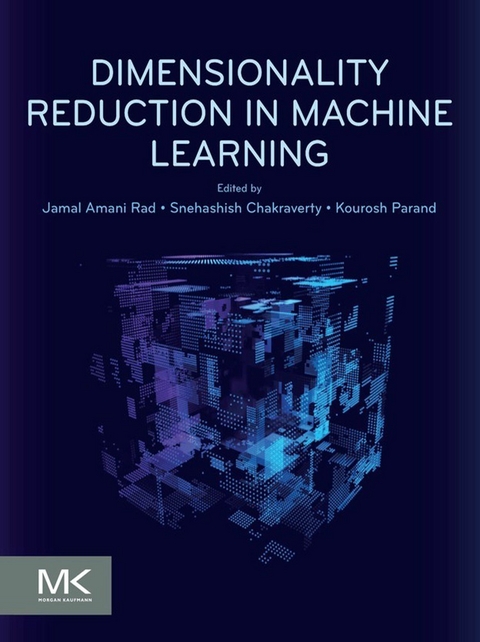
Dimensionality Reduction in Machine Learning (eBook)
250 Seiten
Elsevier Science (Verlag)
978-0-443-32819-0 (ISBN)
Dimensionality Reduction in Machine Learning covers both the mathematical and programming sides of dimension reduction algorithms, comparing them in various aspects. Part One provides an introduction to Machine Learning and the Data Life Cycle, with chapters covering the basic concepts of Machine Learning, essential mathematics for Machine Learning, and the methods and concepts of Feature Selection. Part Two covers Linear Methods for Dimension Reduction, with chapters on Principal Component Analysis and Linear Discriminant Analysis. Part Three covers Non-Linear Methods for Dimension Reduction, with chapters on Linear Local Embedding, Multi-dimensional Scaling, and t-distributed Stochastic Neighbor Embedding.Finally, Part Four covers Deep Learning Methods for Dimension Reduction, with chapters on Feature Extraction and Deep Learning, Autoencoders, and Dimensionality reduction in deep learning through group actions. With this stepwise structure and the applied code examples, readers become able to apply dimension reduction algorithms to different types of data, including tabular, text, and image data. - Provides readers with a comprehensive overview of various dimension reduction algorithms, including linear methods, non-linear methods, and deep learning methods- Covers the implementation aspects of algorithms supported by numerous code examples- Compares different algorithms so the reader can understand which algorithm is suitable for their purpose- Includes algorithm examples that are supported by a Github repository which consists of full notebooks for the programming code
| Erscheint lt. Verlag | 4.2.2025 |
|---|---|
| Sprache | englisch |
| Themenwelt | Informatik ► Theorie / Studium ► Künstliche Intelligenz / Robotik |
| ISBN-10 | 0-443-32819-6 / 0443328196 |
| ISBN-13 | 978-0-443-32819-0 / 9780443328190 |
| Informationen gemäß Produktsicherheitsverordnung (GPSR) | |
| Haben Sie eine Frage zum Produkt? |
 EPUB (Adobe DRM)
Kopierschutz: Adobe-DRM
Adobe-DRM ist ein Kopierschutz, der das eBook vor Mißbrauch schützen soll. Dabei wird das eBook bereits beim Download auf Ihre persönliche Adobe-ID autorisiert. Lesen können Sie das eBook dann nur auf den Geräten, welche ebenfalls auf Ihre Adobe-ID registriert sind.
Details zum Adobe-DRM
Dateiformat: EPUB (Electronic Publication)
EPUB ist ein offener Standard für eBooks und eignet sich besonders zur Darstellung von Belletristik und Sachbüchern. Der Fließtext wird dynamisch an die Display- und Schriftgröße angepasst. Auch für mobile Lesegeräte ist EPUB daher gut geeignet.
Systemvoraussetzungen:
PC/Mac: Mit einem PC oder Mac können Sie dieses eBook lesen. Sie benötigen eine
eReader: Dieses eBook kann mit (fast) allen eBook-Readern gelesen werden. Mit dem amazon-Kindle ist es aber nicht kompatibel.
Smartphone/Tablet: Egal ob Apple oder Android, dieses eBook können Sie lesen. Sie benötigen eine
Geräteliste und zusätzliche Hinweise
Buying eBooks from abroad
For tax law reasons we can sell eBooks just within Germany and Switzerland. Regrettably we cannot fulfill eBook-orders from other countries.
aus dem Bereich