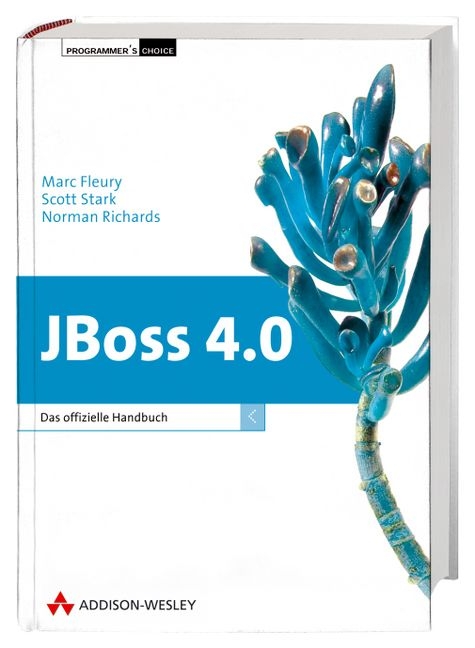
Wenn Sie JBoss verstehen möchten, warum lassen Sie es sich nicht von den Entwicklern persönlich erklären? "JBoss 4.0 - Das offizielle Handbuch" ist das wegweisende und als offizielle Dokumentation für JBoss 4.0 anerkannte Handbuch. Als einziges bietet es auch für fortgeschrittene JBoss-Anwender eine umfassende Beschreibung der Konfiguration und Verwendung von JBoss 4.0. Sie erfahren, wie Sie Anwendungen mit Kerntechnologie von J2EE wie EJBs, Servlets, JMS und Webdienste erstellen und verteilen. Dabei lernen Sie die Sicherheitsverfahren und Transaktionen sowie die weiteren Technologien kennen, die Ihren Anwendungen Zusammenhalt verleihen. Darüber hinaus erfahren Sie, wie alle Komponenten durch den erweiterbaren Microkernel von JBoss verknüpft sind und wie Sie den Microkernel in eigene Anwendungen integrieren. Abschließend lernen Sie mit Hibernate und der aspektorientierten Programmierung Alternativen zur direkten J2EE-Entwicklung kennen.
Der Schwerpunkt dieses Buchs liegt darauf, die Standardkomponenten von JBoss 4.0 vorzustellen und dabei sowohl die Konfiguration als auch die Architektur zu beleuchten. Als Benutzer einer Standarddistribution von JBoss lernen Sie, wie Sie die Standardkomponenten konfigurieren. Diese Buch ist jedoch keine Einführung in J2EE oder den Einsatz von J2EE für Anwendungen, sondern konzentriert sich auf die Interna der JBoss-Serverarchitektur und auf die Konfiguration und Erweiterung eines gegebenen J2EE-Containers.
Bei der Lektüre dieses Buchs gewinnen Sie ein Verständnis der Architektur und Integration der Standardkomponenten, so dass Sie nach den Bedürfnissen Ihrer Infrastruktur erweitern und ersetzen können. In diesem Buch erfahren Sie auch, wie Sie den JBoss-Quellcode erwerben und wie Sie JBoss-Server erstellen und debuggen.
Der JBoss Application Server 4.0 (JBoss AS 4.0) ist ein produktionsreifer J2EE-Anwendungsserver (Java 2 Enterprise Edition). Er ist auf der sehr erfolgreichen Produktlinie JBoss 3.2 aufgebaut und bietet darüber hinaus verbesserte Konformität mit Standards und größere Funktionsverbesserungen. JBoss AS 4.0 bietet dasselbe Niveau von Qualität und Stabilität, das Kunden von JBoss 3.2 gewohnt sind.
Zu den Schlüsselfunktionen von JBoss AS 4.0 zählen unter anderem:
- Das Produkt ist offiziell als vollständig konform mit der J2EE-Spezifikation 1.4 zertifiziert. JBoss AS 4.0 ist der erste produktionsreife J2EE-1.4-Anwendungsserver in der Branche.
- Es bietet volle Unterstützung für J2EE-Webdienste und SOA (Service-Oriented Architecture).
- Es unterstützt das Modell der aspektorientierten Programmierung (AOP) zur Entwicklung von Middleware-Lösungen. Durch JBoss-AOP wird die Entwicklerproduktivität deutlich gesteigert.
- Es arbeitet innerhalb das Anwendungsservers eng mit Hibernate zusammen, dem von JBoss entwickelten, weltweit beliebtesten Framework für Objektpersistenz.
- Es bietet verbesserte Unterstützung für Clustering und Zwischenspeicherung mit einer neuen internen Caching-Architektur.
Über die Autoren:
Marc Fleury rief das JBoss-Projekt 1999 ins Leben und ist derzeit Vorsitzender und Geschäftsführer von JBoss Inc.
Scott Stark ist der technische Leiter von JBoss Inc. und für die technische Verwaltung des JBoss-Anwendungsservers verantwortlich.
Norman Richards ist einer der Kernentwickler von JBoss und pflegt die JBoss-Dokumentation.
JBoss, Inc. gehört zu den Elite-Dienstleistungsunternehmen und widmet sich der Unterstützung, der Schulung und der Beratung für die freie JBoss-Platform. Bei JBoss handelt es sich um einen normgerechten J2EE-Anwendungsserver, der in 100% reinem Java umgesetzt ist und als Open Source zur Verfügung steht. Die monatlich über 50.000 Downloads machen JBoss zu dem branchenweiten am häufigsten heruntergeladenen J2EE-basierten Server.
Inhaltsverzeichnis: (der US-Originalausgabe)
Introduction.
1. Installing and Building the JBoss Server.Getting the Binary Files Prerequisites Installing the Binary Package Directory Structure The Default Server Configuration File Set conf/jboss-minimal.xml conf/jboss-service.xml conf/jboss.web conf/jndi.properties conf/log4j.xml conf/login-config.xml conf/server.policy conf/standardjaws.xml conf/standardjboss.xml conf/standardjbosscmp-jdbc.xml conf/xmdesc/-mbean.xml deploy/bsh-deployer.xml deploy/cache-invalidation-service.xml deploy/client-deployer-service.xml deploy/ear-deployer.xml deploy/ejb-deployer.xml deploy/hsqldb-ds.xml deploy/http-invoker.sar deploy/jboss-aop.deployer deploy/jboss-hibernate.deployer deploy/jboss-local-jdbc.rar deploy/jboss-ws4ee.sar deploy/jboss-xa-jdbc.rar deploy/jbossjca-service.sar deploy/jbossweb-tomcat50.sar deploy/jms/hsqldb-jdbc2-service.xml deploy/jms/jbossmq-destinations-service.xml deploy/jms/jbossmq-httpil.sar deploy/jms/jbossmq-service.xml deploy/jms/jms-ds.xml deploy/jms/jms-ra.rar deploy/jms/jvm-il-service.xml deploy/jms/uil2-service.xml deploy/jmx-console.war deploy/jmx-invoker-service.sar deploy/mail-ra.rar deploy/mail-service.xml deploy/management/console-mgr.sar and web-console.war deploy/monitoring-service.xml deploy/properties-service.xml deploy/scheduler-service.xml and schedule-manager-service.xml deploy/sqlexception-service.xml deploy/uuid-key-generator.sar Basic Installation Testing Booting from a Network Server Building the Server from Source Code Accessing the JBoss CVS Repositories at SourceForge Understanding CVS Anonymous CVS Access Obtaining a CVS Client Building the JBoss Distribution Using the Source Code Building the JBoss Distribution Using the CVS Source Code An Overview of the JBoss CVS Source Tree Using the JBossTest Unit Testsuite
2. The JBoss JMX Microkernel.JMX An Introduction to JMX The JBoss JMX Implementation Architecture The JBoss ClassLoader Architecture Class Loading and Types in Java JBoss XMBeans Connecting to the JMX Server Inspecting the Server: The JMX Console Web Application Connecting to JMX Using RMI Command-Line Access to JMX Connecting to JMX Using Any Protocol Using JMX as a Microkernel The Startup Process JBoss MBean Services Writing JBoss MBean Services Deployment Ordering and Dependencies The JBoss Deployer Architecture Deployers and Class Loaders Exposing MBean Events via SNMP The Event to Trap Service Remote Access to Services, Detached Invokers A Detached Invoker Example: The MBeanServer Invoker Adaptor Service JRMPInvoker: RMI/JRMP Transport PooledInvoker: RMI/Socket Transport IIOPInvoker: RMI/IIOP Transport JRMPProxyFactory: Building Dynamic JRMP Proxies HttpInvoker: RMI/HTTP Transport JRMPInvoker: Clustered RMI/JRMP Transport HttpInvoker: Clustered RMI/HTTP Transport HttpProxyFactory: Building Dynamic HTTP Proxies Steps to Expose Any RMI Interface via HTTP
3. Naming on JBoss.An Overview of JNDI The JNDI API J2EE and JNDI: The Application Component Environment The JBossNS Architecture The Naming InitialContext Factories Accessing JNDI over HTTP Accessing JNDI over HTTPS Securing Access to JNDI over HTTP Securing Access to JNDI with a Read-only Unsecured Context Additional Naming MBeans
4. Transactions on JBoss.Transaction and JTA Overview Pessimistic and Optimistic Locking The Components of a Distributed Transaction The Two-phase XA Protocol Heuristic Exceptions Transaction Identities and Branches JBoss Transaction Internals Adapting a Transaction Manager to JBoss The Default Transaction Manager UserTransaction Support
5. EJBs on JBoss.The EJB Client-Side View Specifying the EJB Proxy Configuration The EJB Server-Side View Detached Invokers: The Transport Middlemen The HA JRMPInvoker: Clustered RMI/JRMP Transport The HA HttpInvoker: Clustered RMI/HTTP Transport The EJB Container The EJBDeployer MBean The Container Plug-in Framework Entity Bean Locking and Deadlock Detection Why JBoss Needs Locking The Entity Bean Life Cycle Default Locking Behavior Pluggable Interceptors and Locking Policy Deadlocking Advanced Configurations and Optimizations Running Within a Cluster Troubleshooting
6. Messaging on JBoss.JMS Examples A Point-to-Point Example A Pub-Sub Example An Example of a Pub-Sub with a Durable Topic An Example of P2P with MDB JBossMQ Overview The Invocation Layer Services The SecurityManager Service The DestinationManager Service The MessageCache Service The StateManager Service The PersistenceManager Service Destinations JBossMQ Configuration and MBeans The org.jboss.mq.il.jvm.JVMServerILService MBean The org.jboss.mq.il.uil2.UILServerILService MBean The org.jboss.mq.il.http.HTTPServerILService MBean The org.jboss.mq.server.jmx.Invoker MBean The org.jboss.mq.server.jmx.InterceptorLoader MBean The org.jboss.mq.sm.jdbc.JDBCStateManager MBean The org.jboss.mq.security.SecurityManager MBean The org.jboss.mq.server.jmx.DestinationManager MBean The org.jboss.mq.server.MessageCache MBean The org.jboss.mq.pm.jdbc2.PersistenceManager MBean Destination MBeans Specifying the MDB JMS Provider The org.jboss.jms.jndi.JMSProviderLoader MBean The org.jboss.jms.asf.ServerSessionPoolLoader MBean Integrating Non-JBoss JMS Providers
7. Connectors on JBoss.JCA Overview An Overview of the JBossCX Architecture The BaseConnectionManager2 MBean The RARDeployment MBean The JBossManagedConnectionPool MBean The CachedConnectionManager MBean A Sample Skeleton of a JCA Resource Adaptor Configuring JDBC Datasources Configuring Generic JCA Adaptors
8. Security on JBoss.J2EE Declarative Security Overview Security References Security Identity Security Roles EJB Method Permissions Web Content Security Constraints Enabling Declarative Security in JBoss An Introduction to JAAS What Is JAAS? The JBoss Security Model Enabling Declarative Security in JBoss, Revisited The JBossSX Architecture How JaasSecurityManager Uses JAAS The JaasSecurityManagerService MBean The JaasSecurityDomain MBean An XML JAAS Login Configuration MBean The JAAS Login Configuration Management MBean Using and Writing JBossSX Login Modules The DynamicLoginConfig Service The Secure Remote Password (SRP) Protocol Providing Password Information for SRP Inside the SRP Algorithm Running JBoss with a Java 2 Security Manager Using SSL with JBoss and JSSE Configuring JBoss for Use Behind a Firewall Securing the JBoss Server The jmx-console.war Service The web-console.war Service The http-invoker.sar Service The jmx-invoker-adaptor-server.sar Service
9. Web Applications.The Tomcat Service The Tomcat server.xml File The Connector Element The Engine Element The Host Element The DefaultContext Element The Logger Element The Valve Element Using SSL with the JBoss/Tomcat Bundle Setting the Context Root of a Web Application Setting Up Virtual Hosts Serving Static Content Using Apache with Tomcat Using Clustering Integrating Third-Party Servlet Containers The AbstractWebContainer Class
10. MBean Services Miscellany.System Properties Management Property Editor Management Services Binding Management Scheduling Tasks The org.jboss.varia.scheduler.Scheduler MBean The Log4j Service MBean RMI Dynamic Class Loading
11. The CMP Engine.Example Code Enabling CMP Debug Logging Running the Examples The jbosscmp-jdbc Structure Entity Beans Entity Mapping CMP Fields CMP Field Declaration CMP Field Column Mapping Read-only Fields Auditing Entity Access Dependent Value Classes Container-Managed Relationships CMR-field Abstract Accessors Relationship Declaration Relationship Mapping Declaring Queries Declaring Finders and Selects Declaring EJB-QL Queries Overriding the Mapping of EJB-QL to SQL JBossQL DynamicQL DeclaredSQL EJB-QL 2.1 and SQL92 Queries BMP Custom Finders Optimized Loading A Loading Scenario Load Groups Read-ahead The Loading Process Commit Options The Eager-Loading Process The Lazy-Loading Process Lazy-Loading Result Sets Transactions Optimistic Locking Entity Commands and Primary Key Generation Existing Entity Commands JBoss Global Defaults A Sample jbosscmp-jdbc.xml Defaults Declaration Datasource Customization Type Mapping Function Mapping Mapping User Type Mappings
12. Web Services.JAX-RPC Service Endpoints Enterprise JavaBean Endpoints Web Services Clients-A JAX-RPC Client Service References
13. Hibernate.The Hibernate MBean Hibernate Archives Using Hibernate Objects Using a HAR File Inside an EAR File The HAR Deployer
14. Aspect-Oriented Programming (AOP) Support.JBoss AOP: EJB-Style Services for Plain Java Objects Why AOP? Basic Concepts of AOP Joinpoints and Invocation Advice and Aspects Introducing Pointcuts Introductions and Mixins Building JBoss AOP Applications Compiling to Bytecode Compiling Annotations AOP Instrumentation The JBoss AOP Deployer Installing the Latest jboss-aop.deployer Service Configuring the AOP Service The Prepackaged Aspects Library Packaging and Deploying AOP Applications to JBoss Using Prepackaged Aspects Developing Your Own Aspects Packaging and Deploying Custom Aspects
Appendix A. The GNU Lesser General Public License (LGPL).GNU General Public License Preamble Terms and Conditions for Copying, Distribution, and Modification How to Apply These Terms to Your New Programs
Appendix B. Example Installation.Index.