


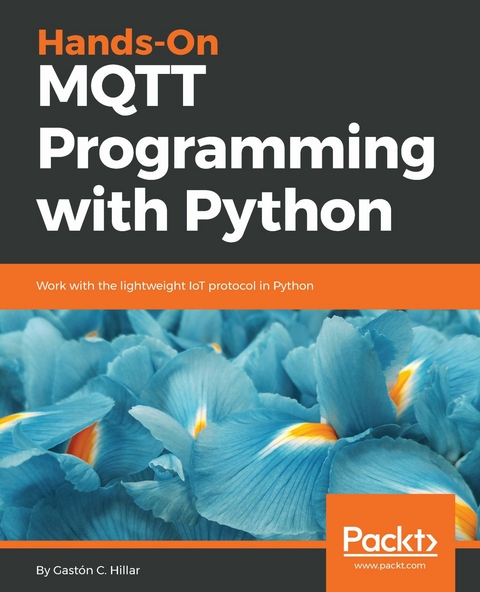
Hands-On MQTT Programming with Python (eBook)
228 Seiten
Packt Publishing (Verlag)
978-1-78913-781-1 (ISBN)
Explore the features included in the latest versions of MQTT for IoT and M2M communications and use them with modern Python 3.
Key Features
- Make your connected devices less prone to attackers by understanding security mechanisms
- Take advantage of MQTT features for IoT and Machine-to-Machine communications
- The only book that covers MQTT with a single language, Python
Book Description
MQTT is a lightweight messaging protocol for small sensors and mobile devices. This book explores the features of the latest versions of MQTT for IoT and M2M communications, how to use them with Python 3, and allow you to interact with sensors and actuators using Python.
The book begins with the specific vocabulary of MQTT and its working modes, followed by installing a Mosquitto MQTT broker. You will use different utilities and diagrams to understand the most important concepts related to MQTT. You will learn to make all the necessary configuration to work with digital certificates for encrypting all data sent between the MQTT clients and the server. You will also work with the different Quality of Service levels and later analyze and compare their overheads.
You will write Python 3.x code to control a vehicle with MQTT messages delivered through encrypted connections (TLS 1.2), and learn how leverage your knowledge of the MQTT protocol to build a solution based on requirements. Towards the end, you will write Python code to use the PubNub cloud-based real-time MQTT provider to monitor a surfing competition.
In the end, you will have a solution that was built from scratch by analyzing the requirements and then write Python code that will run on water-proof IoT boards connected to multiple sensors in surfboards.
What you will learn
- Learn how MQTT and its lightweight messaging system work
- Understand the MQTT puzzle: clients, servers (formerly known as brokers), and connections
- Explore the features included in the latest versions of MQTT for IoT and M2M communications
- Publish and receive MQTT messages with Python
- Learn the difference between blocking and threaded network loops
- Take advantage of the last will and testament feature
- Work with cloud-based MQTT interfaces in Python
Who this book is for
This book is for developers who want to learn about the MQTT protocol for their IoT projects. Prior knowledge of working with IoT and Python will be helpful.
Gaston C. Hillar is Italian and has been working with computers since he was 8 years old. Gaston has a bachelor's degree in computer science (graduated with honors) and an MBA. He is the CTO of Mapgenix, a freelance author, and a speaker. He has been a senior contributing editor at Dr. Dobb's and has written more than a hundred articles on software development topics. He has received the prestigious Intel® Black Belt Software Developer award eight times. He lives with his wife, Vanesa, and his two sons, Kevin and Brandon.Explore the features included in the latest versions of MQTT for IoT and M2M communications and use them with modern Python 3.About This BookMake your connected devices less prone to attackers by understanding security mechanismsTake advantage of MQTT features for IoT and Machine-to-Machine communicationsThe only book that covers MQTT with a single language, PythonWho This Book Is ForThis book is for developers who want to learn about the MQTT protocol for their IoT projects. Prior knowledge of working with IoT and Python will be helpful.What You Will LearnLearn how MQTT and its lightweight messaging system workUnderstand the MQTT puzzle: clients, servers (formerly known as brokers), and connectionsExplore the features included in the latest versions of MQTT for IoT and M2M communicationsPublish and receive MQTT messages with PythonLearn the difference between blocking and threaded network loopsTake advantage of the last will and testament featureWork with cloud-based MQTT interfaces in PythonIn DetailMQTT is a lightweight messaging protocol for small sensors and mobile devices. This book explores the features of the latest versions of MQTT for IoT and M2M communications, how to use them with Python 3, and allow you to interact with sensors and actuators using Python.The book begins with the specific vocabulary of MQTT and its working modes, followed by installing a Mosquitto MQTT broker. You will use different utilities and diagrams to understand the most important concepts related to MQTT. You will learn to make all the necessary configuration to work with digital certificates for encrypting all data sent between the MQTT clients and the server. You will also work with the different Quality of Service levels and later analyze and compare their overheads.You will write Python 3.x code to control a vehicle with MQTT messages delivered through encrypted connections (TLS 1.2), and learn how leverage your knowledge of the MQTT protocol to build a solution based on requirements. Towards the end, you will write Python code to use the PubNub cloud-based real-time MQTT provider to monitor a surfing competition.In the end, you will have a solution that was built from scratch by analyzing the requirements and then write Python code that will run on water-proof IoT boards connected to multiple sensors in surfboards.Style and approachThis book shows you what MQTT is, and how to install and secure an MQTT server. You will write Python 3 code to control a vehicle with MQTT messages, test and improve, then monitor a surfing competition with cloud-based real-time MQTT providers.
| Erscheint lt. Verlag | 22.5.2018 |
|---|---|
| Sprache | englisch |
| Themenwelt | Mathematik / Informatik ► Informatik ► Programmiersprachen / -werkzeuge |
| Schlagworte | IOT • IoT Protocol • M2M • Messaging IoT protocol • Mosquitto MQTT • MQTT • MQTT 3.1.1 Mosquitto |
| ISBN-10 | 1-78913-781-0 / 1789137810 |
| ISBN-13 | 978-1-78913-781-1 / 9781789137811 |
| Informationen gemäß Produktsicherheitsverordnung (GPSR) | |
| Haben Sie eine Frage zum Produkt? |
 EPUB (Adobe DRM)
Kopierschutz: Adobe-DRM
Adobe-DRM ist ein Kopierschutz, der das eBook vor Mißbrauch schützen soll. Dabei wird das eBook bereits beim Download auf Ihre persönliche Adobe-ID autorisiert. Lesen können Sie das eBook dann nur auf den Geräten, welche ebenfalls auf Ihre Adobe-ID registriert sind.
Details zum Adobe-DRM
Dateiformat: EPUB (Electronic Publication)
EPUB ist ein offener Standard für eBooks und eignet sich besonders zur Darstellung von Belletristik und Sachbüchern. Der Fließtext wird dynamisch an die Display- und Schriftgröße angepasst. Auch für mobile Lesegeräte ist EPUB daher gut geeignet.
Systemvoraussetzungen:
PC/Mac: Mit einem PC oder Mac können Sie dieses eBook lesen. Sie benötigen eine
eReader: Dieses eBook kann mit (fast) allen eBook-Readern gelesen werden. Mit dem amazon-Kindle ist es aber nicht kompatibel.
Smartphone/Tablet: Egal ob Apple oder Android, dieses eBook können Sie lesen. Sie benötigen eine
Geräteliste und zusätzliche Hinweise
Buying eBooks from abroad
For tax law reasons we can sell eBooks just within Germany and Switzerland. Regrettably we cannot fulfill eBook-orders from other countries.
aus dem Bereich


