


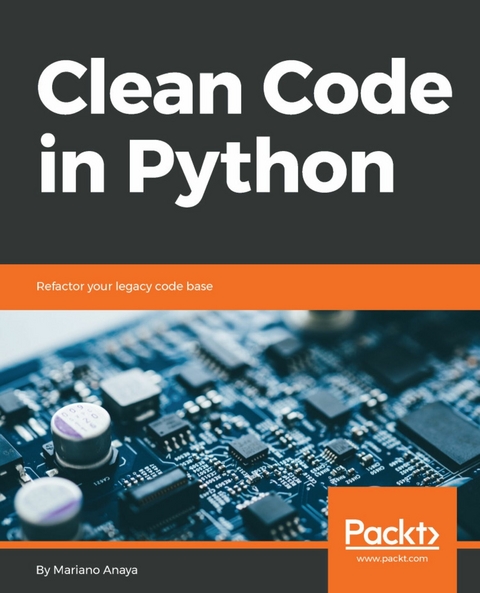
Clean Code in Python (eBook)
332 Seiten
Packt Publishing (Verlag)
978-1-78883-706-4 (ISBN)
Python is currently used in many different areas such as software construction, systems administration, and data processing.
In all of these areas, experienced professionals can find examples of inefficiency, problems, and other perils, as a result of bad code. After reading this book, readers will understand these problems, and more importantly, how to correct them.
The book begins by describing the basic elements of writing clean code and how it plays an important role in Python programming. You will learn about writing efficient and readable code using the Python standard library and best practices for software design. You will learn to implement the SOLID principles in Python and use decorators to improve your code. The book delves more deeply into object oriented programming in Python and shows you how to use objects with descriptors and generators. It will also show you the design principles of software testing and how to resolve software problems by implementing design patterns in your code. In the final chapter we break down a monolithic application to a microservice one, starting from the code as the basis for a solid platform.
By the end of the book, you will be proficient in applying industry approved coding practices to design clean, sustainable and readable Python code.
Getting the most out of Python to improve your codebaseKey FeaturesSave maintenance costs by learning to fix your legacy codebaseLearn the principles and techniques of refactoringApply microservices to your legacy systems by implementing practical techniquesBook DescriptionPython is currently used in many different areas such as software construction, systems administration, and data processing. In all of these areas, experienced professionals can find examples of inefficiency, problems, and other perils, as a result of bad code. After reading this book, readers will understand these problems, and more importantly, how to correct them. The book begins by describing the basic elements of writing clean code and how it plays an important role in Python programming. You will learn about writing efficient and readable code using the Python standard library and best practices for software design. You will learn to implement the SOLID principles in Python and use decorators to improve your code. The book delves more deeply into object oriented programming in Python and shows you how to use objects with descriptors and generators. It will also show you the design principles of software testing and how to resolve software problems by implementing design patterns in your code. In the final chapter we break down a monolithic application to a microservice one, starting from the code as the basis for a solid platform. By the end of the book, you will be proficient in applying industry approved coding practices to design clean, sustainable and readable Python code. What you will learnSet up tools to effectively work in a development environmentExplore how the magic methods of Python can help us write better codeExamine the traits of Python to create advanced object-oriented designUnderstand removal of duplicated code using decorators and descriptorsEffectively refactor code with the help of unit testsLearn to implement the SOLID principles in PythonWho this book is forThis book will appeal to team leads, software architects and senior software engineers who would like to work on their legacy systems to save cost and improve efficiency. A strong understanding of Programming is assumed.
| Erscheint lt. Verlag | 29.8.2018 |
|---|---|
| Sprache | englisch |
| Themenwelt | Mathematik / Informatik ► Informatik ► Programmiersprachen / -werkzeuge |
| ISBN-10 | 1-78883-706-1 / 1788837061 |
| ISBN-13 | 978-1-78883-706-4 / 9781788837064 |
| Informationen gemäß Produktsicherheitsverordnung (GPSR) | |
| Haben Sie eine Frage zum Produkt? |
 EPUB (Ohne DRM)
Digital Rights Management: ohne DRM
Dieses eBook enthält kein DRM oder Kopierschutz. Eine Weitergabe an Dritte ist jedoch rechtlich nicht zulässig, weil Sie beim Kauf nur die Rechte an der persönlichen Nutzung erwerben.
Dateiformat: EPUB (Electronic Publication)
EPUB ist ein offener Standard für eBooks und eignet sich besonders zur Darstellung von Belletristik und Sachbüchern. Der Fließtext wird dynamisch an die Display- und Schriftgröße angepasst. Auch für mobile Lesegeräte ist EPUB daher gut geeignet.
Systemvoraussetzungen:
PC/Mac: Mit einem PC oder Mac können Sie dieses eBook lesen. Sie benötigen dafür die kostenlose Software Adobe Digital Editions.
eReader: Dieses eBook kann mit (fast) allen eBook-Readern gelesen werden. Mit dem amazon-Kindle ist es aber nicht kompatibel.
Smartphone/Tablet: Egal ob Apple oder Android, dieses eBook können Sie lesen. Sie benötigen dafür eine kostenlose App.
Geräteliste und zusätzliche Hinweise
Buying eBooks from abroad
For tax law reasons we can sell eBooks just within Germany and Switzerland. Regrettably we cannot fulfill eBook-orders from other countries.
aus dem Bereich


