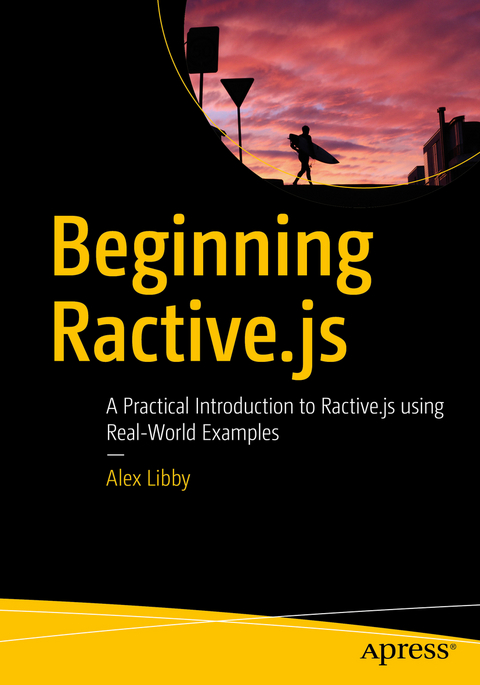
Beginning Ractive.js (eBook)
XXI, 285 Seiten
Apress (Verlag)
978-1-4842-3093-0 (ISBN)
Develop websites using the Ractive.js template-driven UI library. This book is project-oriented and simplifies the process of using Ractive.js to create websites or online applications that are interactive by default. It equips you with a starting toolset to develop future projects, safe in the knowledge that the site operates as expected, and is not reliant on bloated technology, typical of other similar frameworks.
Beginning Ractive.js takes the view that you shouldn't always resort to what 'everyone else uses', and that there is indeed a different way you can achieve the same result. We live in an age where speed and simplicity are of the essence - this book provides a perfect alternative that challenges the norm. Stop thinking you must use the same library as everyone else. Give Ractive a try!
What You'll Learn
- Understand how Ractive.js works and how it differs to other templating frameworks.
- Source and manage data using Ractive.js' data binding methods.
- Gain an appreciation of managing events and animations using Ractive.js.
- Create components that contain reusability functionality for current or future projects.
- Work through real-world project examples using the Ractive.js library.
Who This Book is For
Website developers who are keen to develop a fully interactive, template-driven website quickly, but don't have the desire to learn a more heavyweight framework, such as AngularJS.
Agile development teams, where time is of the essence, and the pressure is on to deliver results quickly.
Developers who want to focus on simplicity, where the library works for them, and they are not constrained by having to follow a particular methodology.
Alex Libby is an A/B testing developer and seasoned computer book author, who hails from England. His passion for all things Open Source dates back to the days of his degree studies, where he first came across web development, and has been hooked ever since. His daily work involves extensive use of JavaScript, HTML and CSS to manipulate existing website content; Alex enjoys tinkering with different open source libraries to see how they work. He has spent a stint maintaining the jQuery Tools library, and enjoys writing about Open Source technologies, principally for front end UI development.
Develop websites using the Ractive.js template-driven UI library. This book is project-oriented and simplifies the process of using Ractive.js to create websites or online applications that are interactive by default. It equips you with a starting toolset to develop future projects, safe in the knowledge that the site operates as expected, and is not reliant on bloated technology, typical of other similar frameworks.Beginning Ractive.js takes the view that you shouldn't always resort to what "e;everyone else uses"e;, and that there is indeed a different way you can achieve the same result. We live in an age where speed and simplicity are of the essence - this book provides a perfect alternative that challenges the norm. Stop thinking you must use the same library as everyone else. Give Ractive a try! What You'll LearnUnderstand how Ractive.js works and how it differs to other templating frameworksSource and manage data using Ractive.js' data binding methodsGain an appreciation of managing events and animations using Ractive.jsCreate components that contain reusability functionality for current or future projectsWork through real-world project examples using the Ractive.js library Who This Book is ForWebsite developers who are keen to develop a fully interactive, template-driven website quickly, but don't have the desire to learn a more heavyweight framework, such as AngularJS. Agile development teams, where time is of the essence, and the pressure is on to deliver results quickly. Developers who want to focus on simplicity, where the library works for them, and they are not constrained by having to follow a particular methodology.
Alex Libby is an A/B testing developer and seasoned computer book author, who hails from England. His passion for all things Open Source dates back to the days of his degree studies, where he first came across web development, and has been hooked ever since. His daily work involves extensive use of JavaScript, HTML and CSS to manipulate existing website content; Alex enjoys tinkering with different open source libraries to see how they work. He has spent a stint maintaining the jQuery Tools library, and enjoys writing about Open Source technologies, principally for front end UI development.
Part I: Getting StartedChapter 1: Getting Started with RactiveChapter 2: Creating TemplatesPart II: In More DetailChapter 3: Binding DataChapter 4: Handling EventsChapter 5: Animating ContentChapter 6: Creating ComponentsChapter 7: Building PluginsPart III: Putting Ractive to UseChapter 8: Using RactiveChapter 9: Putting it All TogetherChapter 10: Creating a Shopping CartAppendix: Ractive API
| Erscheint lt. Verlag | 15.12.2017 |
|---|---|
| Zusatzinfo | XXI, 285 p. 118 illus. |
| Verlagsort | Berkeley |
| Sprache | englisch |
| Themenwelt | Mathematik / Informatik ► Informatik ► Web / Internet |
| Schlagworte | alternative to Vue.js • components • JavaScript • MVC • template library • UI |
| ISBN-10 | 1-4842-3093-0 / 1484230930 |
| ISBN-13 | 978-1-4842-3093-0 / 9781484230930 |
| Informationen gemäß Produktsicherheitsverordnung (GPSR) | |
| Haben Sie eine Frage zum Produkt? |
 PDF (Wasserzeichen)
DRM: Digitales Wasserzeichen
Dieses eBook enthält ein digitales Wasserzeichen und ist damit für Sie personalisiert. Bei einer missbräuchlichen Weitergabe des eBooks an Dritte ist eine Rückverfolgung an die Quelle möglich.
Dateiformat: PDF (Portable Document Format)
Mit einem festen Seitenlayout eignet sich die PDF besonders für Fachbücher mit Spalten, Tabellen und Abbildungen. Eine PDF kann auf fast allen Geräten angezeigt werden, ist aber für kleine Displays (Smartphone, eReader) nur eingeschränkt geeignet.
Systemvoraussetzungen:
PC/Mac: Mit einem PC oder Mac können Sie dieses eBook lesen. Sie benötigen dafür einen PDF-Viewer - z.B. den Adobe Reader oder Adobe Digital Editions.
eReader: Dieses eBook kann mit (fast) allen eBook-Readern gelesen werden. Mit dem amazon-Kindle ist es aber nicht kompatibel.
Smartphone/Tablet: Egal ob Apple oder Android, dieses eBook können Sie lesen. Sie benötigen dafür einen PDF-Viewer - z.B. die kostenlose Adobe Digital Editions-App.
Buying eBooks from abroad
For tax law reasons we can sell eBooks just within Germany and Switzerland. Regrettably we cannot fulfill eBook-orders from other countries.
aus dem Bereich