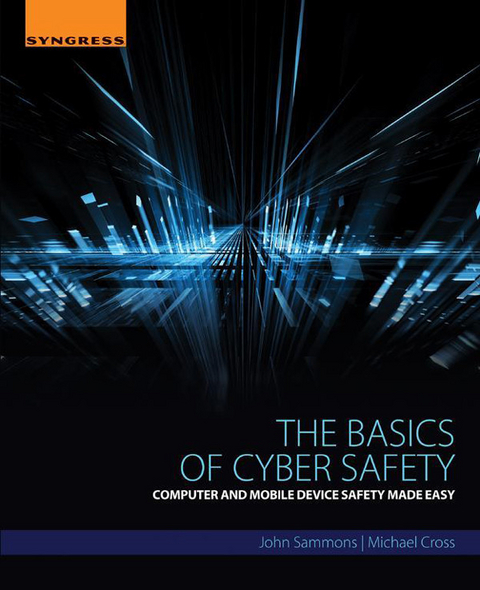
Basics of Cyber Safety (eBook)
254 Seiten
Elsevier Science (Verlag)
978-0-12-416639-4 (ISBN)
John Sammons is an Associate Professor and Director of the undergraduate program in Digital Forensics and Information Assurance at Marshall University in Huntington, West Virginia. John teaches digital forensics, electronic discovery, information security and technology in the School of Forensic and Criminal Justices Sciences. He's also adjunct faculty with the Marshall University graduate forensic science program where he teaches the advanced digital forensics course. John, a former police officer, is also an Investigator with the Cabell County Prosecuting Attorney's Office and a member of the West Virginia Internet Crimes Against Children Task Force. He is a Member of the American Academy of Forensic Sciences, the High Technology Crime Investigation Association, and Infragard.John is the founder and President of the Appalachian Institute of Digital Evidence. AIDE is a non-profit organization that provides research and training for digital evidence professionals including attorneys, judges, law enforcement and information security practitioners in the private sector. He is the author of best-selling book, The Basics of Digital Forensics published by Syngress.
The Basics of Cyber Safety: Computer and Mobile Device Safety Made Easy presents modern tactics on how to secure computer and mobile devices, including what behaviors are safe while surfing, searching, and interacting with others in the virtual world. The book's author, Professor John Sammons, who teaches information security at Marshall University, introduces readers to the basic concepts of protecting their computer, mobile devices, and data during a time that is described as the most connected in history. This timely resource provides useful information for readers who know very little about the basic principles of keeping the devices they are connected to or themselves secure while online. In addition, the text discusses, in a non-technical way, the cost of connectedness to your privacy, and what you can do to it, including how to avoid all kinds of viruses, malware, cybercrime, and identity theft. Final sections provide the latest information on safe computing in the workplace and at school, and give parents steps they can take to keep young kids and teens safe online. - Provides the most straightforward and up-to-date guide to cyber safety for anyone who ventures online for work, school, or personal use- Includes real world examples that demonstrate how cyber criminals commit their crimes, and what users can do to keep their data safe
| Erscheint lt. Verlag | 20.8.2016 |
|---|---|
| Sprache | englisch |
| Themenwelt | Informatik ► Netzwerke ► Sicherheit / Firewall |
| ISBN-10 | 0-12-416639-3 / 0124166393 |
| ISBN-13 | 978-0-12-416639-4 / 9780124166394 |
| Informationen gemäß Produktsicherheitsverordnung (GPSR) | |
| Haben Sie eine Frage zum Produkt? |
 EPUB (Adobe DRM)
Kopierschutz: Adobe-DRM
Adobe-DRM ist ein Kopierschutz, der das eBook vor Mißbrauch schützen soll. Dabei wird das eBook bereits beim Download auf Ihre persönliche Adobe-ID autorisiert. Lesen können Sie das eBook dann nur auf den Geräten, welche ebenfalls auf Ihre Adobe-ID registriert sind.
Details zum Adobe-DRM
Dateiformat: EPUB (Electronic Publication)
EPUB ist ein offener Standard für eBooks und eignet sich besonders zur Darstellung von Belletristik und Sachbüchern. Der Fließtext wird dynamisch an die Display- und Schriftgröße angepasst. Auch für mobile Lesegeräte ist EPUB daher gut geeignet.
Systemvoraussetzungen:
PC/Mac: Mit einem PC oder Mac können Sie dieses eBook lesen. Sie benötigen eine
eReader: Dieses eBook kann mit (fast) allen eBook-Readern gelesen werden. Mit dem amazon-Kindle ist es aber nicht kompatibel.
Smartphone/Tablet: Egal ob Apple oder Android, dieses eBook können Sie lesen. Sie benötigen eine
Geräteliste und zusätzliche Hinweise
Buying eBooks from abroad
For tax law reasons we can sell eBooks just within Germany and Switzerland. Regrettably we cannot fulfill eBook-orders from other countries.
aus dem Bereich