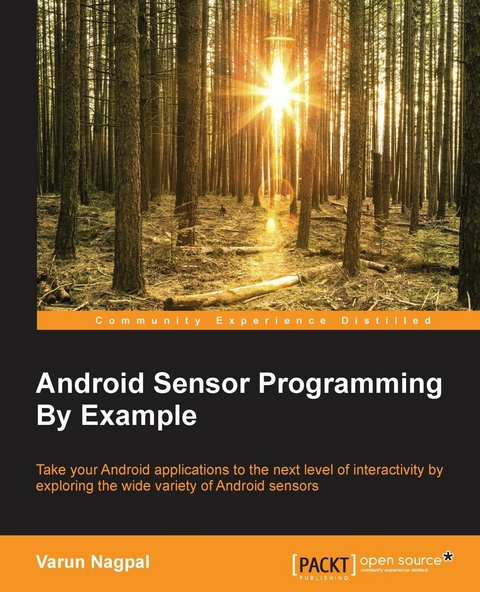
Android Sensor Programming By Example (eBook)
194 Seiten
Packt Publishing (Verlag)
978-1-78528-466-3 (ISBN)
Take your Android applications to the next level of interactivity by exploring the wide variety of Android sensors
About This Book
- Get a thorough understanding of the fundamentals and framework of Android sensors.
- Acquire knowledge of advance sensor programming, and learn how to connect and use sensors in external devices such as the Android Watch, Polar heart rate monitors, Adidas speed cells, and so on.
- Learn from real-world sensor-based applications such as the Pedometer app to detect daily steps, the Driving app to detect driving events, and the Professional Fitness tracker app to track heart rate, weight, daily steps, calories burned, and so on.
Who This Book Is For
This book is targeted at Android developers who want to get a good understanding of sensors and write sensor-based applications, or who want to enhance their existing applications with additional sensor functionality. A basic knowledge of Android development is required
What You Will Learn
- Learn about sensor fundamentals, different types of sensors, and the sensor co-ordinate system
- Understand the various classes, callbacks, and APIs of the Android Sensor framework
- Check all the available sensors on an Android device and know their individual capabilities-for example, their range of values, power consumption, and so on.
- Implement sensor fusion using two or more sensors together and learn to compensate for the weakness of one sensor by using the strength of another
- Build a variety of sensor based, real-world applications such as Weather, Pedometer, Compass, Driving Events Detection, Fitness Tracker, and so on.
- Get to know about wake up and non-wake up sensors, wake locks, and how to use sensor batch processing along with the sensor hardware FIFO queue
- Develop efficient battery and processor algorithms using raw sensor data to solve real-world problems
- Connect to a variety of remote sensors such as body weight measurement and body fat percentage measurement using the Google Fit platform from your Android app
In Detail
Android phones available in today's market have a wide variety of powerful and highly precise sensors. Interesting applications can be built with them such as a local weather app using weather sensors, analyzing risky driving behavior using motion sensors, a fitness tracker using step-counter sensors, and so on. Sensors in external devices such as Android Watch, Body Analyzer & Weight Machine, Running Speed Cell, and so on can also be connected and used from your Android app running on your phone.
Moving further, this book will provide the skills required to use sensors in your Android applications. It will walk you through all the fundamentals of sensors and will provide a thorough understanding of the Android Sensor Framework. You will also get to learn how to write code for the supportive infrastructure such as background services, scheduled and long running background threads, and databases for saving sensor data. Additionally, you will learn how to connect and use sensors in external devices from your Android app using the Google Fit platform.
By the end of the book, you will be well versed in the use of Android sensors and programming to build interactive applications.
Style and approach
A step-by-step and easy-to-follow guide that focuses on utilizing sensors to perform certain tasks. After covering the fundamentals in the first chapter, the book develops the concepts by building a real-world, sensor-based application in subsequent chapters.
Take your Android applications to the next level of interactivity by exploring the wide variety of Android sensorsAbout This BookGet a thorough understanding of the fundamentals and framework of Android sensors.Acquire knowledge of advance sensor programming, and learn how to connect and use sensors in external devices such as the Android Watch, Polar heart rate monitors, Adidas speed cells, and so on.Learn from real-world sensor-based applications such as the Pedometer app to detect daily steps, the Driving app to detect driving events, and the Professional Fitness tracker app to track heart rate, weight, daily steps, calories burned, and so on.Who This Book Is ForThis book is targeted at Android developers who want to get a good understanding of sensors and write sensor-based applications, or who want to enhance their existing applications with additional sensor functionality. A basic knowledge of Android development is requiredWhat You Will LearnLearn about sensor fundamentals, different types of sensors, and the sensor co-ordinate systemUnderstand the various classes, callbacks, and APIs of the Android Sensor frameworkCheck all the available sensors on an Android device and know their individual capabilities-for example, their range of values, power consumption, and so on.Implement sensor fusion using two or more sensors together and learn to compensate for the weakness of one sensor by using the strength of anotherBuild a variety of sensor based, real-world applications such as Weather, Pedometer, Compass, Driving Events Detection, Fitness Tracker, and so on.Get to know about wake up and non-wake up sensors, wake locks, and how to use sensor batch processing along with the sensor hardware FIFO queueDevelop efficient battery and processor algorithms using raw sensor data to solve real-world problemsConnect to a variety of remote sensors such as body weight measurement and body fat percentage measurement using the Google Fit platform from your Android appIn DetailAndroid phones available in today's market have a wide variety of powerful and highly precise sensors. Interesting applications can be built with them such as a local weather app using weather sensors, analyzing risky driving behavior using motion sensors, a fitness tracker using step-counter sensors, and so on. Sensors in external devices such as Android Watch, Body Analyzer & Weight Machine, Running Speed Cell, and so on can also be connected and used from your Android app running on your phone.Moving further, this book will provide the skills required to use sensors in your Android applications. It will walk you through all the fundamentals of sensors and will provide a thorough understanding of the Android Sensor Framework. You will also get to learn how to write code for the supportive infrastructure such as background services, scheduled and long running background threads, and databases for saving sensor data. Additionally, you will learn how to connect and use sensors in external devices from your Android app using the Google Fit platform.By the end of the book, you will be well versed in the use of Android sensors and programming to build interactive applications.Style and approachA step-by-step and easy-to-follow guide that focuses on utilizing sensors to perform certain tasks. After covering the fundamentals in the first chapter, the book develops the concepts by building a real-world, sensor-based application in subsequent chapters.
| Erscheint lt. Verlag | 29.4.2016 |
|---|---|
| Sprache | englisch |
| Themenwelt | Mathematik / Informatik ► Informatik |
| ISBN-10 | 1-78528-466-5 / 1785284665 |
| ISBN-13 | 978-1-78528-466-3 / 9781785284663 |
| Informationen gemäß Produktsicherheitsverordnung (GPSR) | |
| Haben Sie eine Frage zum Produkt? |
 EPUB (Adobe DRM)
Kopierschutz: Adobe-DRM
Adobe-DRM ist ein Kopierschutz, der das eBook vor Mißbrauch schützen soll. Dabei wird das eBook bereits beim Download auf Ihre persönliche Adobe-ID autorisiert. Lesen können Sie das eBook dann nur auf den Geräten, welche ebenfalls auf Ihre Adobe-ID registriert sind.
Details zum Adobe-DRM
Dateiformat: EPUB (Electronic Publication)
EPUB ist ein offener Standard für eBooks und eignet sich besonders zur Darstellung von Belletristik und Sachbüchern. Der Fließtext wird dynamisch an die Display- und Schriftgröße angepasst. Auch für mobile Lesegeräte ist EPUB daher gut geeignet.
Systemvoraussetzungen:
PC/Mac: Mit einem PC oder Mac können Sie dieses eBook lesen. Sie benötigen eine
eReader: Dieses eBook kann mit (fast) allen eBook-Readern gelesen werden. Mit dem amazon-Kindle ist es aber nicht kompatibel.
Smartphone/Tablet: Egal ob Apple oder Android, dieses eBook können Sie lesen. Sie benötigen eine
Geräteliste und zusätzliche Hinweise
Buying eBooks from abroad
For tax law reasons we can sell eBooks just within Germany and Switzerland. Regrettably we cannot fulfill eBook-orders from other countries.
aus dem Bereich